Corn Husking at Nantucket — History & Analysis
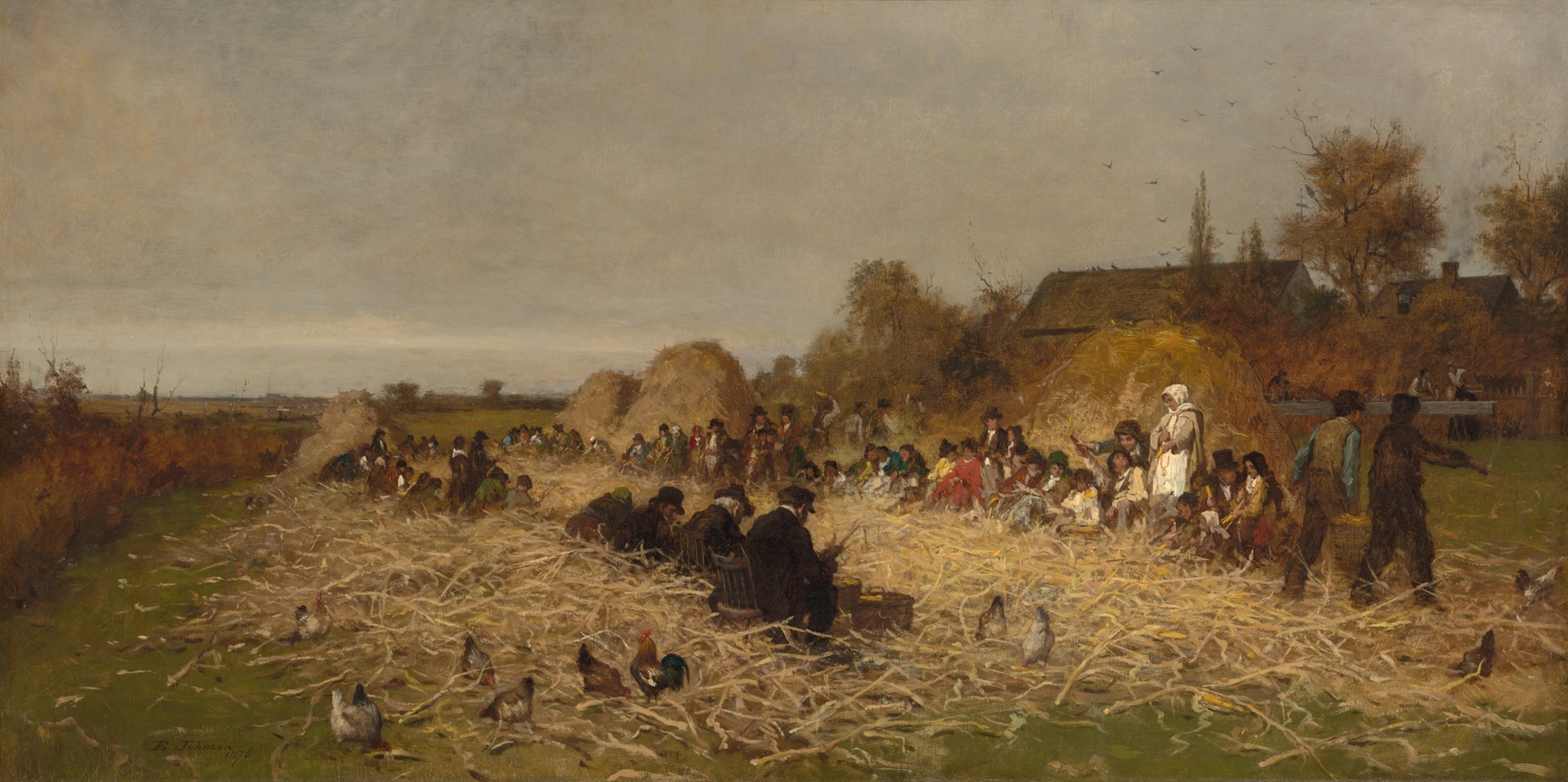
Where does light end, and longing begin? Corn Husking at Nantucket invites us into a moment suspended between labor and camaraderie, where the glow of dusk casts a warm haze over toil, hinting at the desires that tether us to community. Look to the foreground, where figures huddle close, hands deftly peeling husks from golden ears of corn. Notice how the soft, earthy colors of browns and greens meld into the vibrancy of the corn itself, its sunlit yellow almost glowing against the backdrop. The composition is intimate, drawing the viewer's eye towards the shared experience, while the gentle play of light creates a rhythmic dance of shadows that breathes life into each figure.
It is a tableau of simplicity and industriousness, all rendered with the meticulous brushwork characteristic of the artist. Yet beneath this pastoral scene lies an undercurrent of longing. Each gesture conveys not only labor but also connection and perhaps a bittersweet reflection on transience. The expressions of the laborers, caught in quiet concentration, suggest that while their hands are occupied, their minds may wander to aspirations and dreams beyond this moment.
The contrast of the hard work with the ethereal light captures the delicate balance between duty and desire, revealing the complexities of rural life in this era. In 1875, during the American post-Civil War period, Eastman Johnson created this evocative piece amidst a society grappling with change. Working primarily in Nantucket, he was deeply influenced by the region’s rich history and the everyday lives of its inhabitants. The artist's focus on intimate scenes from everyday life mirrored the broader art movement of realism, which sought to portray the authenticity of human experience, inviting viewers to connect with their own desires and stories.