Husking Bee, Island of Nantucket — History & Analysis
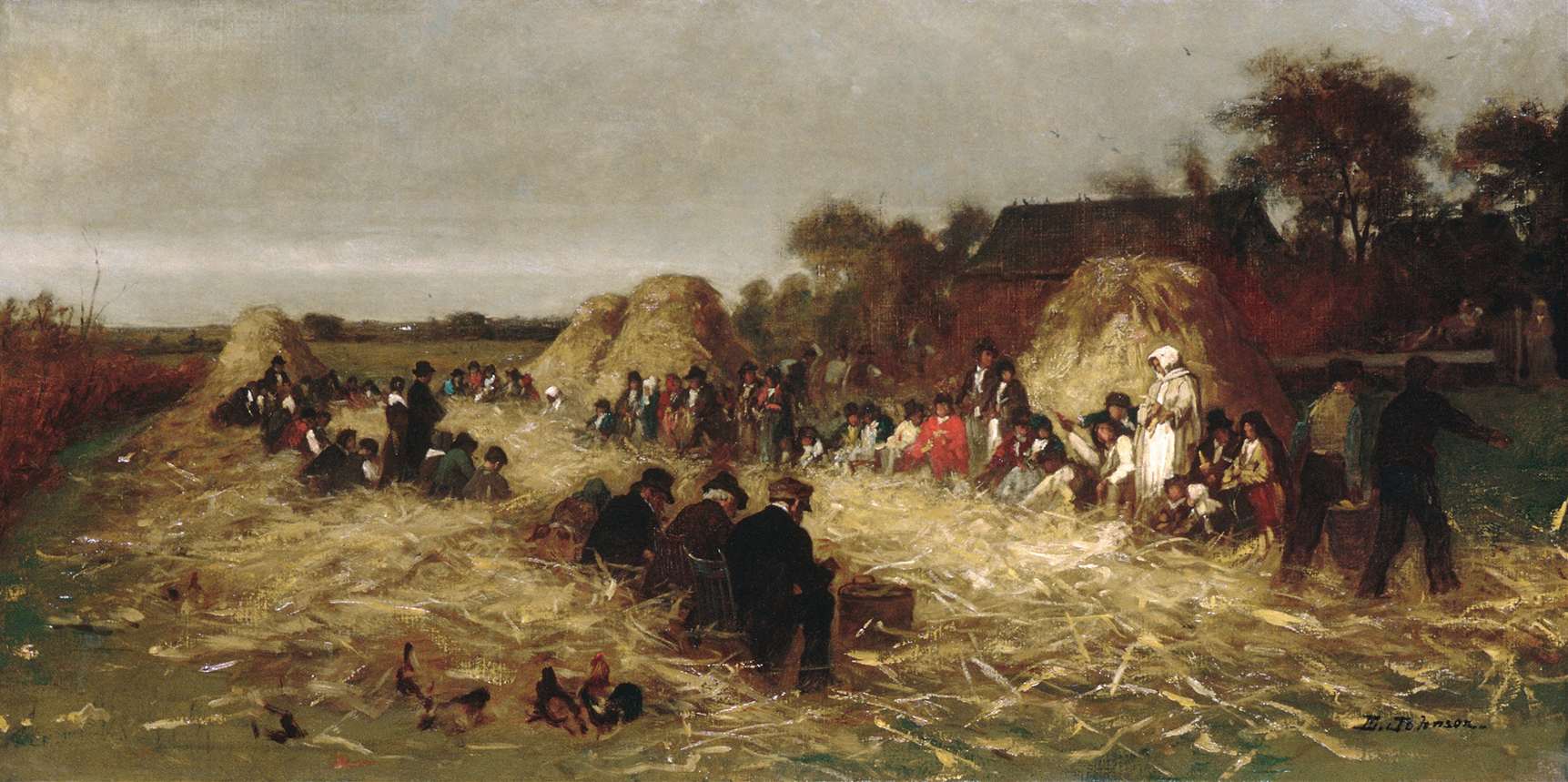
“Every silence here is a confession.” In the hushed moments of Husking Bee, Island of Nantucket, color speaks where words cannot, whispering secrets of shared labor and community bonds. Each hue is a heartbeat, an unspoken connection that bridges the gap between individuals immersed in their task. Look to the vibrant reds and yellows that dominate the scene, bringing warmth to the gathering of figures as they engage in the rhythmic act of husking corn. The careful arrangement of bodies, with some leaning in concentrated effort while others pause to exchange glances, draws your eye across the canvas.
Notice how the light cascades from the left, illuminating the eager faces and the glossy green husks, creating a tapestry of texture that invites you to reach out and touch the very essence of their labor. Delve deeper into the emotional undertones of the painting. The juxtaposition of the individuals’ expressions—some joyful, others contemplative—reveals a silent narrative of camaraderie and the weight of tradition. The underlying tension between the community's collective effort and the personal reflections that unfold amidst the chatter suggests that even in unity, individual stories persist, held tight like the husks they remove.
In 1876, Eastman Johnson created this piece while residing in Nantucket, a time marked by a nation grappling with the aftermath of Civil War. The shift toward realism in American art was gaining momentum, and Johnson sought to capture the essence of everyday life, portraying a simple yet poignant moment that echoed the rhythm of an evolving society. This was a pivotal period for artists, as they moved from grand historical themes to the intimate portrayals of daily experiences.