
Husking Bee, Island of Nantucket — History & Facts
A large group of men, women, and children gather outdoors in a field, surrounded by piles of corn husks and golden haystacks under a wide, overcast sky. Figures sit, kneel, and crouch in clusters across the foreground and middle ground, their hands busy with the work of shucking corn, while chickens peck at the straw scattered around them. In the background, haystacks rise behind the workers, and beyond them, trees in autumn color and the roofs of farmhouses anchor the rural setting.
The composition stretches horizontally, emphasizing the communal nature of the event and leading the eye from the foreground figures to the distant landscape and sky. Johnson uses a warm palette of ochres, browns, and muted greens, with touches of red and blue in the clothing, creating a sense of harmony and seasonal warmth. Loose, visible brushwork describes the straw, the texture of clothing, and the soft forms of the landscape, while more defined lines pick out faces and hands at work.
Soft daylight falls evenly across the scene, illuminating the figures and hay while casting only faint shadows, contributing to the painting’s gentle, nostalgic mood. Small details, such as the scattered tools, baskets, and the attentive chickens, reinforce the sense of a lived-in, working environment. Above the field, a flock of birds is visible against the gray sky, adding a subtle sense of movement and the passage of time. Eastman Johnson completed Husking Bee, Island of Nantucket in 1876, marking the centennial of the United States, a moment that inspired feelings of nostalgia as the country rapidly industrialized and urbanized.
The Art Institute of Chicago notes that Johnson’s warm colors and loose brushwork present an idealized vision of cooperation and closeness to the land, emphasizing the communal spirit of rural life. After its completion, the painting was first shown by Johnson in New York in early 1876, and it appeared in several major exhibitions, including the Centennial International Exhibition in Philadelphia and the Exposition Universelle in Paris. Ownership passed from Johnson to Napoleon Sarony in New York, and later to Potter and Bertha Palmer of Chicago; the painting was eventually given to the Art Institute of Chicago by their descendants in 1922.
Sources: Art Institute of Chicago, record 1922.444 · Wikidata Q20272207
More Artworks by Eastman Johnson

Corn Husking at Nantucket
Eastman Johnson
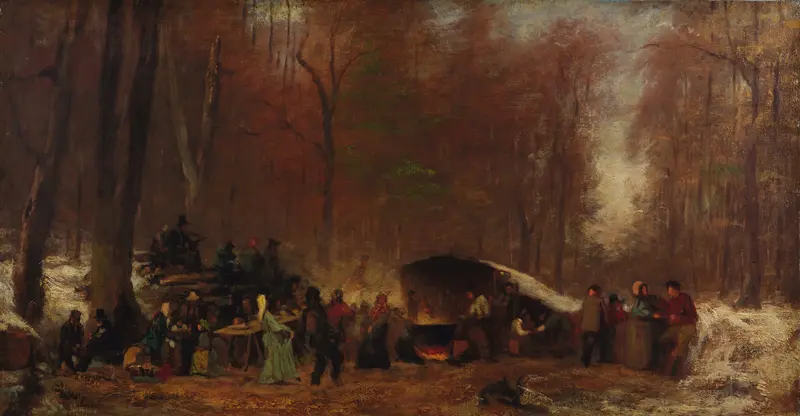
A Different Sugaring Off
Eastman Johnson

Husking Bee, Island of Nantucket
Eastman Johnson
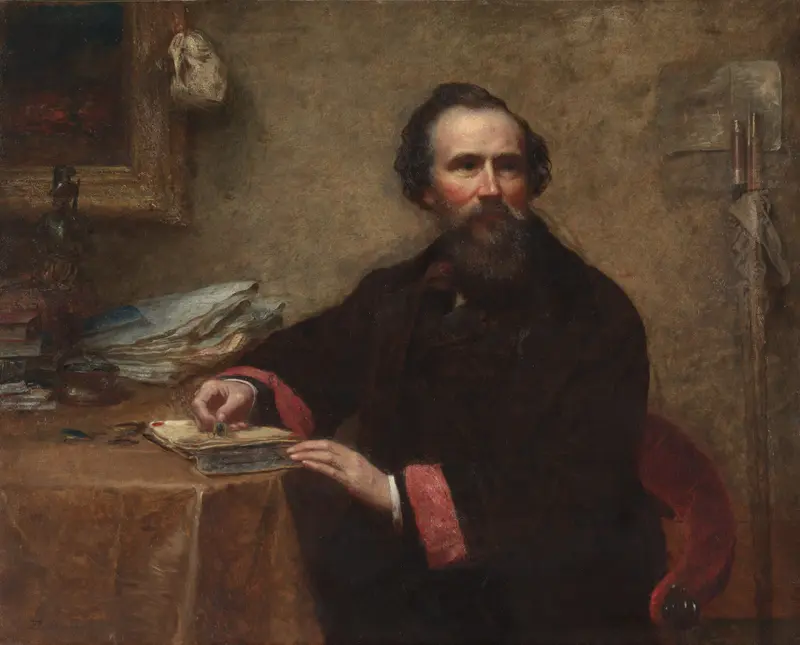
Portrait of Genio C. Scott
Eastman Johnson
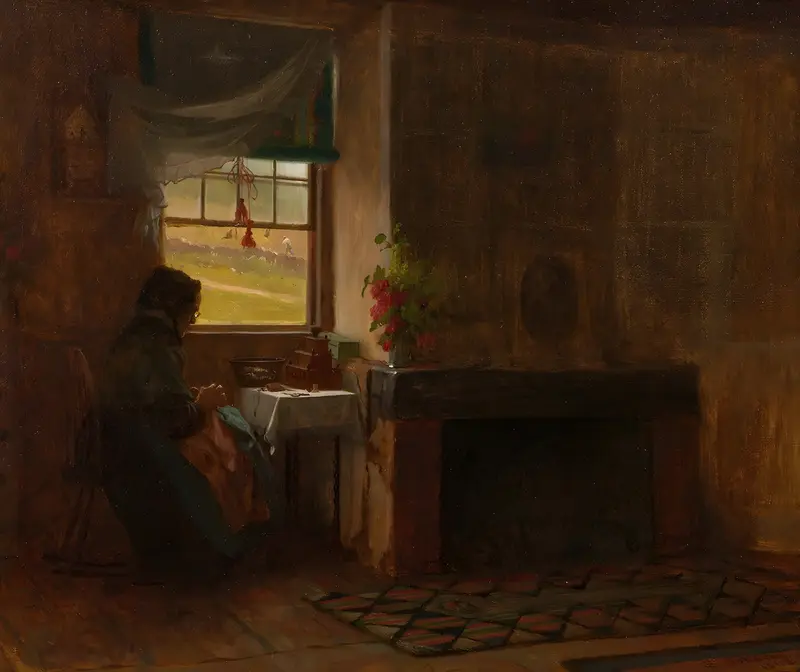
Interior of a Farmhouse in Maine
Eastman Johnson
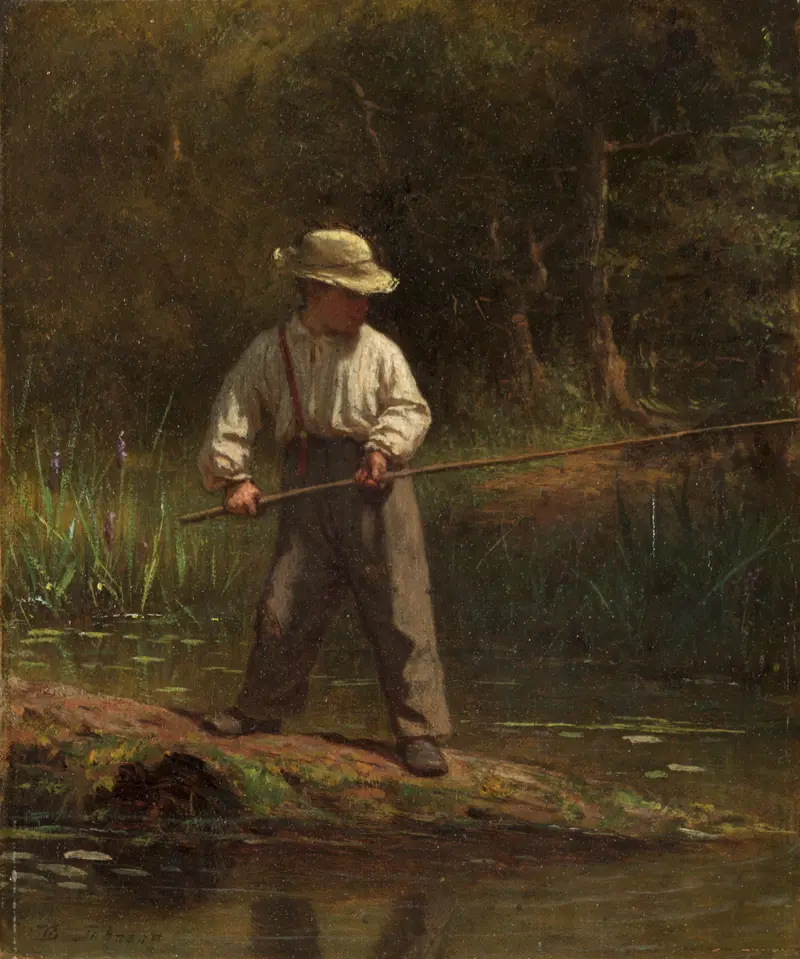
Boy Fishing
Eastman Johnson
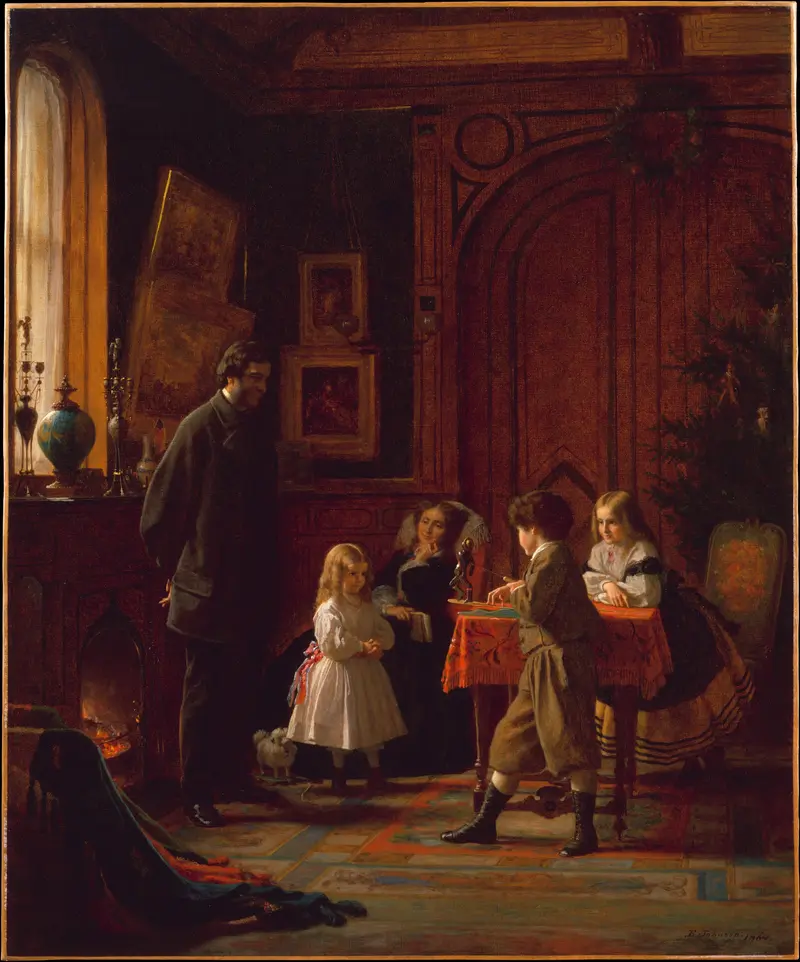
Christmas-Time, The Blodgett Family
Eastman Johnson
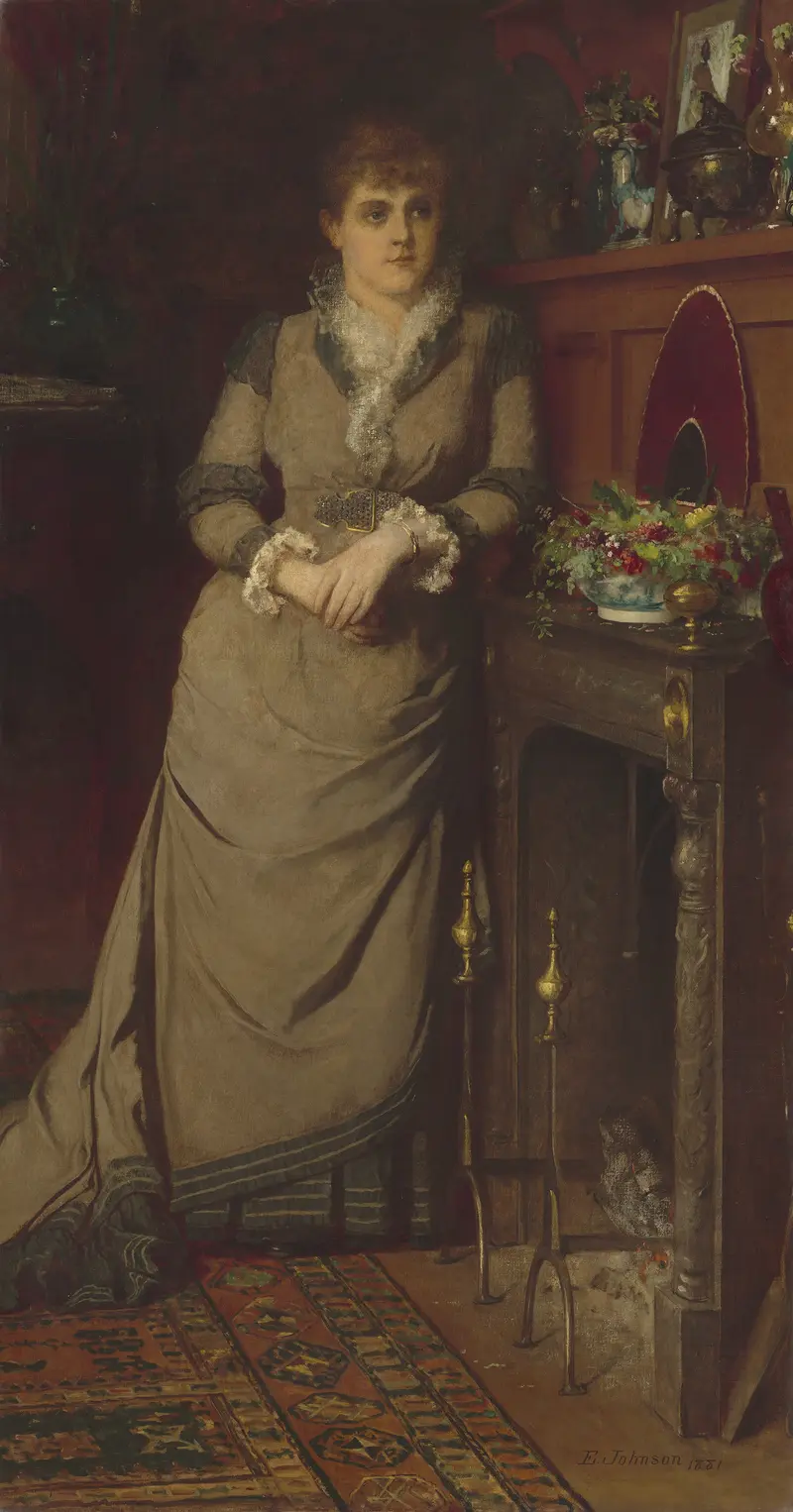
Harriet Hubbard Ayer
Eastman Johnson
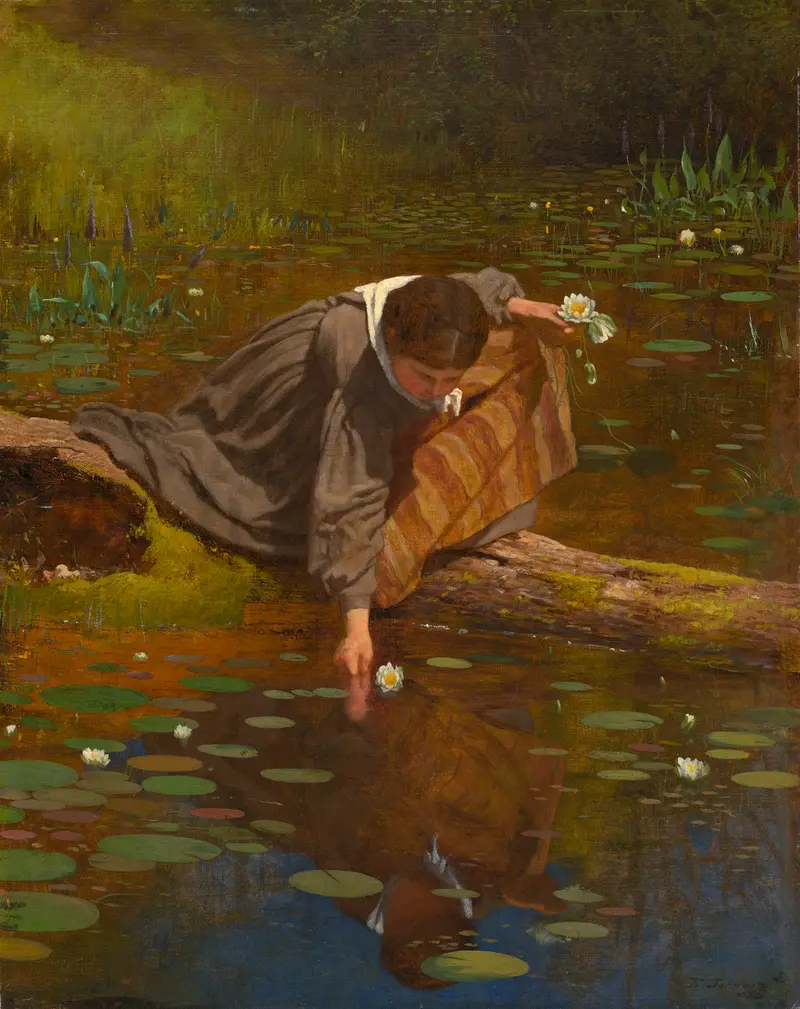
Gathering Lilies
Eastman Johnson
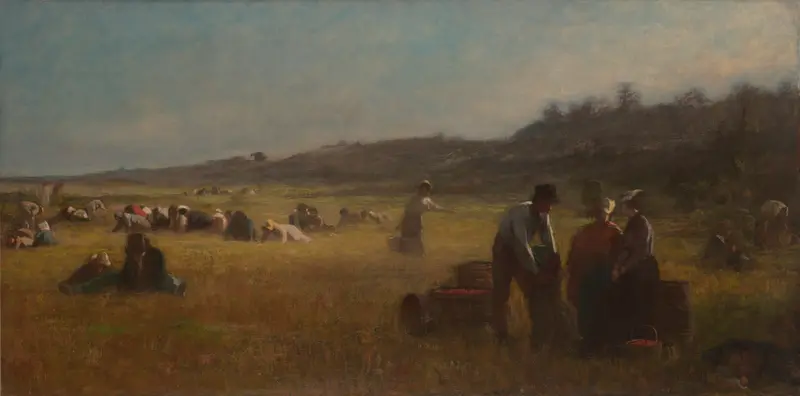
Cranberry Pickers
Eastman Johnson
More Genre Scene Art

Banquet of the Officers of the St George Civic Guard
Frans Hals

Rembrandt and Saskia in the Scene of the Prodigal Son
Rembrandt van Rijn

Bal du moulin de la Galette
Pierre-Auguste Renoir

Quadrille at the Moulin Rouge
Henri de Toulouse-Lautrec

A Burial at Ornans
Gustave Courbet

When Will You Marry?
Paul Gauguin