The Back Fence — History & Analysis
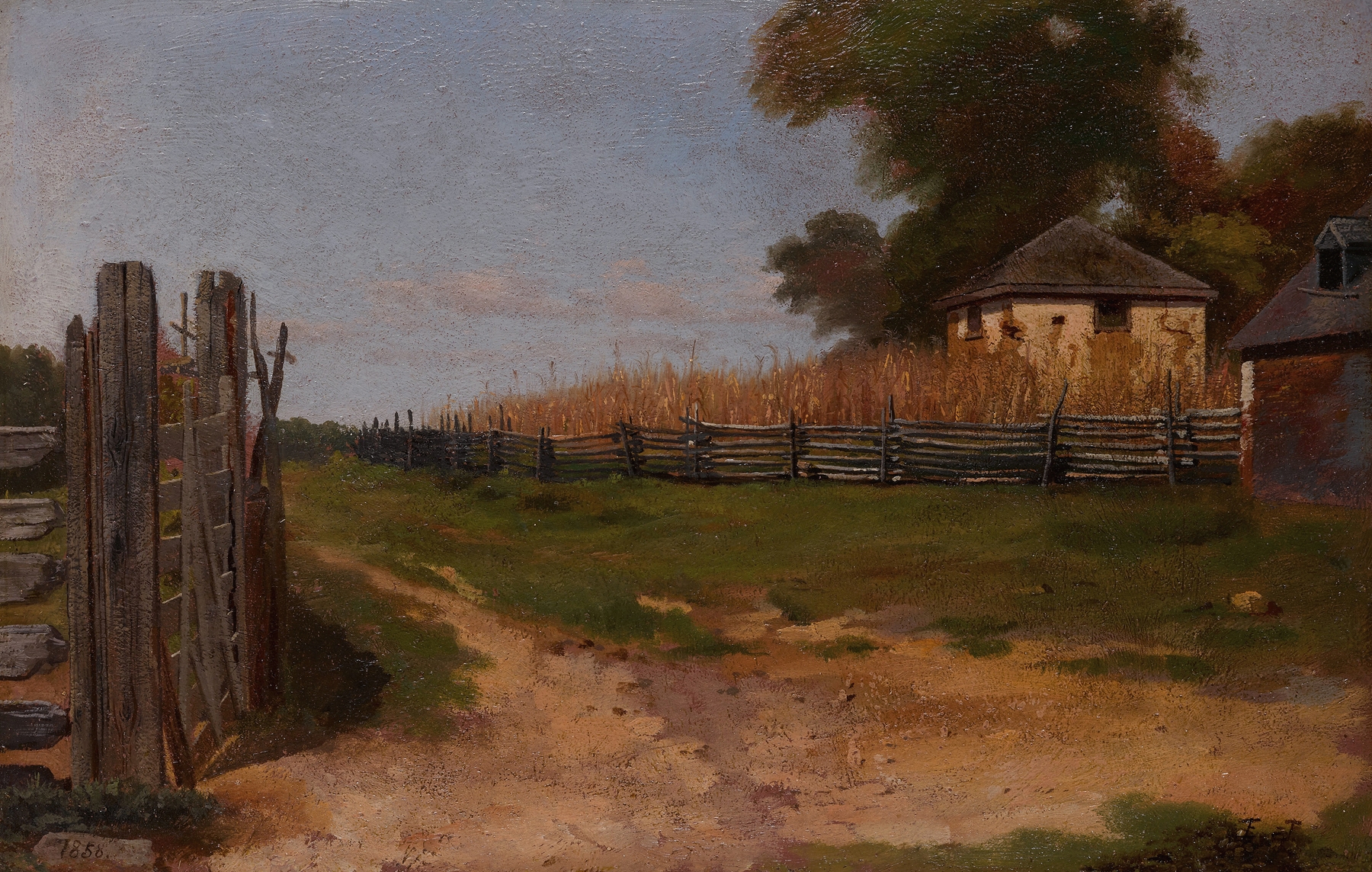
What if beauty was never meant to be finished? In a world that often rushes toward resolution, The Back Fence reveals the quiet, lingering ache of loss and longing. Notice how the soft light bathes the scene, illuminating the figures nestled within their muted surroundings. Look closely at the children to the left, their innocent play contrasting sharply with the somber expression of the woman on the right, who gazes out beyond the canvas. The fence, a simple yet powerful boundary, acts as both a physical and emotional barrier, representing the distance between joy and sadness.
The artist employs a palette rich in earth tones, inviting warmth yet hinting at an underlying chill. Themes of grief and separation pulse beneath the surface of the painting. The way the woman's posture leans towards the children yet remains anchored in place suggests a yearning for connection that is just out of reach. The children’s carefree laughter is palpable, but it serves as a poignant reminder of the joy that may once have filled the woman’s life — a joy now overshadowed by her sorrow.
This emotional tension is underscored by the contrast of their carefree innocence against her stoic demeanor, creating a haunting interplay between past happiness and present disquiet. Eastman Johnson painted this work in 1870 during a time when American art was evolving, moving toward a more intimate portrayal of everyday life. Johnson, who had been influenced by the works of both European and American Realists, captured simple moments with profound emotional depth. At this point in his career, he was balancing the dual influences of realism and sentimentality, exploring the complexities of human experience, especially within the familial sphere.