Cows Crossing a Ford — History & Analysis
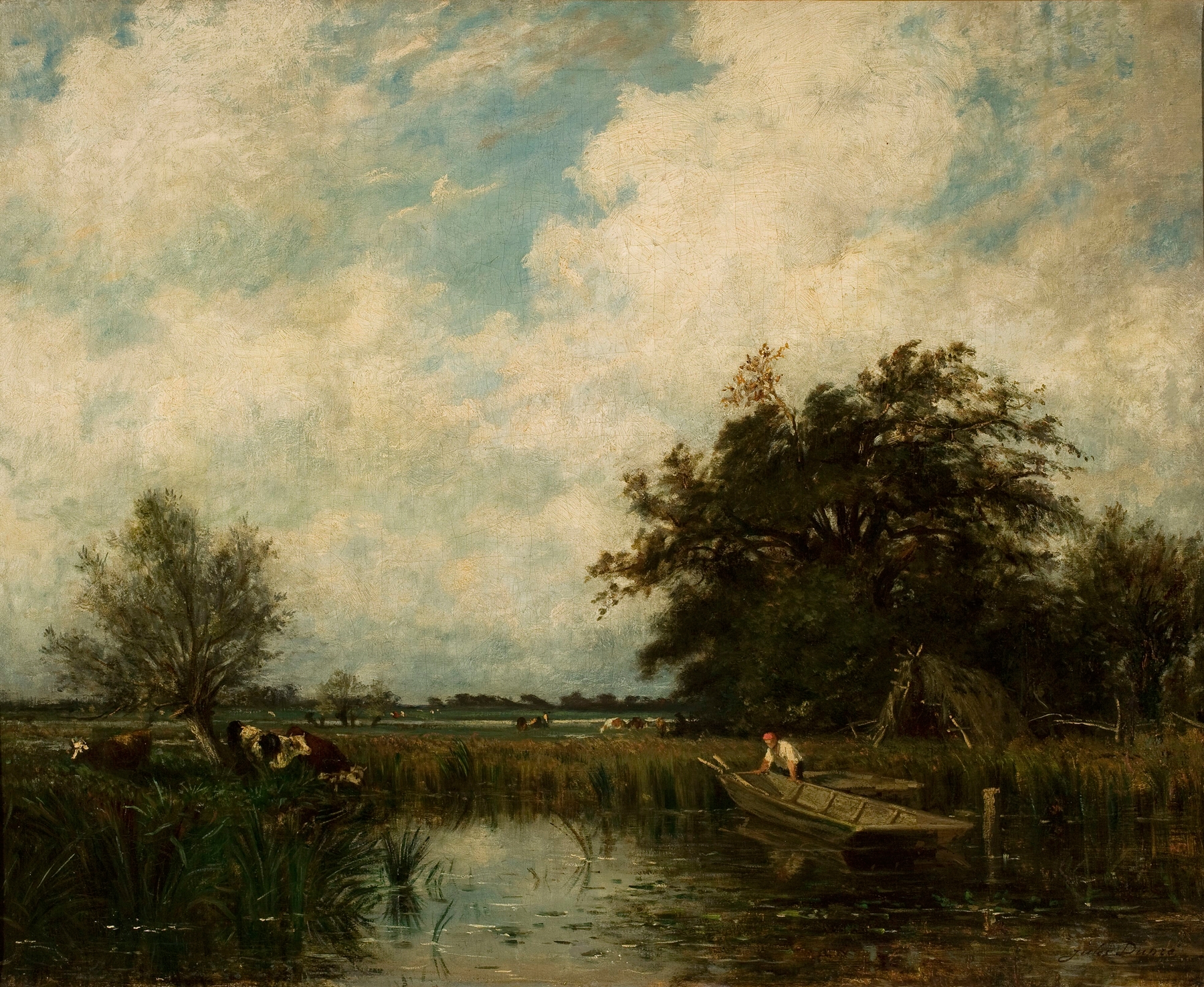
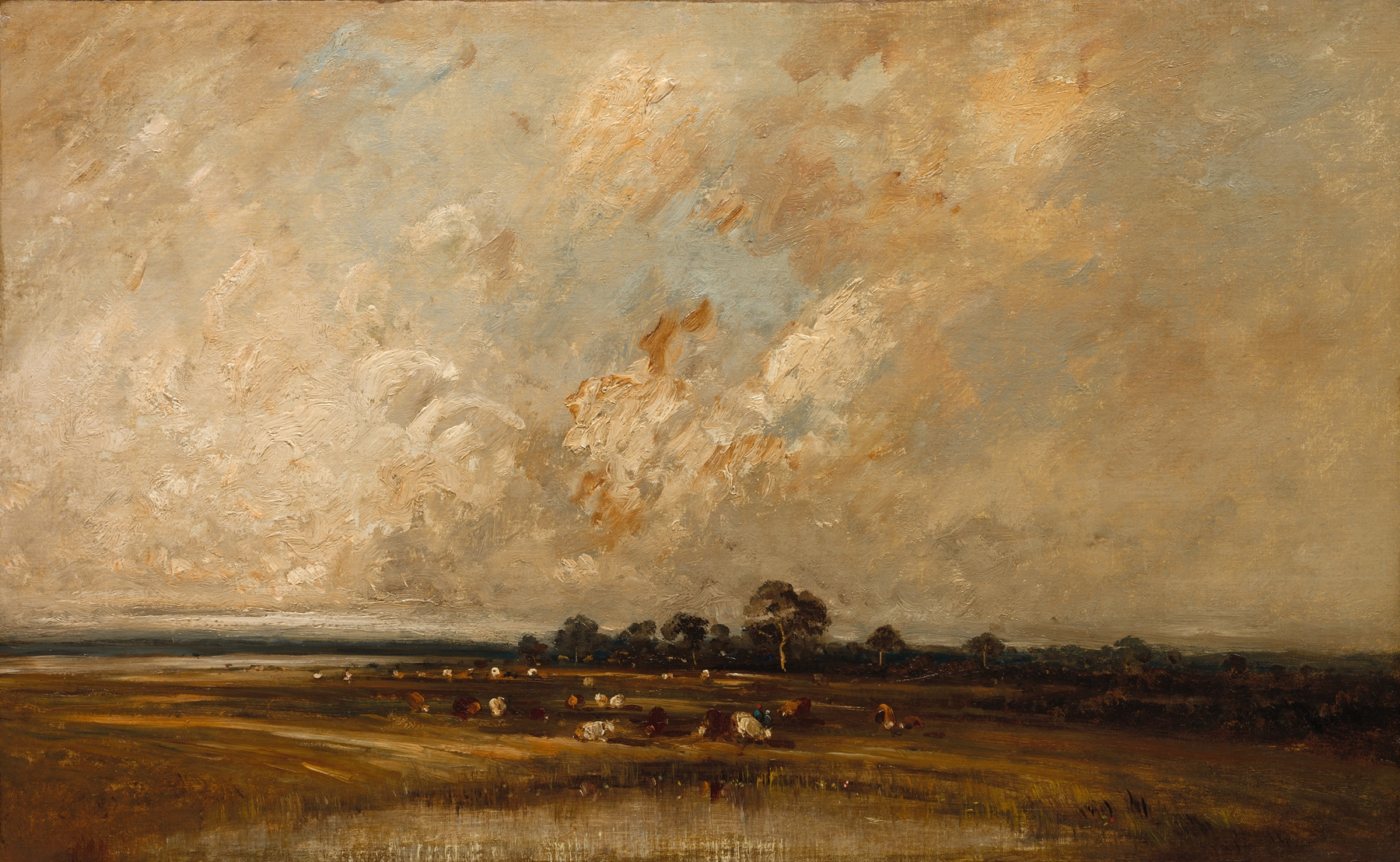
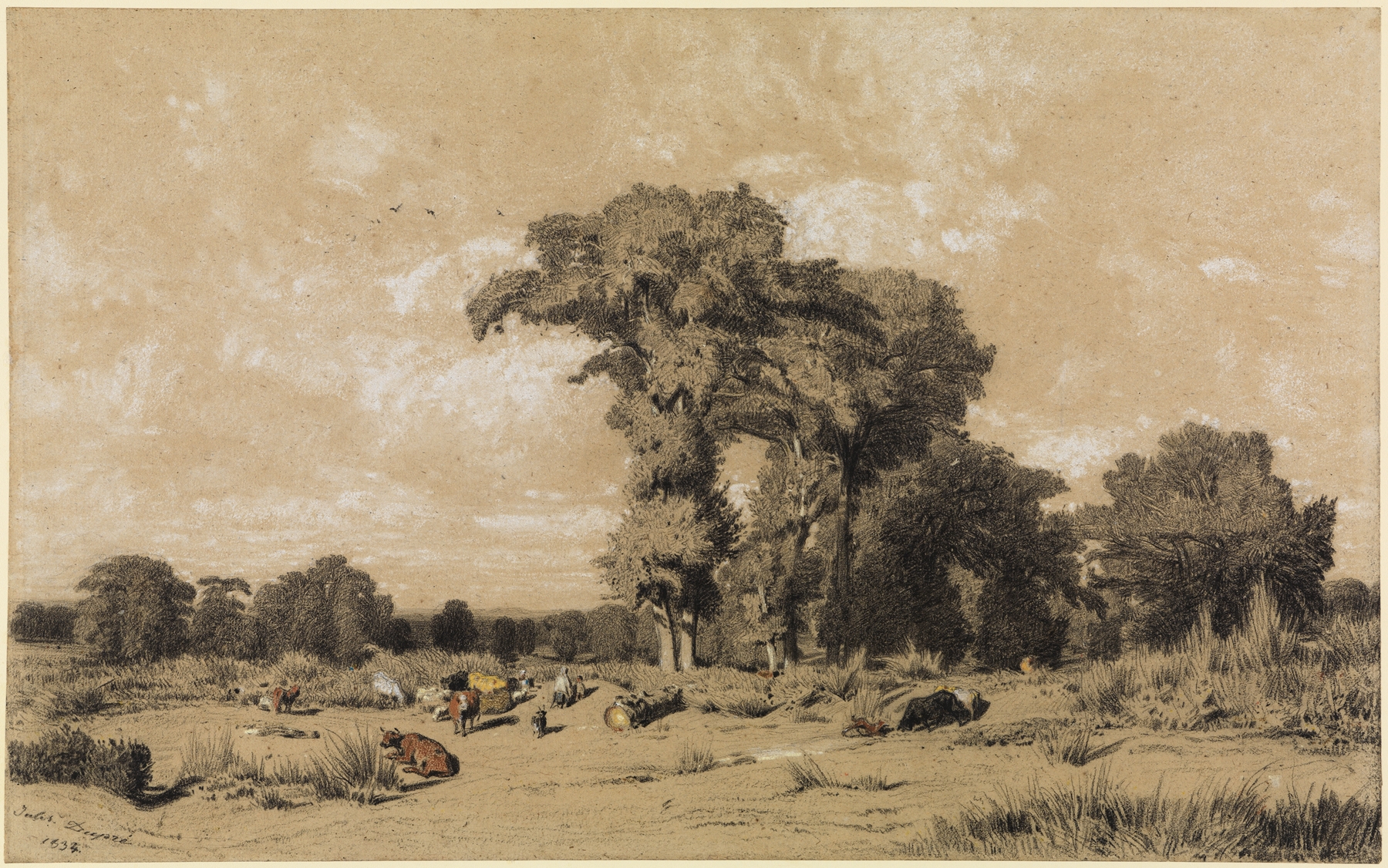
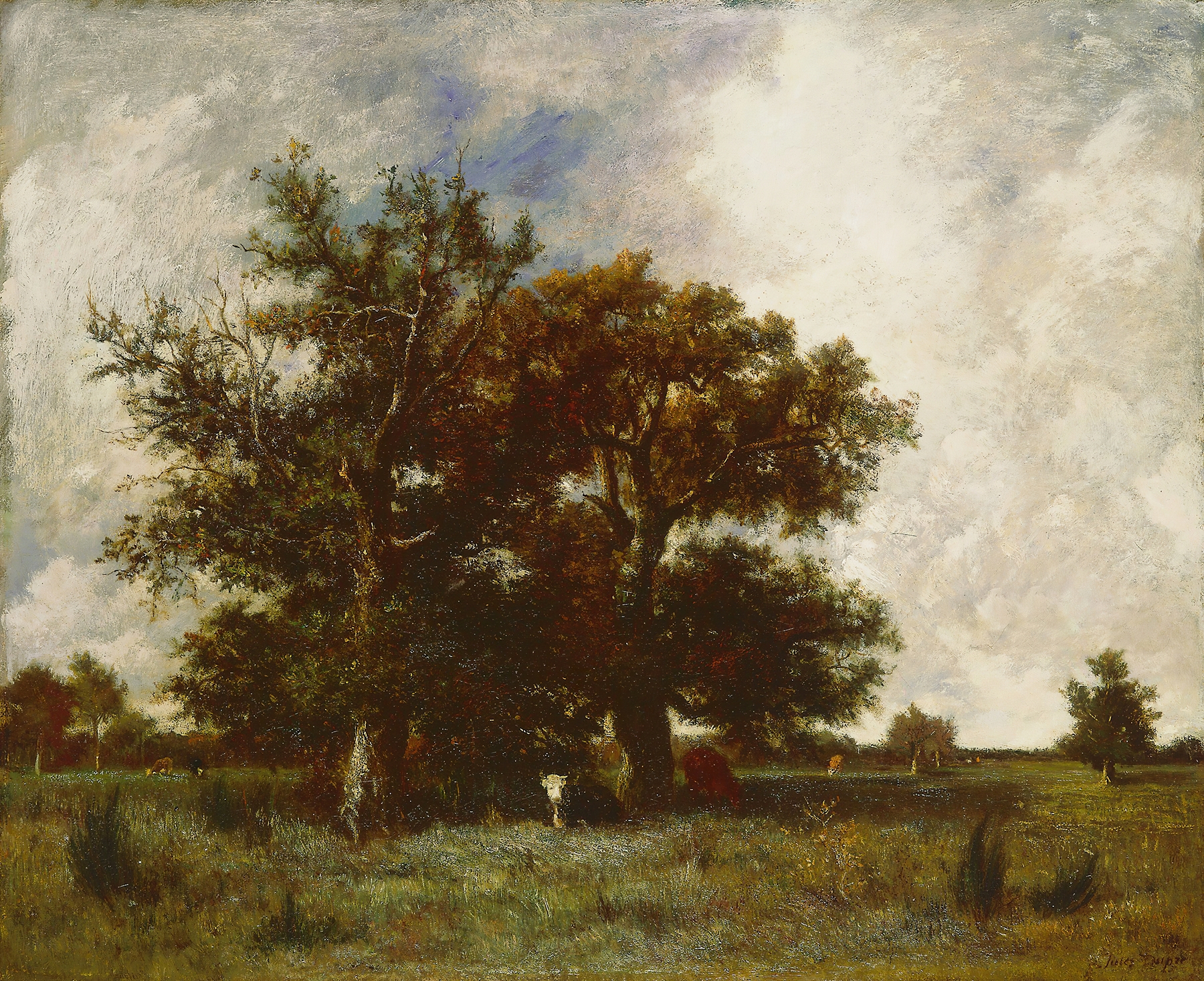
“Under the brush, chaos becomes grace.” In a world constantly in flux, how do we capture fleeting moments in time? Look to the left at the gentle slope where the cows, with their soft, rounded forms, create a harmonious balance against the backdrop of towering trees. The artist employs a muted palette, with earthy greens and browns, punctuated by the rich, reflective quality of water that almost glimmers under a diffused light. Notice the way the brushstrokes convey both movement and stillness, guiding your gaze across the tranquil scene, where nature and livestock coexist in serene rhythm.
As you delve deeper into the painting, consider the tension between the stillness of the cattle and the dynamic flow of the water. Each cow’s posture hints at a story, perhaps hesitation or trust as they navigate the crossing. The light filtering through the canopy above casts dappled shadows, symbolizing the passage of time and the cyclical nature of life—a fleeting moment captured with meticulous care, yet imbued with the weight of permanence.
In 1836, Jules Dupré was immersed in the burgeoning Romantic movement, painting primarily in France during a period marked by urbanization and industrial change. This work, crafted while he resided in the rural countryside, reflects his desire to seek solace in nature amidst societal upheaval. His focus on landscapes and rural life resonates with his contemporaries, who sought to evoke emotion and a profound connection to the natural world.