Fontainebleau Oaks — History & Analysis
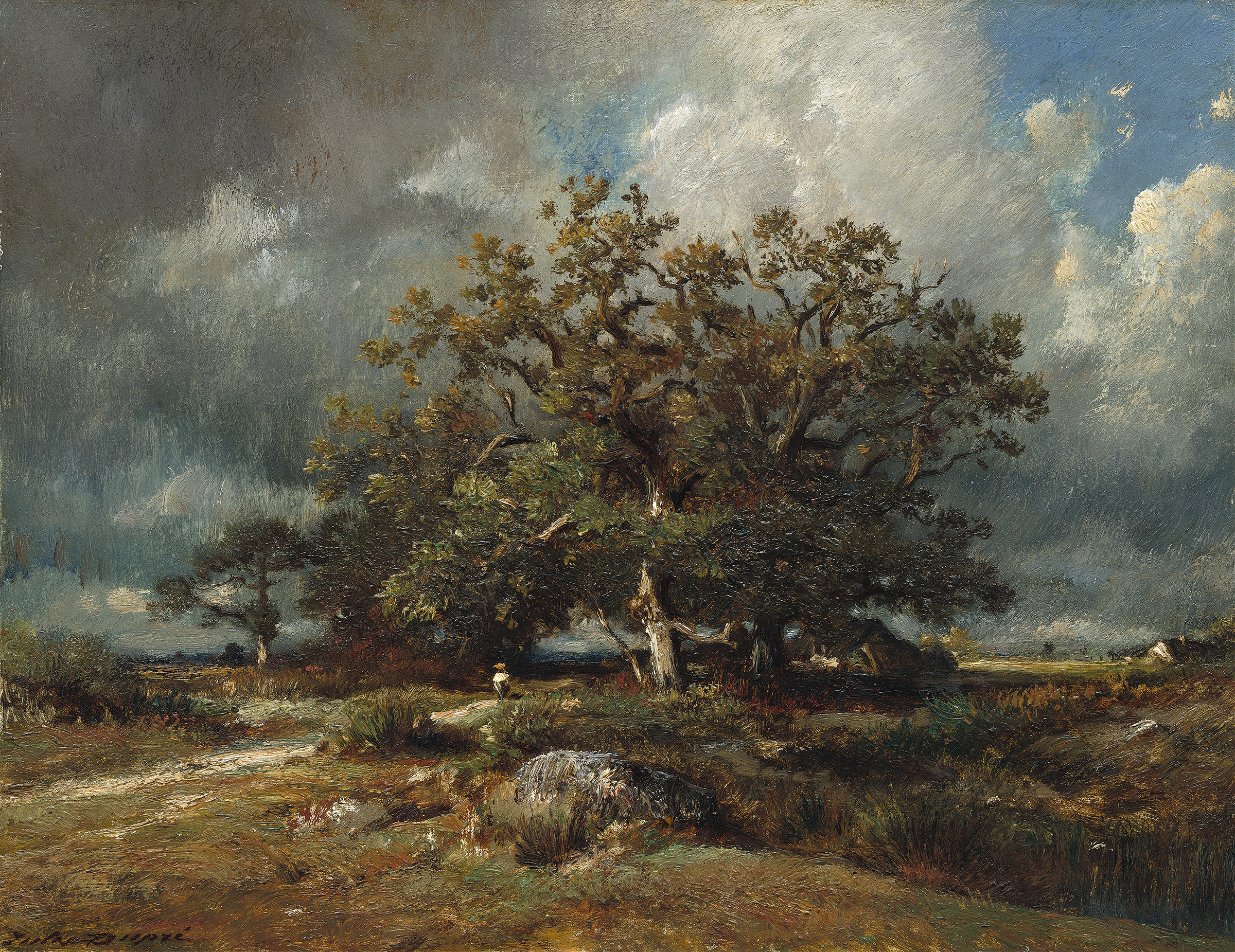
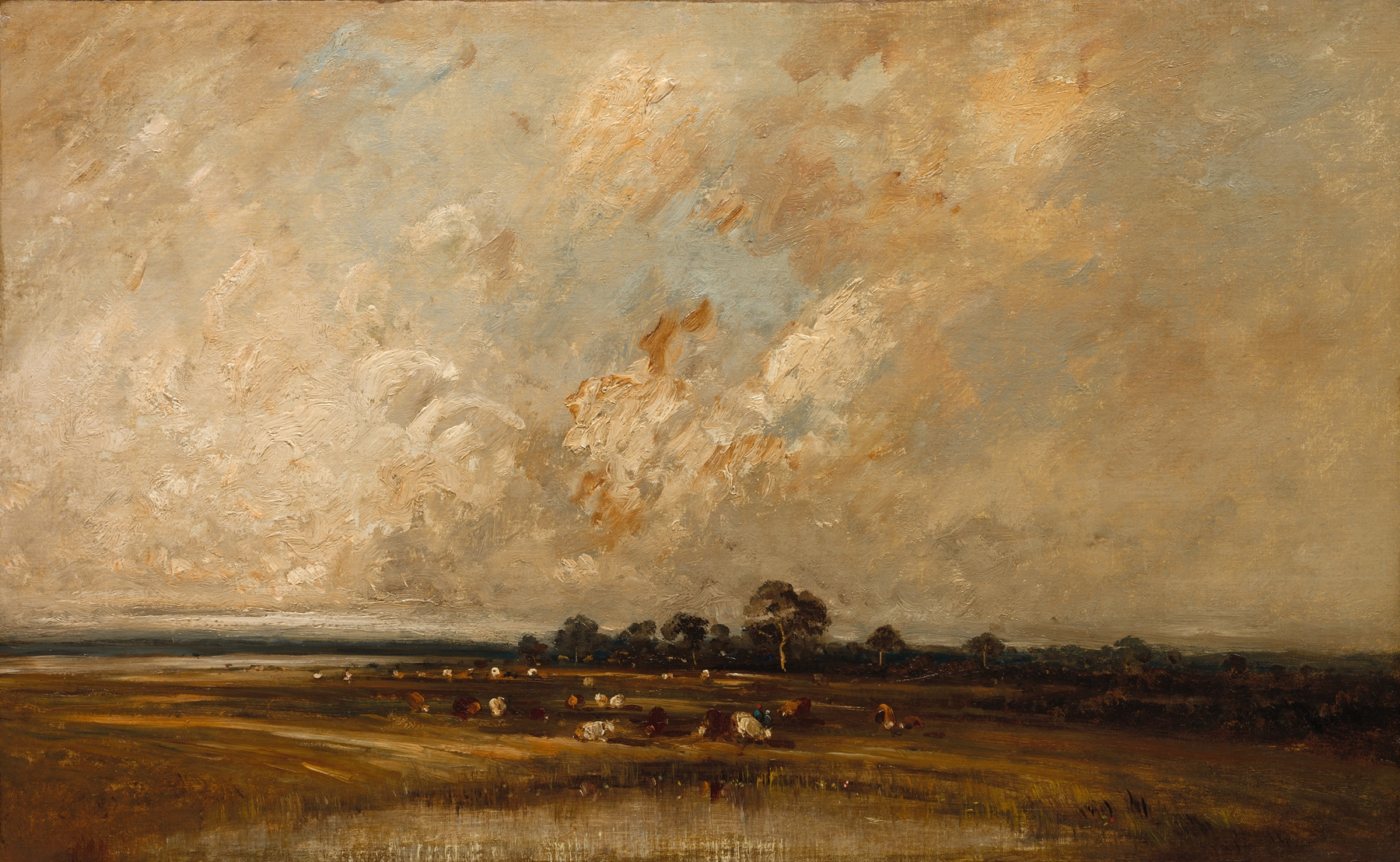
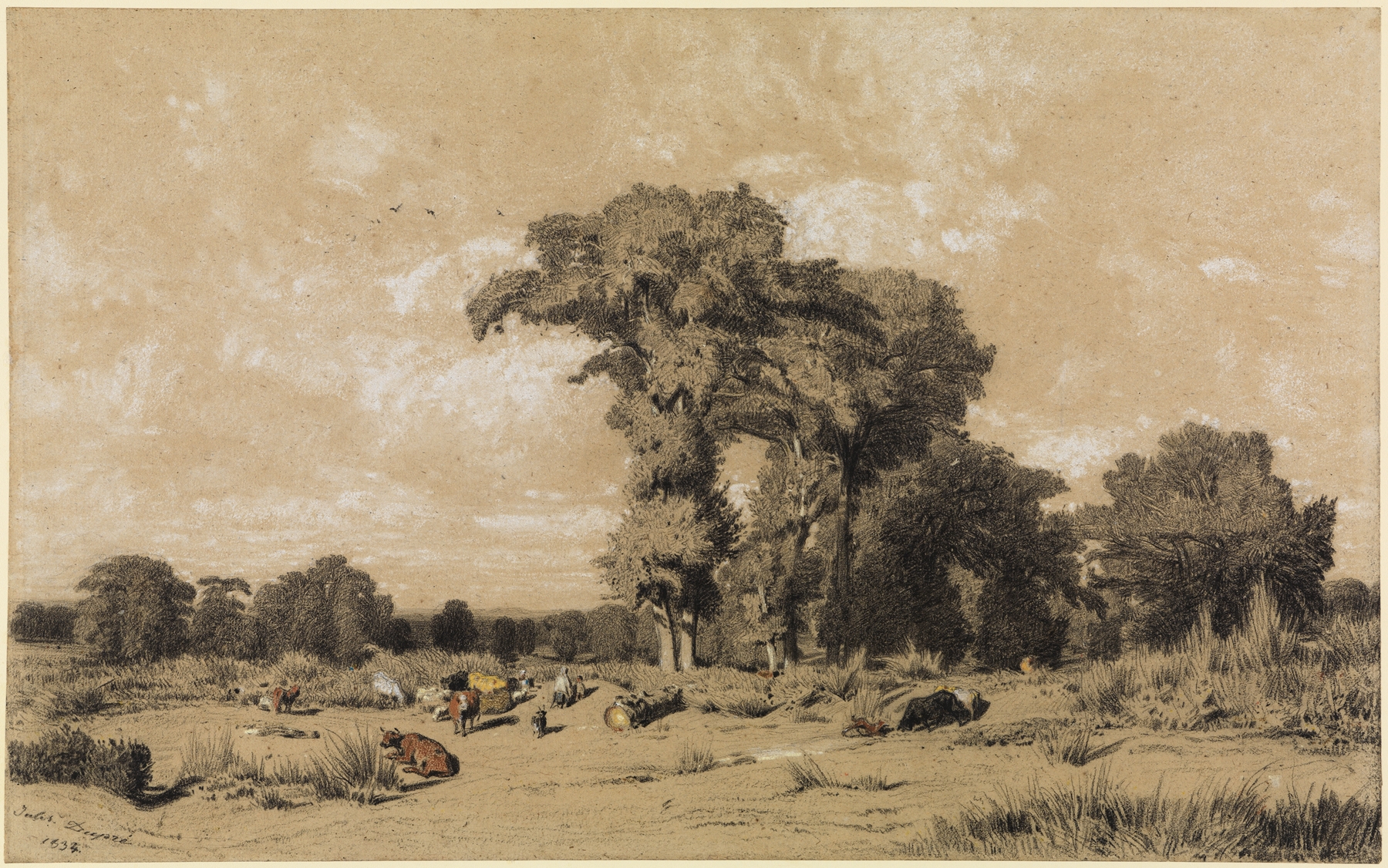
Who listens when art speaks of silence? In Fontainebleau Oaks, nature whispers through towering trees, inviting contemplation and introspection. Look to the left at the gnarled branches reaching skyward, their leaves a tapestry of verdant hues shimmering in the sunlight. The play of light and shadow dances across the ground, creating a rich textural contrast that draws the viewer's gaze deep into the scene.
Notice the soft, earthy palette, where rich browns and greens blend harmoniously, capturing the essence of a tranquil forest glade. The composition feels expansive yet intimate, as if the oaks themselves cradle the viewer in their ancient embrace. The juxtaposition of light filtering through the branches and the deep shadows below evokes a feeling of both serenity and introspection. There’s a stillness that suggests a pause in time, inviting the viewer to ponder the transience of life and the enduring strength of nature.
The oaks stand as silent witnesses to history, embodying resilience against the passage of time while simultaneously representing a sanctuary for reflection and creation. In the early 1840s, Jules Dupré was immersed in the burgeoning Romantic movement in France, painting in the picturesque surroundings of Fontainebleau Forest. This period marked a growing interest in capturing the sublime qualities of nature, a shift away from academic traditions. As he explored the interplay of light and landscape, Dupré contributed significantly to the evolution of landscape painting, seeking to express the emotional depth found within the natural world.