Village Scene, Sunset — History & Analysis
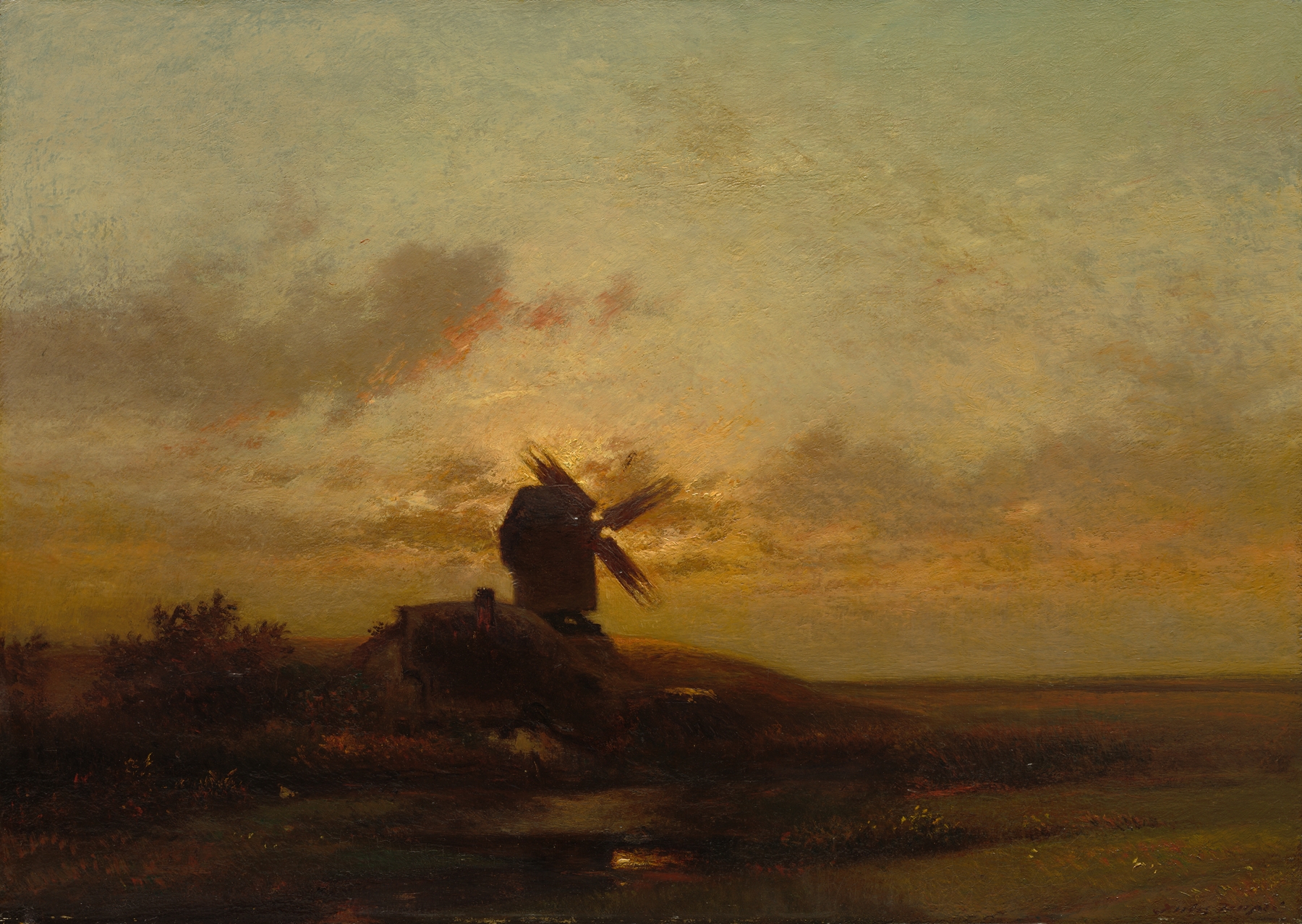
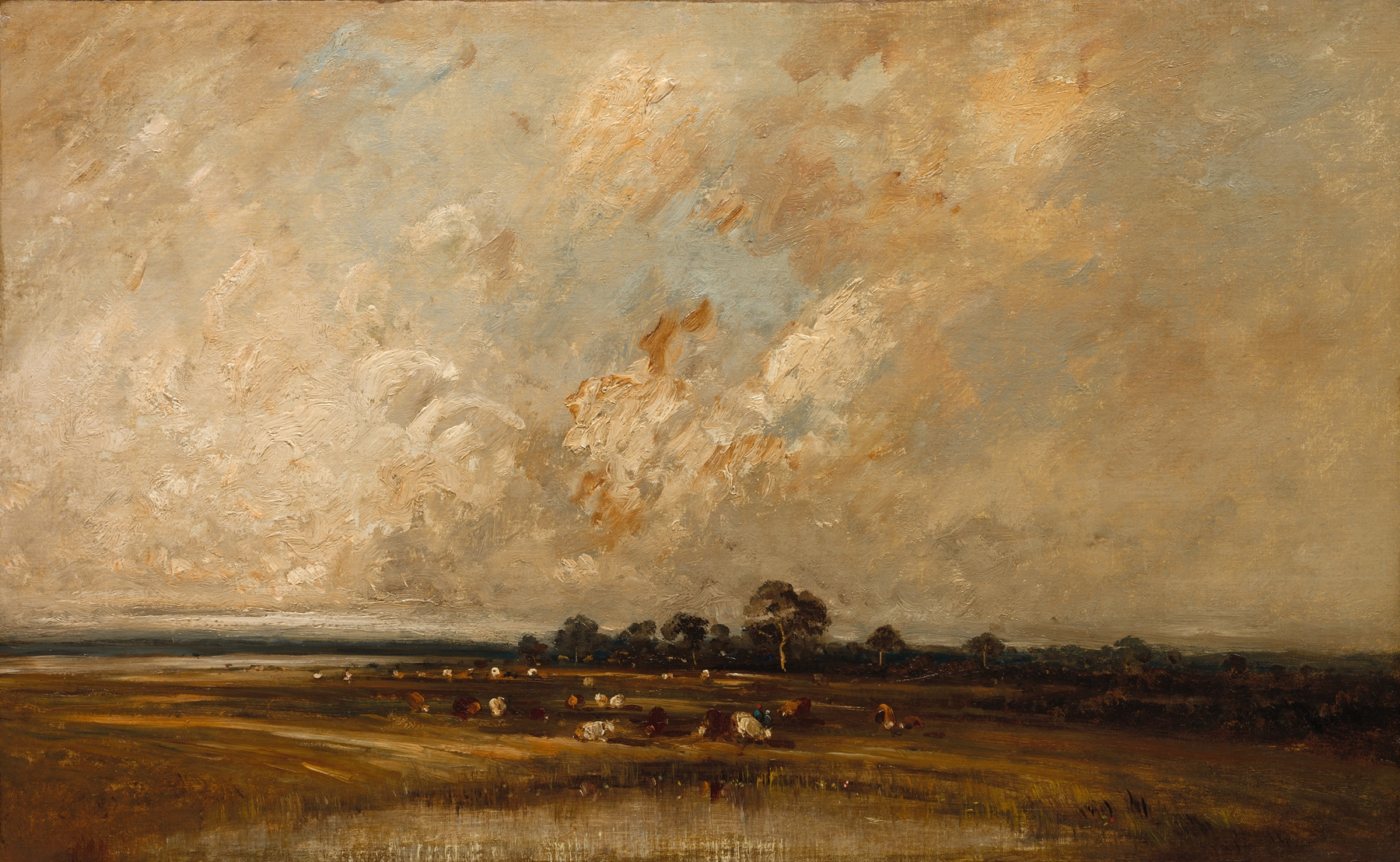
What secret hides in the quiet of the canvas? In Village Scene, Sunset, a tranquil moment unfolds, enveloping the viewer in an embrace of rebirth. Look to the left at the cluster of cottages, their silhouettes softened by the fading light. Notice how the warm hues of orange and gold blend seamlessly into the cool blues of twilight, hinting at the transition from day to night.
The artist employs delicate brushstrokes to capture the gentle ripples in the nearby stream, reflecting the luminous sky above, while the trees stand tall, guardians of the village. Yet, deeper meanings swirl beneath this picturesque facade. The sunset signifies not just the end of a day, but the promise of renewal, as shadows stretch across the landscape in contrast to the radiant horizon. Each cottage, painted with careful detail, tells a story of life and community, while the stillness of the scene whispers of the quiet moments often overlooked — the small joys amidst the passage of time.
In the late 1860s, Jules Dupré was immersed in the French landscape school, focused on capturing the ephemeral qualities of nature. Painted around 1870, this work reflects his mastery of light and atmosphere during a period of artistic exploration, as he sought to depict not just the physical world, but the emotional resonance of each scene. The canvas is a testament to his understanding of the delicate balance between the fleeting and the eternal.