Dansende man en vrouw — History & Analysis
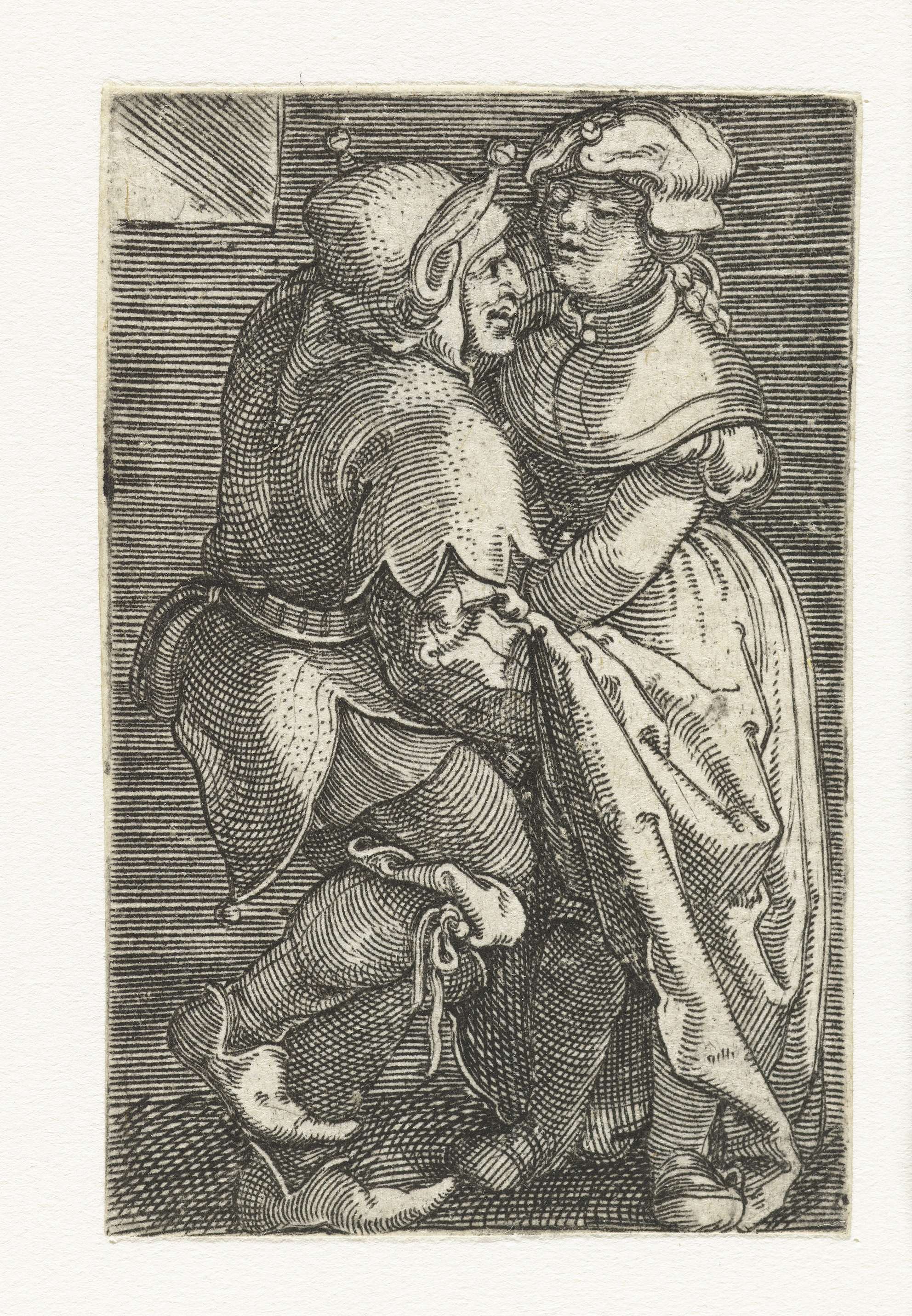
Could beauty survive in a century of chaos? In Dansende man en vrouw, Barthel Beham captures a moment of exquisite transformation, a fleeting glimpse of joy amid the tumult of the early 16th century. Look closely at the couple dancing in the center; their bodies entwined in graceful movement. Notice how the soft, warm hues of their garments contrast with the cool, muted background, drawing your eye to their vibrant celebration. The fluid lines of their limbs and the gentle sway of their heads evoke a sense of rhythm, while the intricate patterns on their clothing reflect the artistry and craftsmanship of the era.
The use of light creates a subtle halo around their figures, suggesting an ephemeral quality to this shared moment. Beneath the surface, the interplay of movement and stillness speaks volumes about human connection and the resilience of love. The man’s hand gently cradles the woman's waist, symbolizing protection in uncertain times. The swirl of their dance could signify liberation, a brief escape from the constraints of their world, hinting at the joys that persist even amidst adversity.
Each detail, from their expressions to the very nature of their interaction, serves as a reminder of the delicate balance between chaos and beauty. In 1524, Beham was immersed in a rapidly changing artistic landscape, navigating the complexities of the Northern Renaissance. Working in Germany, he contributed to the growing interest in humanism and individual expression amidst the backdrop of political and religious upheaval. This period saw both the emergence of new artistic techniques and the challenge of existing norms, reflecting the tumultuous spirit of his time—an essence beautifully encapsulated in his portrayal of this dancing couple.