Portret van Keizer Ferdinand I — History & Analysis
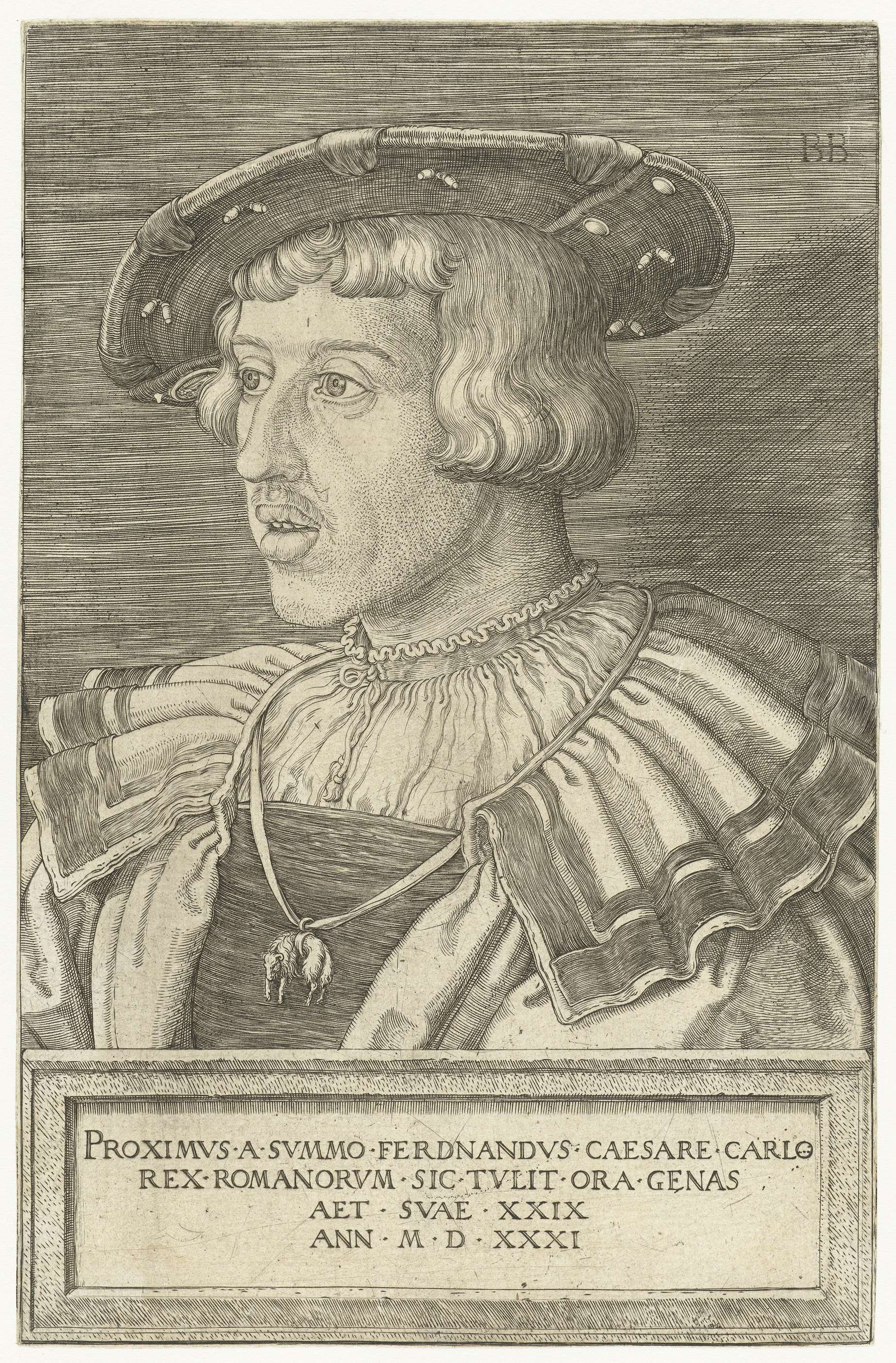
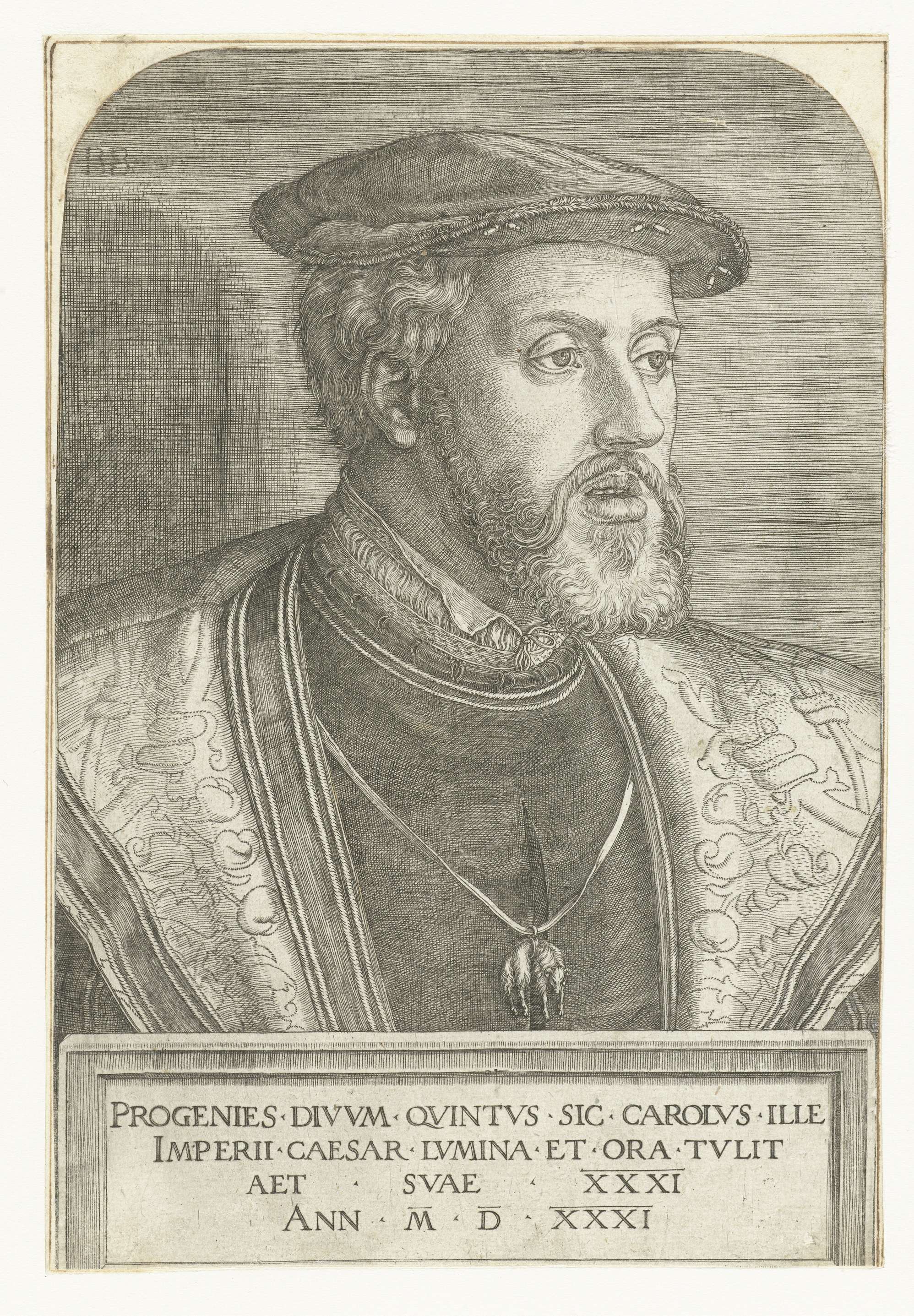
“Sometimes beauty is just pain, disguised in gold.” This sentiment resonates profoundly in the portrayal of an emperor whose opulence contrasts the weight of his crown. In Barthel Beham's Portret van Keizer Ferdinand I, the viewer encounters not just a man adorned with regal splendor, but a complex tapestry of power and vulnerability painted in 1531. Look closely at the emperor’s eyes, which draw you in with a haunting depth. The gentle curvature of his lips, subtly downturned, hints at the burdens of leadership; while the intricate embroidery of his garments sparkles under a crafted light, symbolizing both wealth and the superficiality of status.
The delicate brushwork emphasizes his pale skin against the rich, dark background, enhancing the duality of his presence—both exalted and isolated. The juxtaposition of luxurious attire and the austere expression evokes a profound tension. Each detail—the majestic collar, the golden chain—suggests the ecstasy of power, yet also the weight of expectation.
It invites contemplation of the emotional toll that beauty and authority exact on the soul, urging viewers to ponder what lies beneath the surface of this imperial facade. During this period, Beham was establishing his reputation in Nuremberg, where the Renaissance flourished, reflecting both a keen interest in humanism and an exploration of portraiture's role in asserting social hierarchy. The painting emerges from a time when rulers sought to solidify their legacies through art, a medium that both immortalized and confined them in gilded frames of their own making.