Portret van Keizer Ferdinand I — History & Analysis
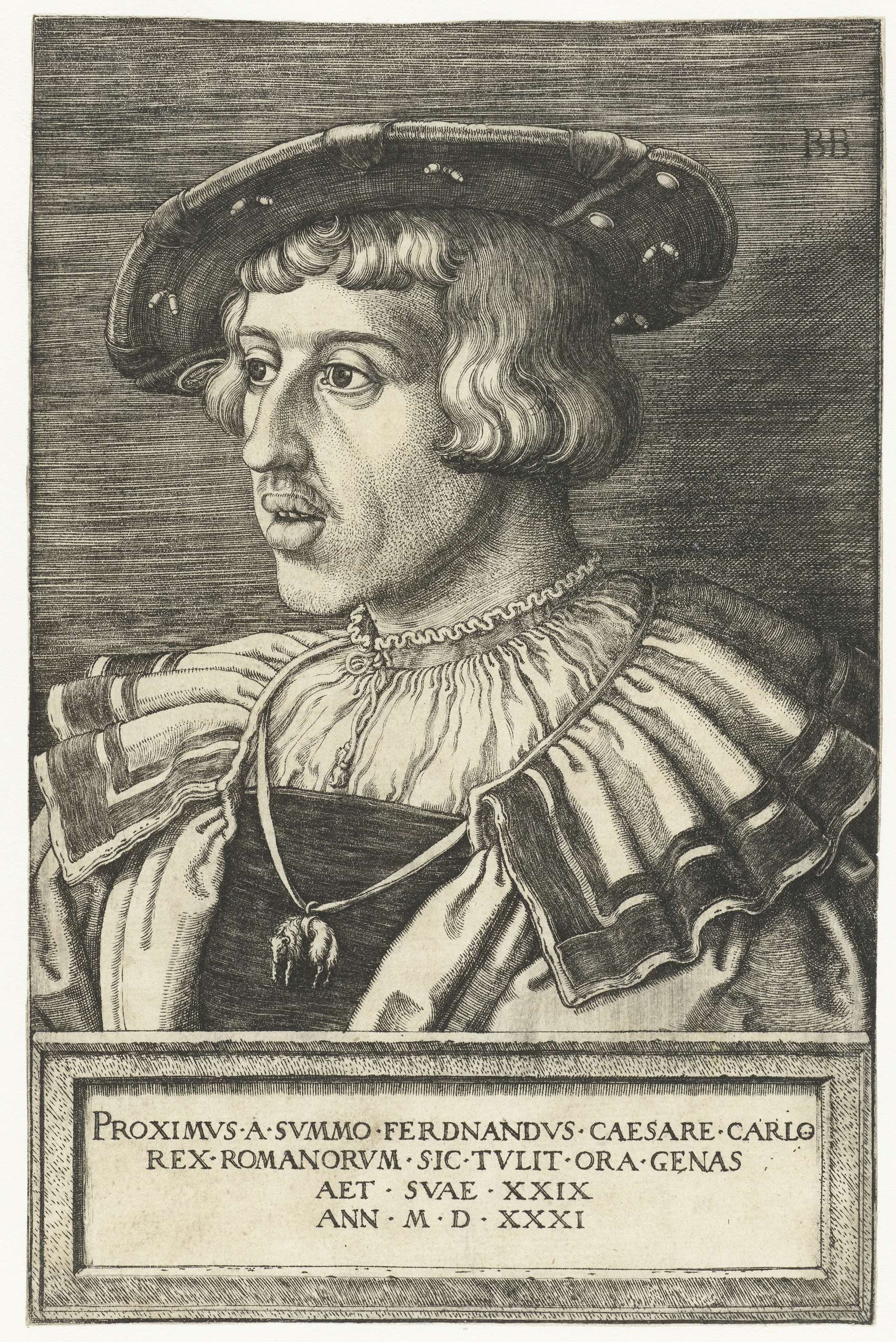
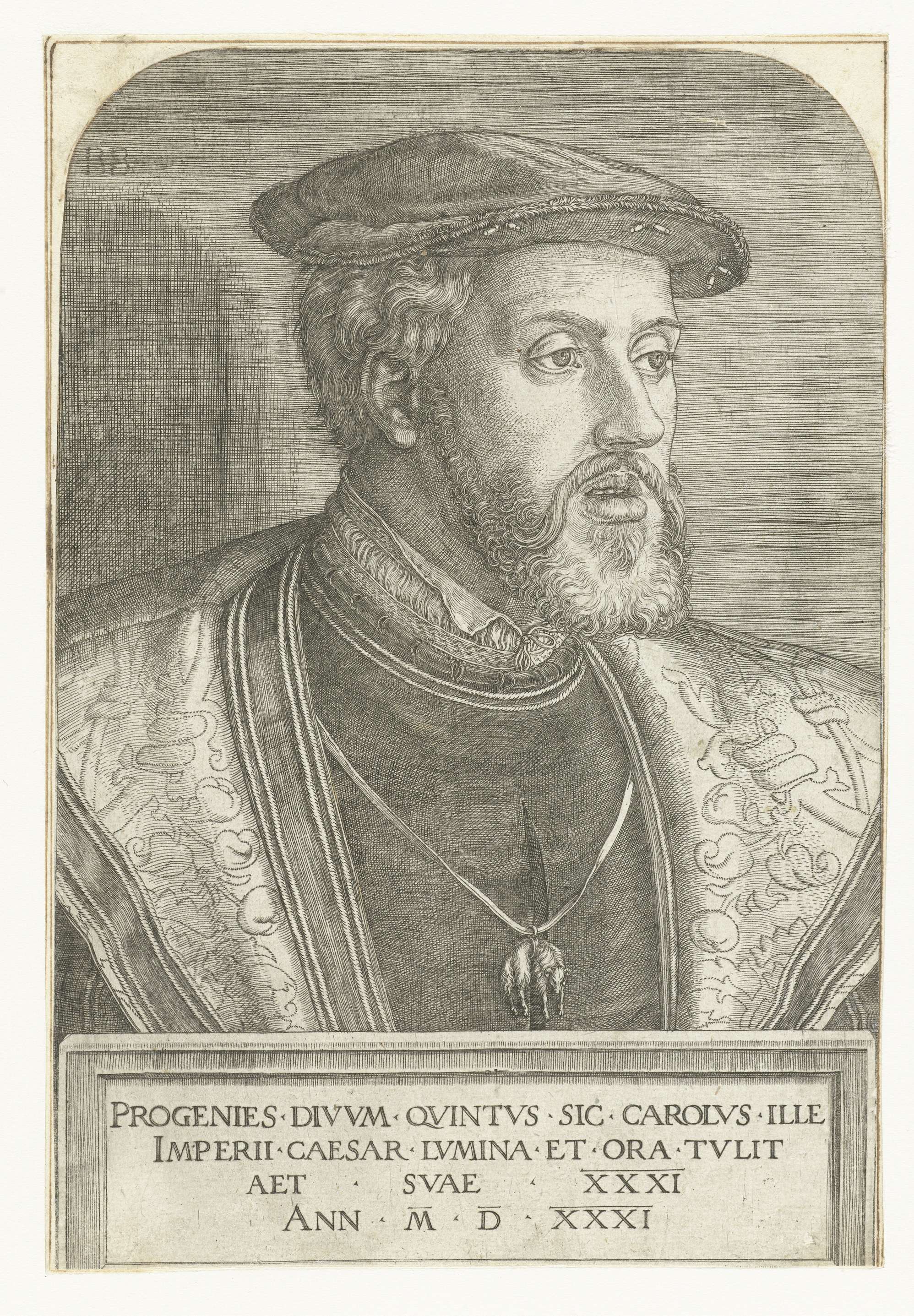
Did the painter know this moment would outlive them? In the quiet intensity of Portret van Keizer Ferdinand I, the viewer is drawn into a world where power, lineage, and artistry converge. Look to the left at the emperor’s stern gaze, his eyes piercing through the canvas with an unwavering authority. The rich colors of his ornate garments—a deep crimson lined with gold—contrast sharply against the muted background, highlighting his social standing. Notice how the light delicately caresses the intricate details of his collar, drawing attention to the craftsmanship that elevates his figure.
Every brushstroke captures not just his likeness but the essence of his reign, creating a harmonious balance between man and monarch. Beneath the surface of this regal facade lies a tension between vulnerability and power. The emperor’s slightly furrowed brow hints at the weight of responsibility he bears, as if he is acutely aware of the legacy he must uphold. The ornate decorations framing him evoke both admiration and a sense of isolation, suggesting the inherent loneliness of leadership in an era marked by political upheaval.
Every detail—his posture, the folds of fabric, the soft play of light—becomes an emblem of the complex interplay between strength and fragility. Barthel Beham painted this portrait in 1531, during a transformative period in European art. Working in Nuremberg, he was part of the Northern Renaissance, where the influence of humanism was reshaping artistic expression. In this era, the demand for portraiture was rising, reflecting a burgeoning interest in individual identity amid the shifting tides of political power and cultural renaissance.