De arts en de Dood — History & Analysis
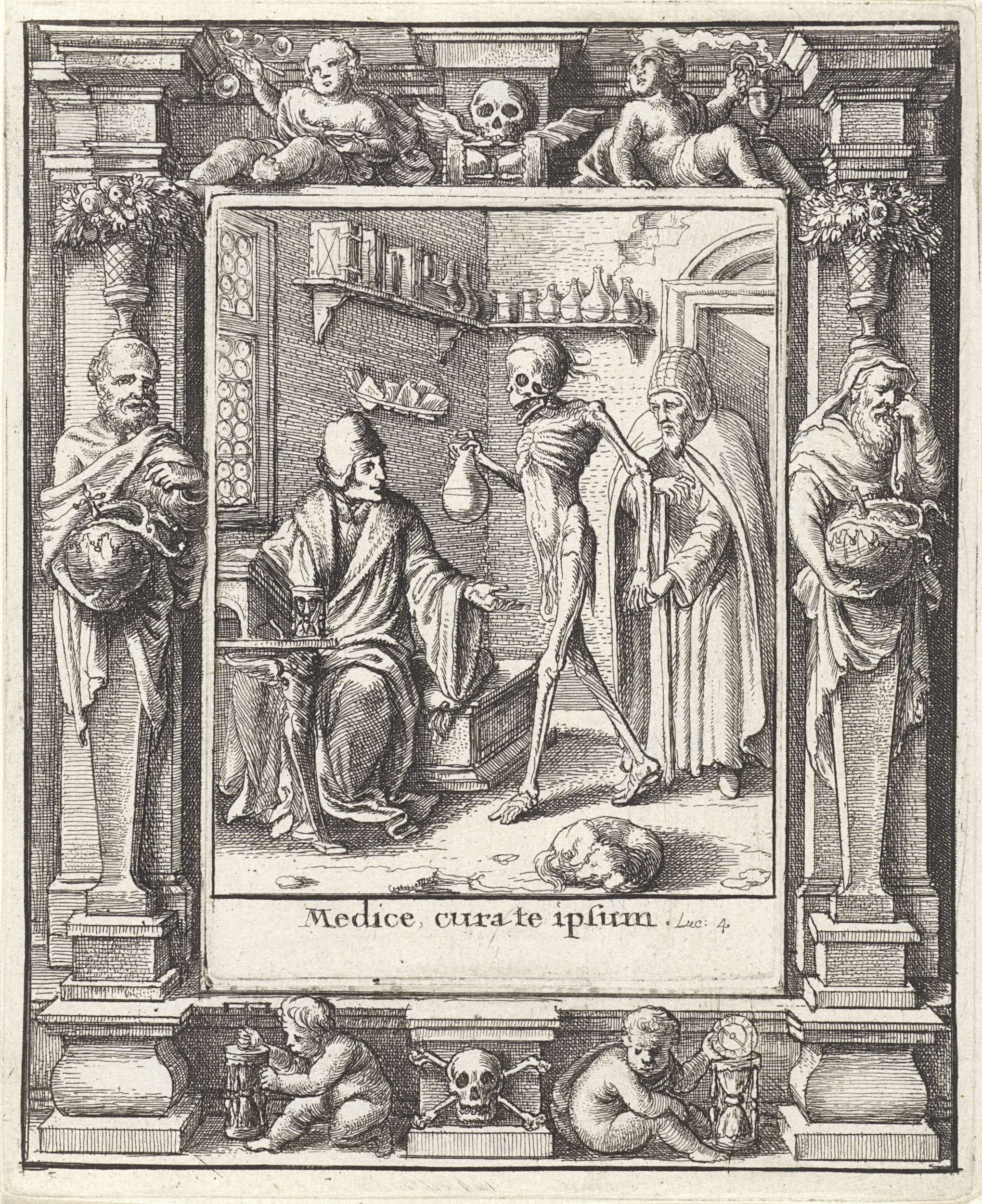
What if beauty was never meant to be finished? In the delicate interplay of art and mortality, a revelation unfolds within De arts en de Dood, inviting contemplation of life's transient nature. Look to the center of the composition, where the graceful figure of Death looms, cloaked and skeletal, yet strangely serene. The vibrant contrast of life surrounds this figure, with a multitude of artistic tools scattered across the ground: brushes, palettes, and scrolls, suggesting a dialogue between creation and destruction.
Notice how the light gracefully transitions from the warm hues of the artist’s world to the chilling shadows cast by Death’s embrace, unveiling the inevitable fate that awaits all creators. The juxtaposition of life’s vibrancy against the still inevitability of death encapsulates a poignant tension. The scattered tools signify the unfinished work of the artist, hinting at the unfulfilled potential of every creative endeavor. As the viewer's gaze travels from the lively instruments to the ominous presence of Death, a profound question arises: can beauty truly endure, or does it inevitably yield to the passage of time?
Wenceslaus Hollar crafted De arts en de Dood in 1651 in England, during a time of significant upheaval and change in the art world and his own life. The artist, originally from Bohemia, found himself amidst the cultural currents of the English Civil War, exploring themes of mortality and the human condition. This work reflects not only Hollar's personal grappling with life and death but also a broader discourse in art, as creators sought to immortalize their fleeting existence through their craft.