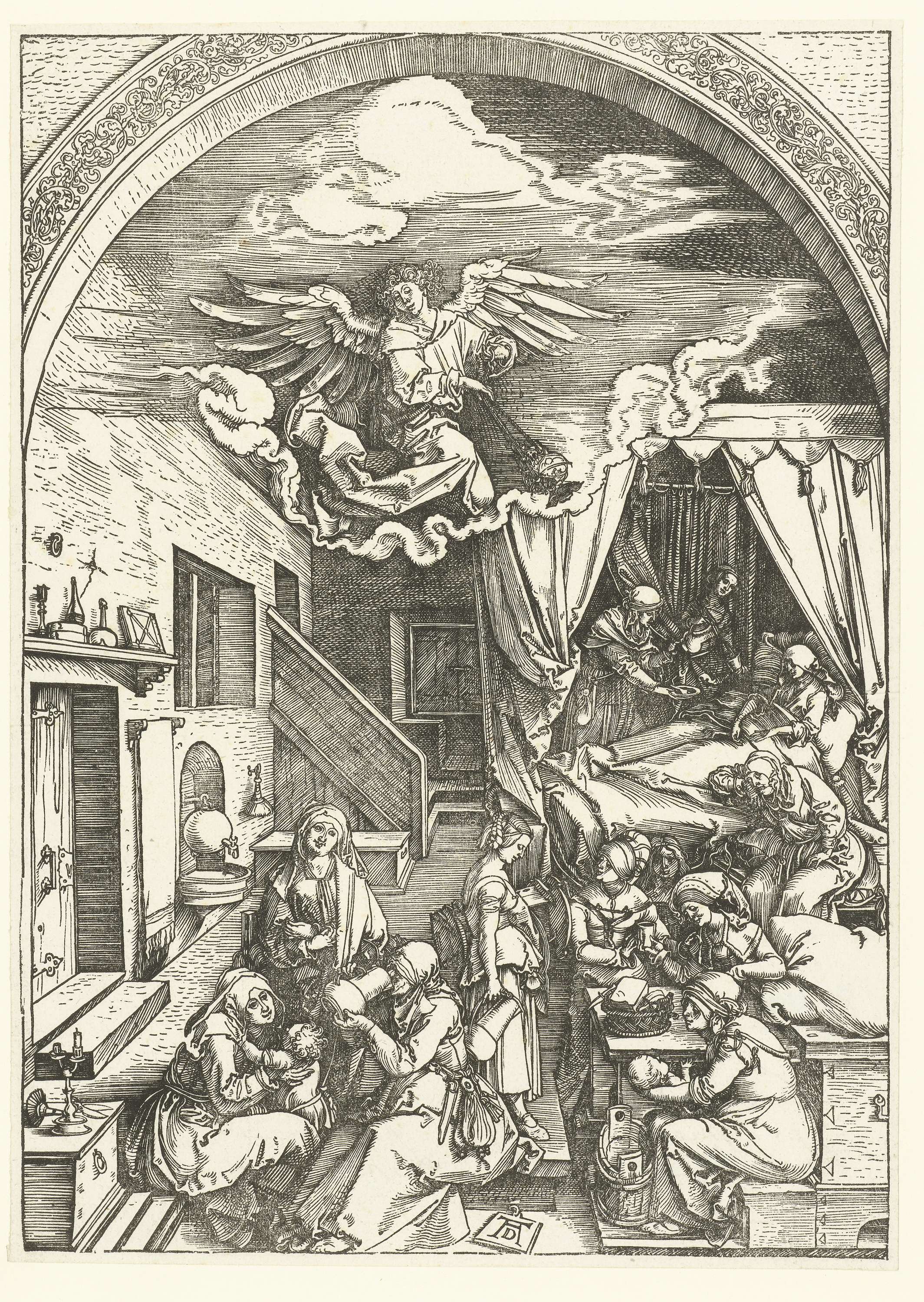
Can paint confess what words never could? In *De geboorte van Maria*, the delicate interplay of figures and symbols invites viewers into a profound contemplation of birth, divinity, and humanity. Look to the central figure, the Virgin Mary, where gentle contours and warm hues create an immediate connection. The soft light illuminating her face contrasts with the dark, shadowy spaces around her, emphasizing her significance. Notice how the surrounding figures, each with a distinct posture and expression, offer a sense of reverence and intimacy. The careful arrangement and balanced composition guide the viewer’s eye across the canvas, revealing layers of meaning embedded in the details. As you explore, consider the rich symbolism: the serene expression of Mary juxtaposed with the chaotic elements of her birth narrative. The presence of the midwife and angel evokes the tension between the earthly and the divine. The flowing drapery frames the scene, echoing the theme of balance within the chaos of life and creation, suggesting that beauty can emerge even from tumult. Each element, meticulously rendered, speaks to a harmony that transcends the surface. Dürer created this work between 1501 and 1505, during a period when the Northern Renaissance was thriving, marked by a growing interest in naturalism and human emotion. Living in Nuremberg, he was at the forefront of artistic innovation, blending technical mastery with profound philosophical inquiries. Amidst the socio-political shifts of the time, he sought to explore spirituality and the human condition, capturing a moment that resonates deeply across centuries.