De Heilige Familie met twee engelen — History & Analysis
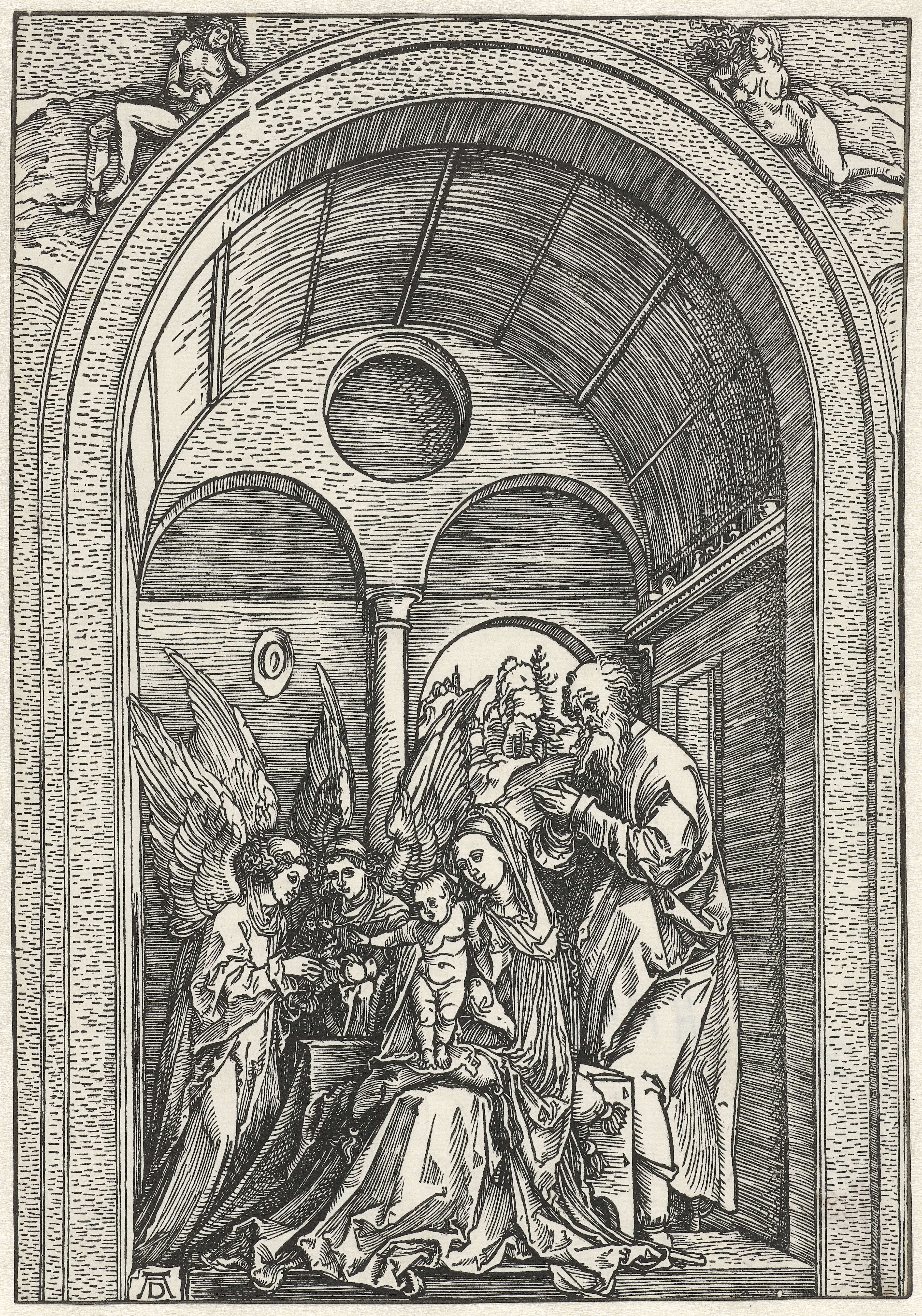
“Sometimes beauty is just pain, disguised in gold.” This reflection echoes through the delicate strokes and radiant hues of a masterpiece, where divine grace and human vulnerability intertwine. Focus first on the serene countenance of the Holy Family, centrally positioned in the composition. The figures are enveloped in a warm glow, their forms delicately rendered with a masterful interplay of light and shadow. Notice how Dürer employs rich, velvety colors, particularly the deep reds and luminous golds, to create a sense of both richness and intimacy. The angels, flanking the family with their ethereal presence, draw the eye to the delicate gestures of protection and reverence, infusing the scene with an air of tranquility. Yet, beyond the beauty lies a profound tension: the juxtaposition of innocence and the weight of impending sacrifice. The tender embrace of the figures contrasts sharply with the world outside their serene bubble, hinting at the struggles that await. The intricate details of their clothing, embroidered with a sense of care, further symbolize the connection between the divine and the earthly — a delicate balance of grace and burden. During 1503-1504, Dürer was at a pivotal moment in his career, returning to Nuremberg after extensive travels in Italy. This phase marked his deepening engagement with humanism and the Northern Renaissance, as he sought to merge naturalism with spiritual themes. The artwork stands as a testament to this exploration, reflecting both personal and societal shifts, as the artist navigated the complexities of his time while pushing the boundaries of artistic expression.