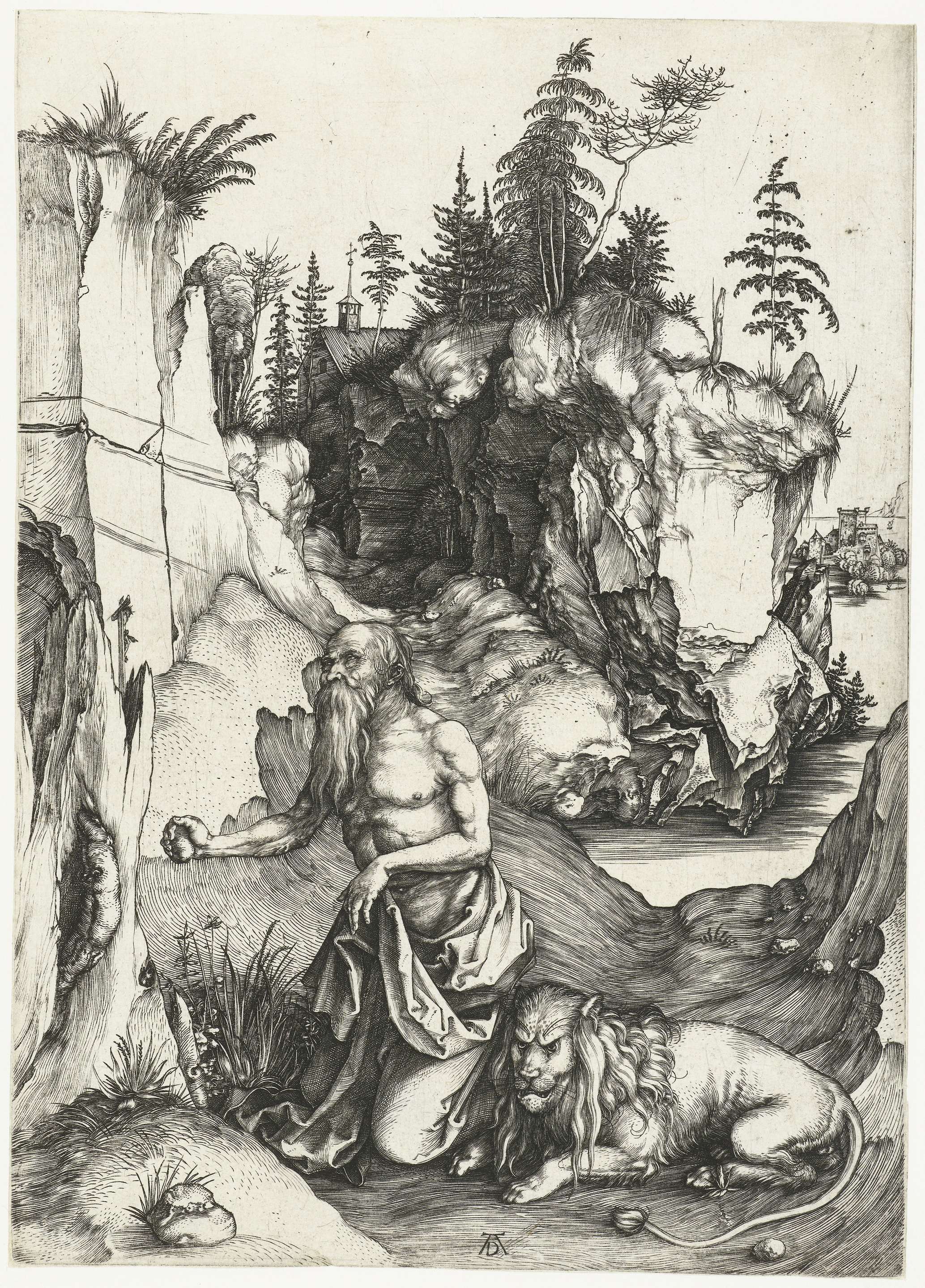
De Heilige Hiëronymus in de wildernis — History & Analysis
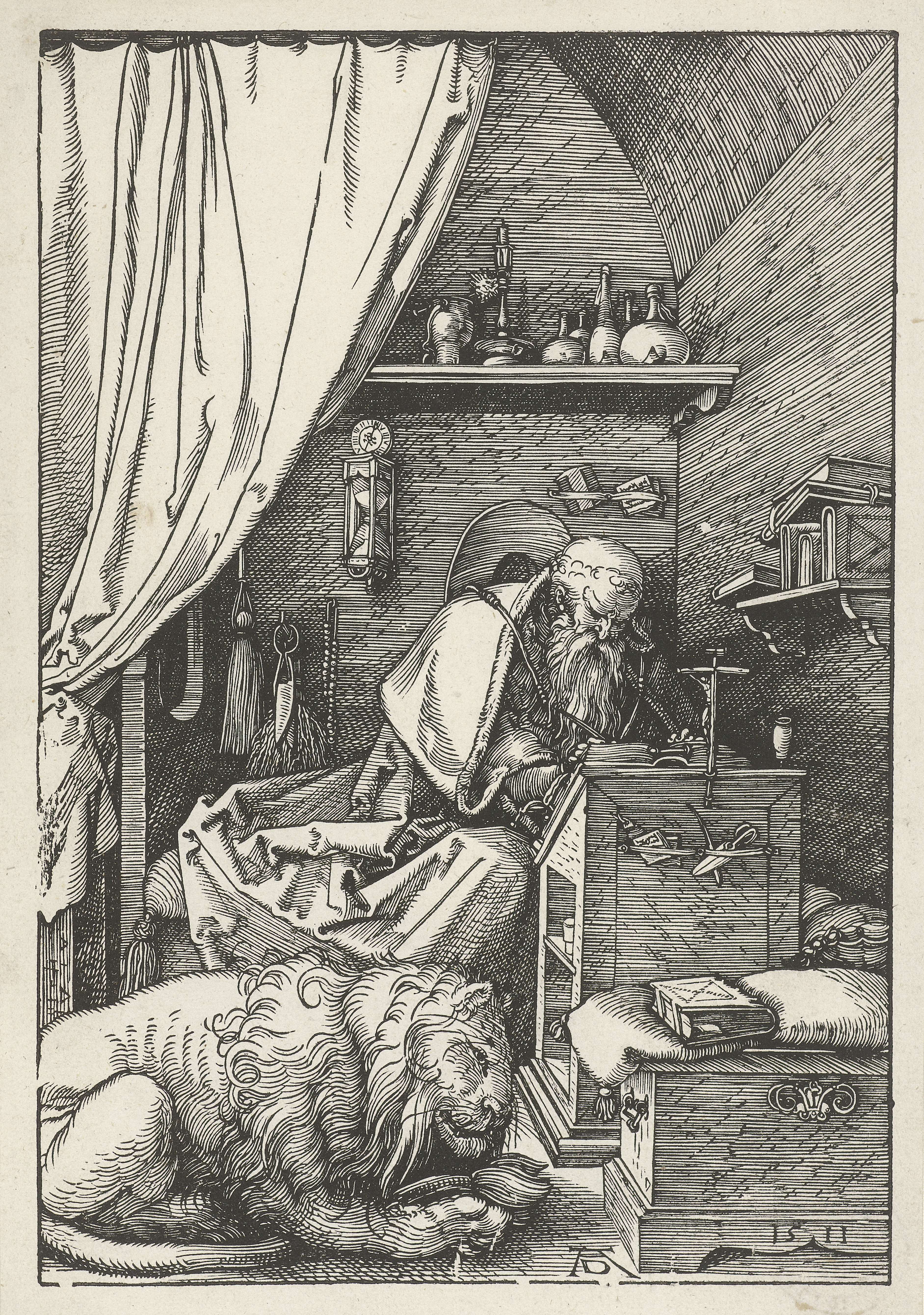
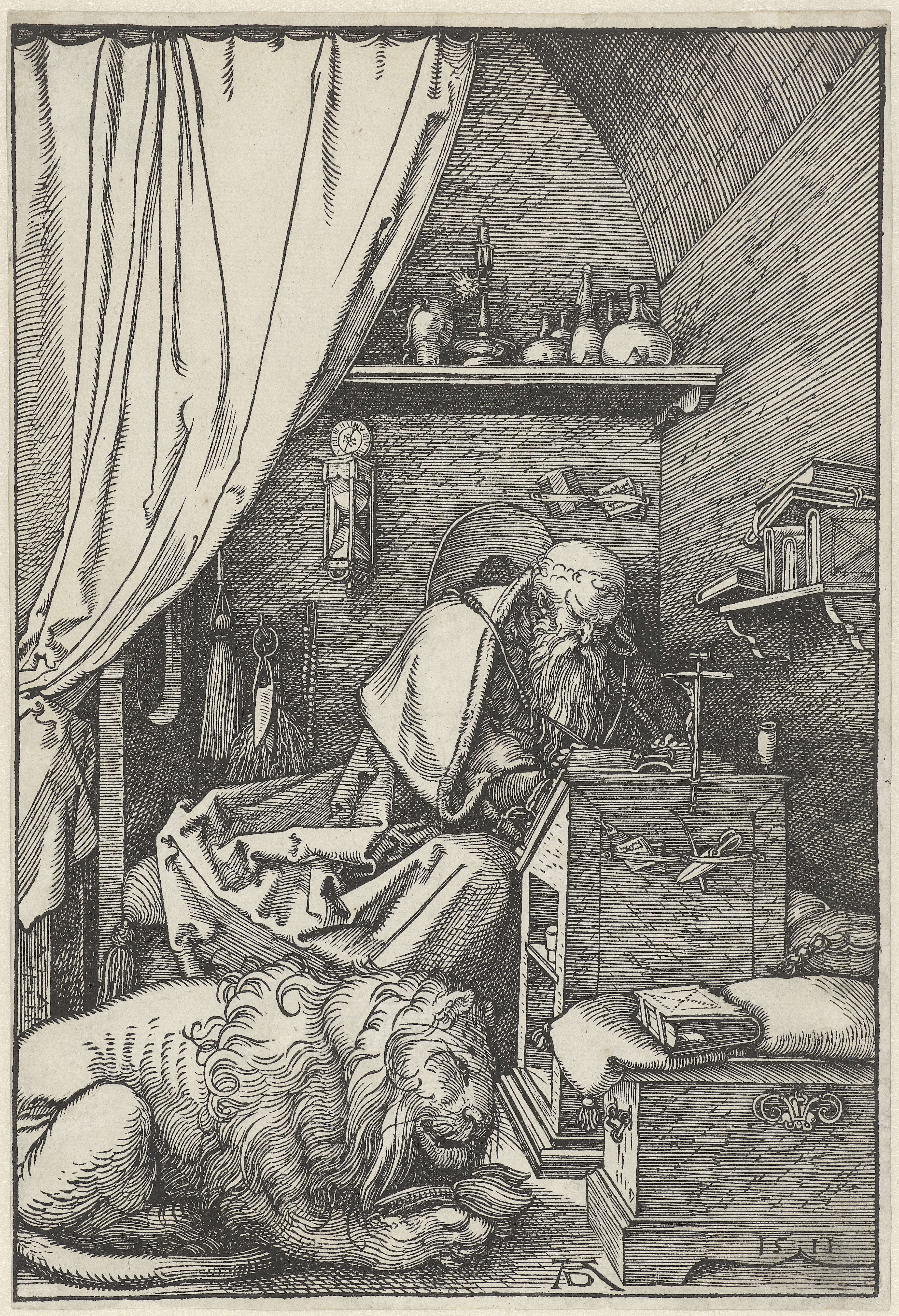
“Art reveals the soul when the world turns away.” In a time of upheaval, the heart of humanity beats quietly beneath layers of paint. This artwork transcends its era, presenting a moment of introspection that prompts us to reflect not only on the subject but also on our own souls amid chaos. Look toward the saint in the center, his solemn gaze directed toward the viewer, inviting you into his isolation. Notice the intricate details in the folds of his robe, rendered with a masterful precision that reveals Dürer’s deep understanding of texture and form. The muted palette, dominated by earthy tones, contrasts sharply with the vibrant green of the wilderness surrounding him, symbolizing the struggle between divine contemplation and the chaos of nature. In the quietude of this scene, the tension between solitude and divine insight unfolds. The wild landscape embodies both a refuge and a challenge, suggesting that true understanding requires one to confront the wildness within. Hieronymus’s book, open in his lap, is not merely a text; it serves as a lifeline to divine wisdom, hinting at the transformative power of knowledge amidst turmoil. Each element, from the flora to the distant mountains, speaks to the duality of enlightenment and the isolation that often accompanies it. During the years 1494 to 1498, Dürer found himself deeply influenced by the Renaissance, marked by intellectual revival and spiritual questioning. Working in Nuremberg, he was navigating his own artistic evolution, entwined with the rising tides of religious reform and burgeoning humanism. This painting reflects his engagement with these themes, capturing the essence of a moment when art began to mirror the complexities of human existence.