De Heilige Hiëronymus in zijn studeervertrek — History & Analysis
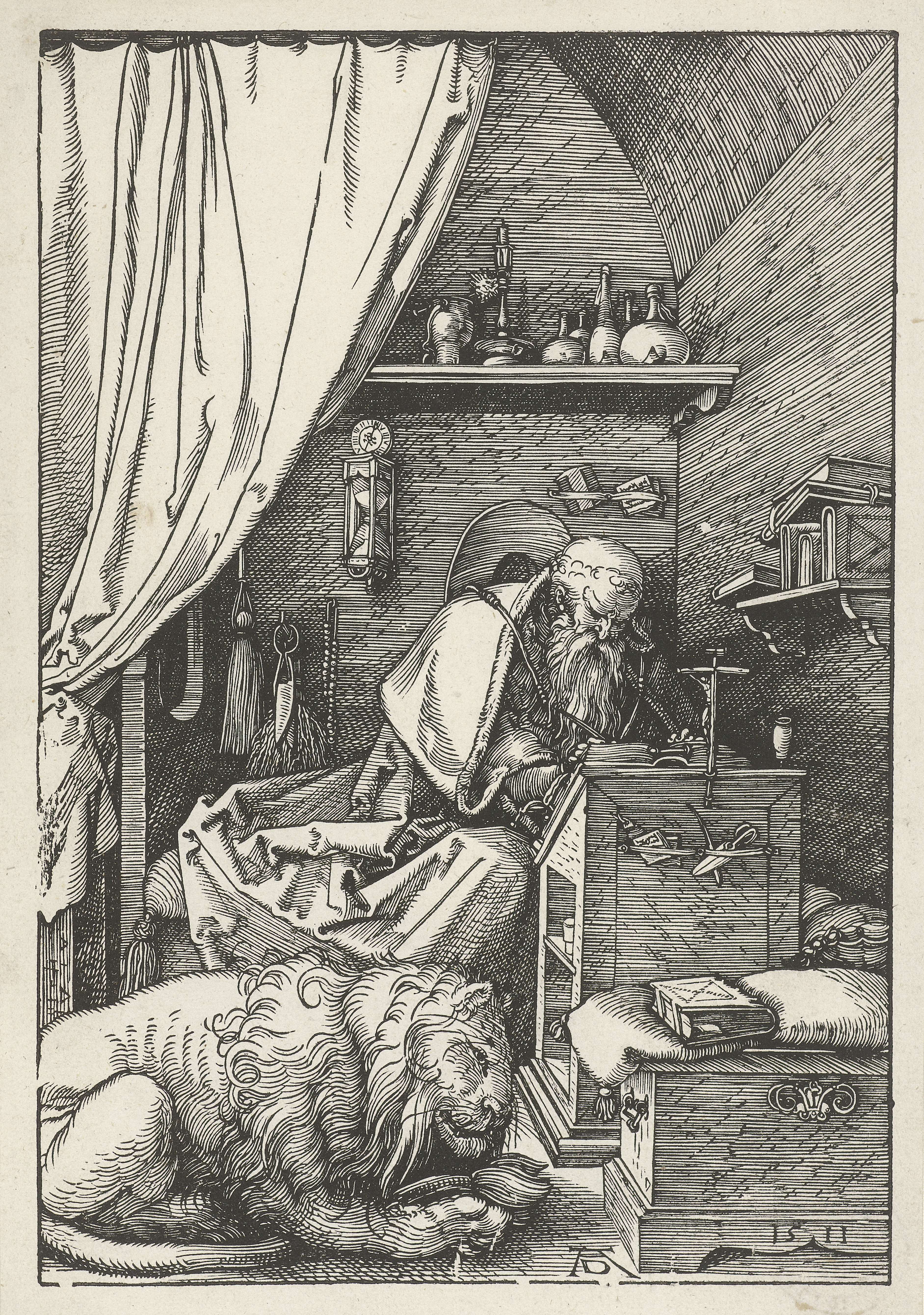
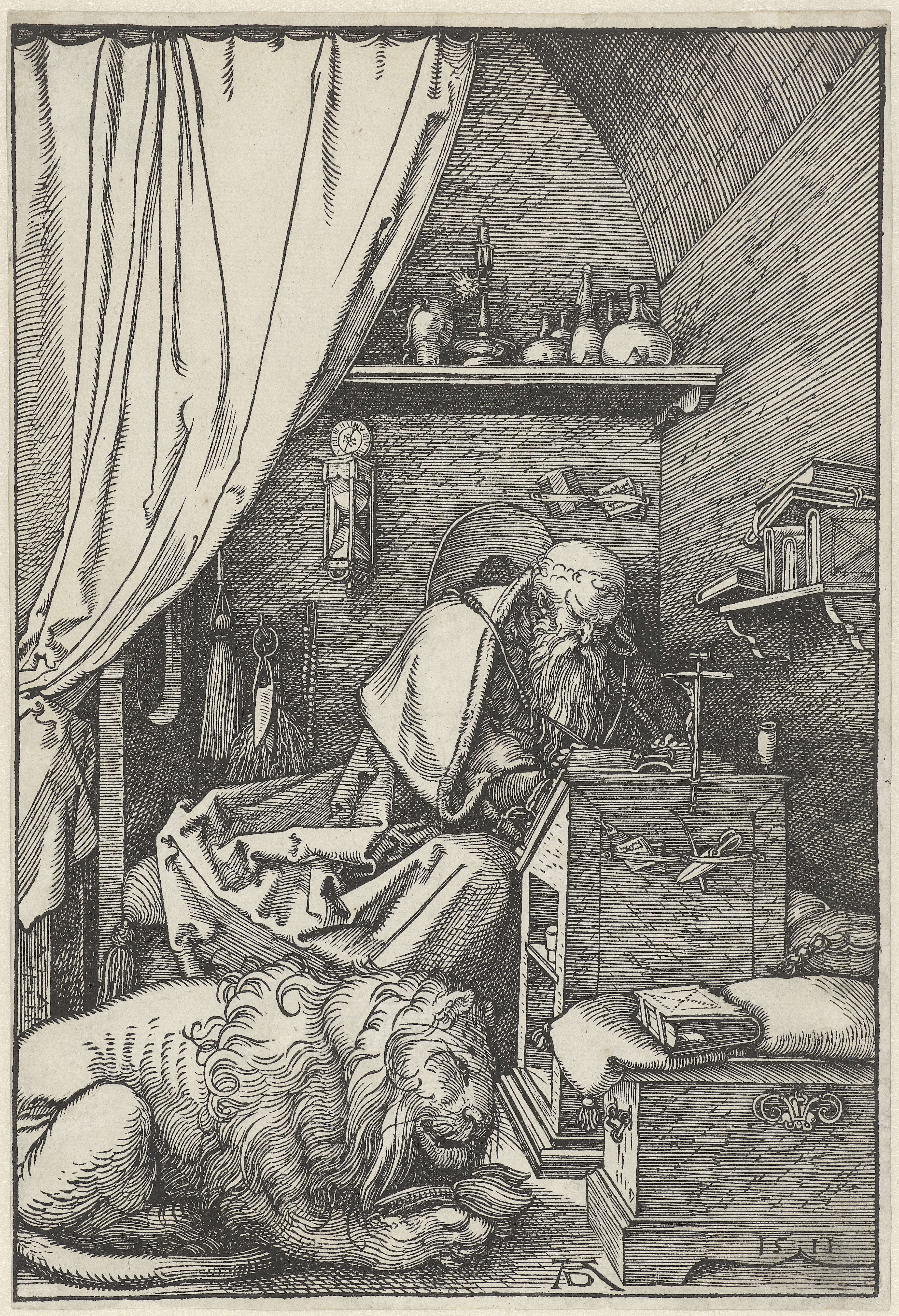
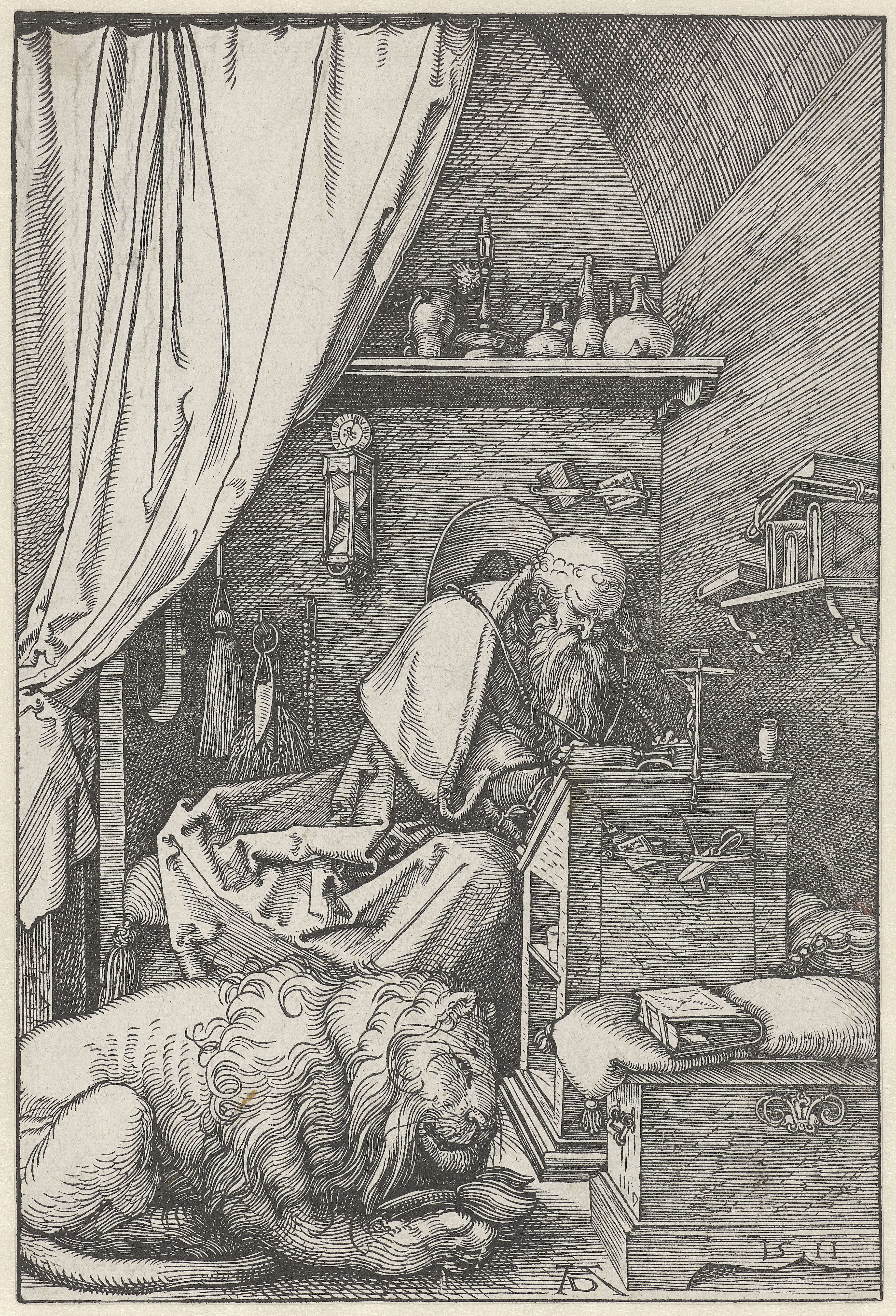
“Between color and silence, truth hides.” In Albrecht Dürer's *De Heilige Hiëronymus in zijn studeervertrek*, the stillness of a scholar's room belies the turbulent world outside. Here, the inner sanctum of St. Jerome echoes with tranquil contemplation, yet hints at a deeper, unsettling tension. Focus on the figure of St. Jerome, sitting in front of a sturdy wooden desk, his solemn expression illuminated by the soft glow of candlelight. Look closely at the scrolls and books scattered around him; each tome, a vessel of knowledge, suggests the weight of wisdom and the burden of inquiry. The muted earth tones of the room contrast with the vivid red of his cloak, symbolizing both the passion of his studies and the sacrifices made for truth, an invitation to explore the conflict between the pursuit of knowledge and the violence of the world beyond. Hidden within this serene setting are the echoes of violence that reverberate through the conscious mind of the scholar. The lion, emblematic of St. Jerome's legend, stands watchfully at his feet, a reminder of the wildness that once roamed the earth—tamed yet forever echoing the chaos of nature. The delicate balance between the comfort of knowledge and the brutality of existence rests heavily upon the viewer, urging reflection on the inner struggles faced by those seeking enlightenment. Dürer created this artwork in 1511 during a period of profound change in Europe, marked by the rise of humanism and the Reformation. Working in Nuremberg, he was influenced by the growing interest in classical texts and the turmoil of societal upheaval. This piece exemplifies the fusion of meticulous detail and emotional depth that characterizes his work, serving as a poignant moment in the dialogue between art, faith, and knowledge during the Renaissance.