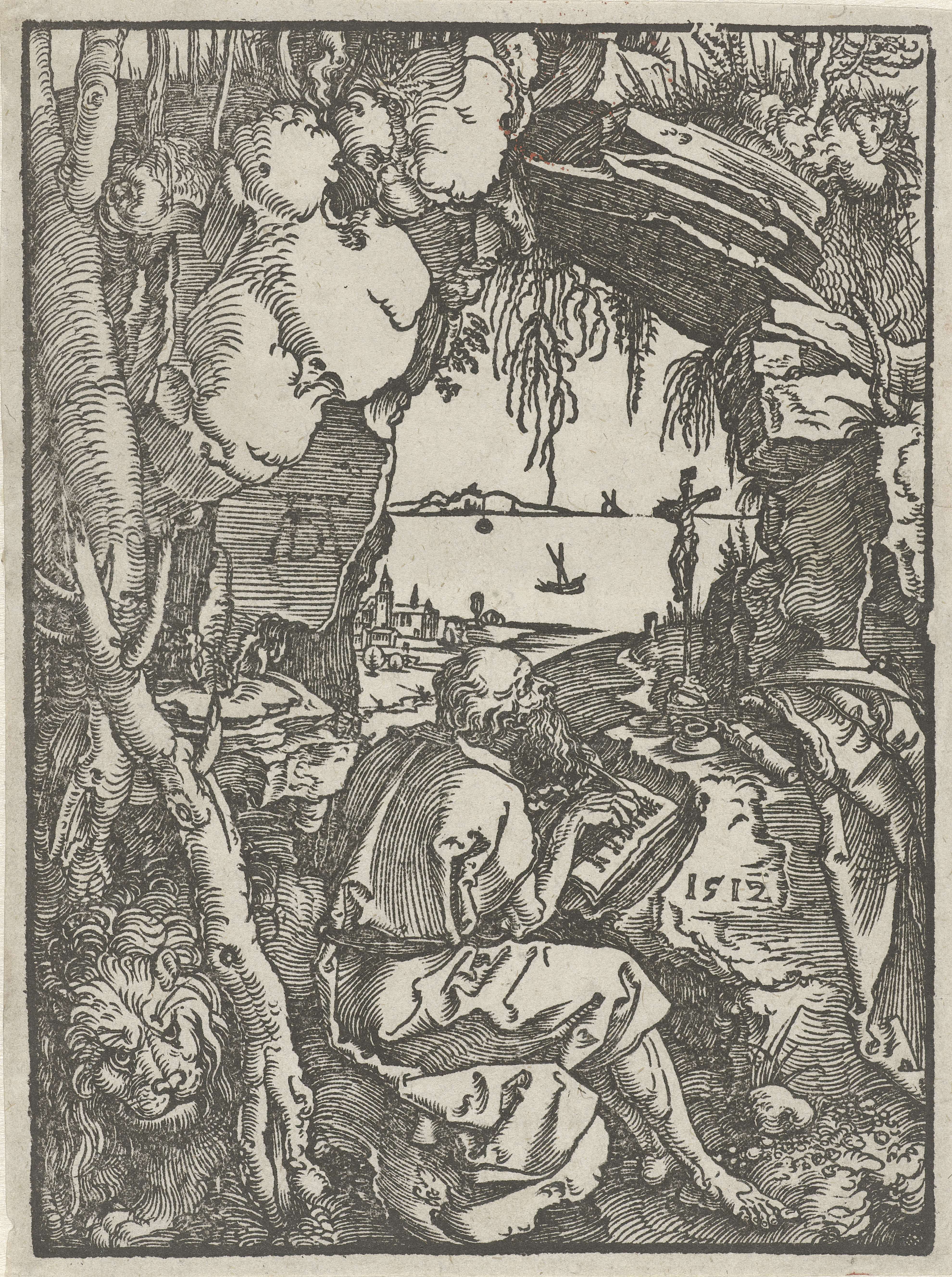
De Heilige Hiëronymus schrijvend in een grot — History & Analysis
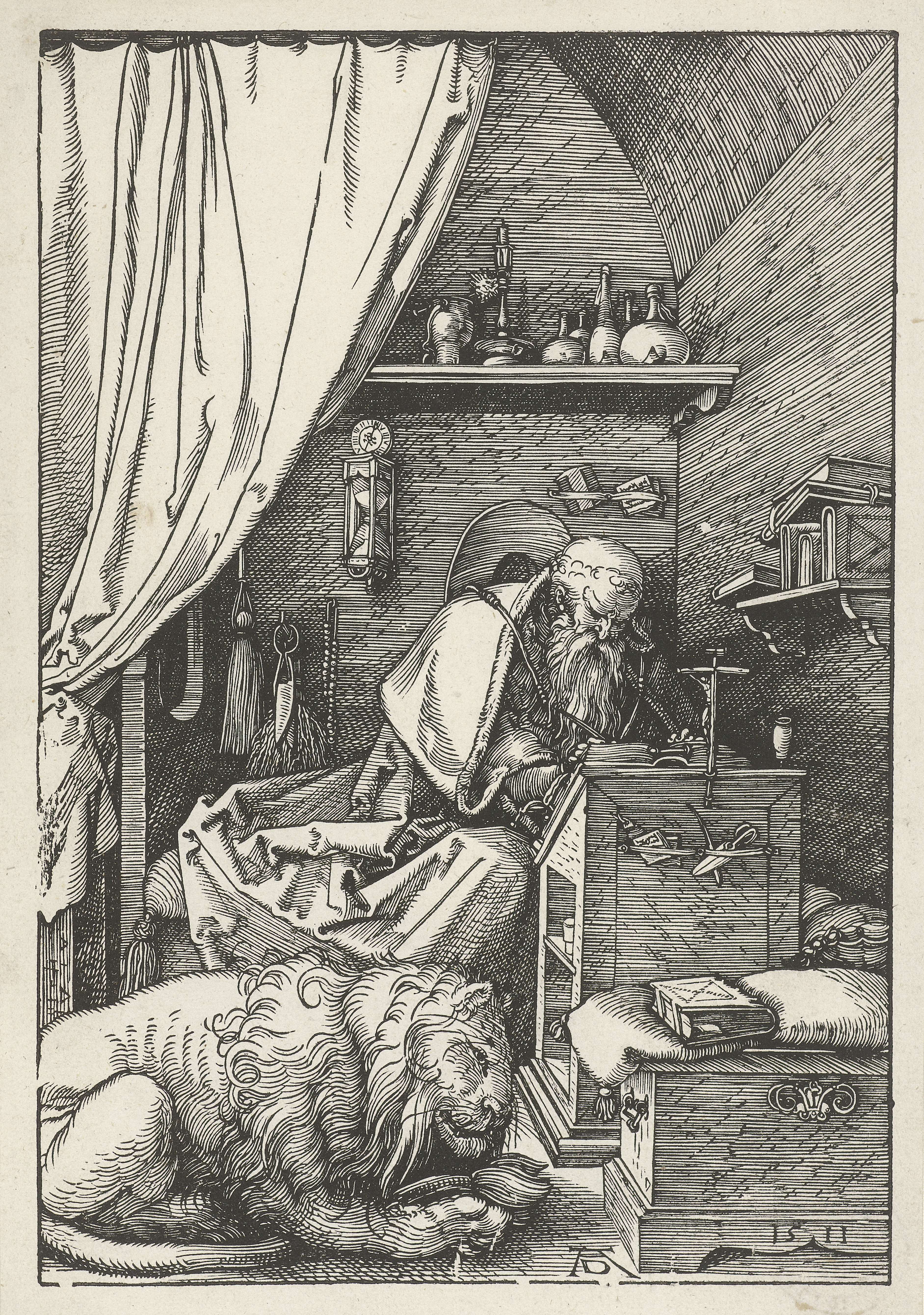
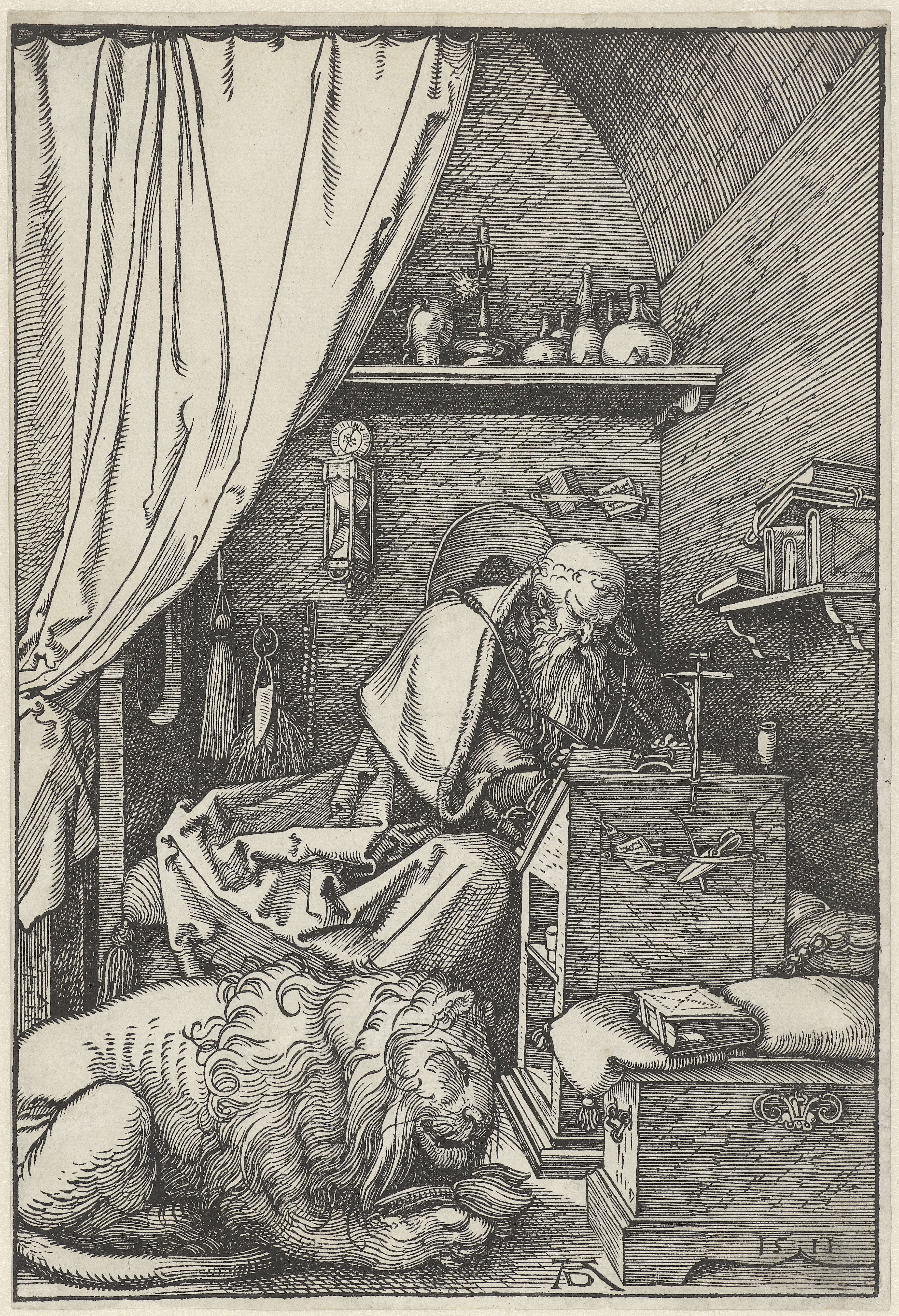
What if beauty was never meant to be finished? In *De Heilige Hiëronymus schrijvend in een grot*, Albrecht Dürer invites us to contemplate the tension between the divine and the earthly, captured in a moment of profound introspection. As you gaze upon this intricate work, look to the left where Saint Jerome is hunched over his writing desk, his quill poised over parchment. The deep shadows envelop him, contrasting with the soft luminescence of his halo, guiding the viewer's eye to the delicate details of his expression. Notice how the texture of the stone surrounding him articulates a sense of isolation, while the warm tones of the scroll suggest the weight of knowledge he carries. Dürer's masterful use of line and shade evokes a palpable stillness, inviting the viewer into this sacred space. The painting holds layers of meaning beneath its surface. The secluded grotto symbolizes both sanctuary and solitude, reflecting the duality of human existence—seeking divine wisdom while grappling with worldly distractions. Jerome’s weary gaze and the cluttered desk speak to the tension between enlightenment and the burdens of intellect. Furthermore, the juxtaposition of his saintly attributes with the rawness of the cave underscores the complexity of faith amidst human experience. In 1512, Dürer was in Nuremberg, a pivotal period during which he was deeply engaged with his own artistic evolution and the broader humanist movement. The Renaissance was flourishing, and artists like him were redefining the relationship between man and the divine, pushing the boundaries of both art and philosophy. This piece exemplifies his commitment to exploring profound themes while mastering techniques that would influence generations.