De Heilige Stefanus, Sixtus en Laurentius — History & Analysis
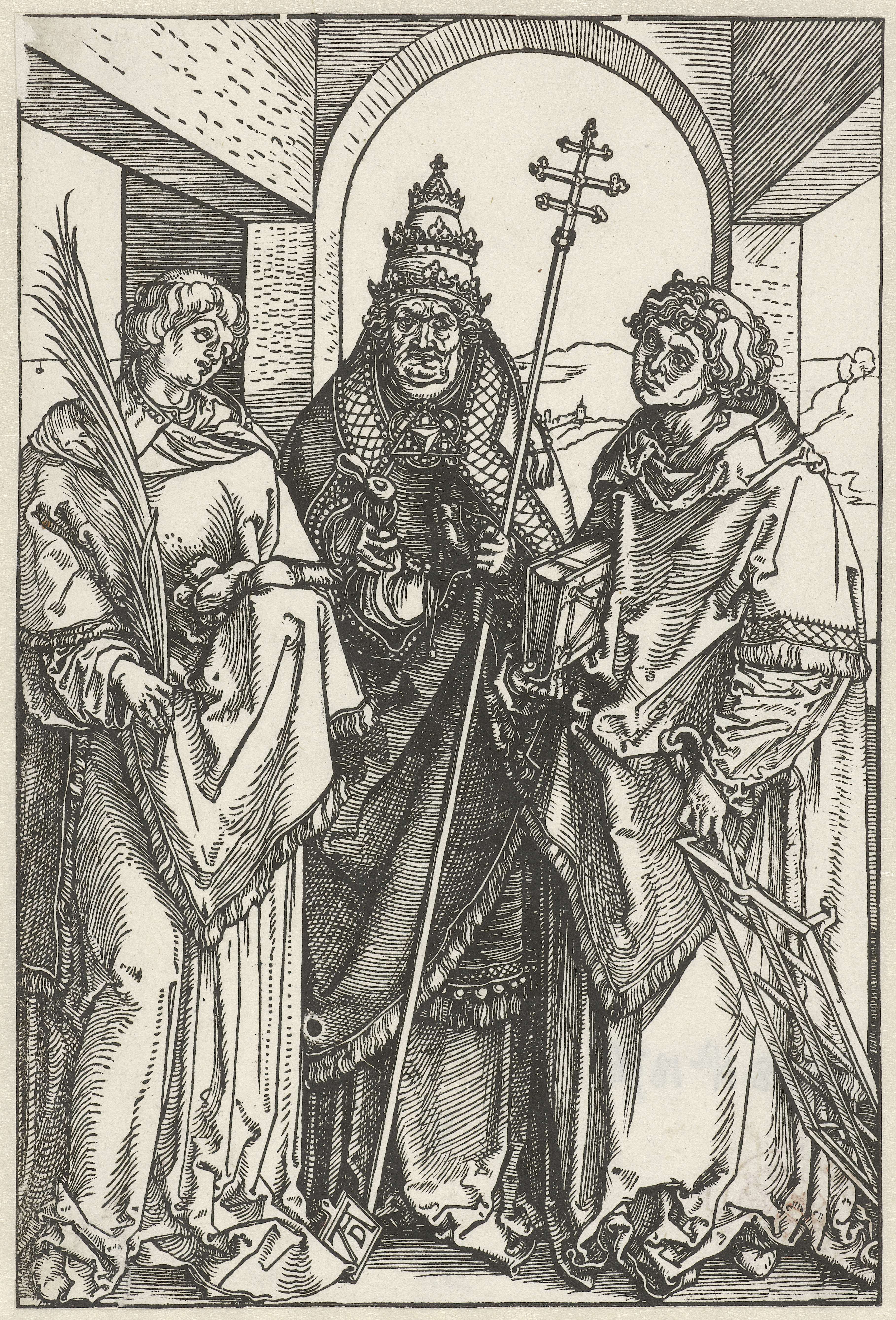
Can beauty exist without sorrow? In *De Heilige Stefanus, Sixtus en Laurentius*, Albrecht Dürer delves into the profound emptiness that shadows even the most serene moments of devotion. Look to the left where Saint Stephen, draped in rich reds and golds, stands poised with a heavenly calm. His gaze, both steady and contemplative, draws you in, while the delicate strokes of Dürer’s brush render the intricate details of his flowing garments. Notice how the light cascades from above, illuminating the serene faces of the saints surrounding him, creating a contrast of warmth against the cooler tones of the background. The triangular composition directs your eyes upward, suggesting an elevation of the spirit beyond earthly ties. The work resonates with hidden tensions between the sacred and the human experience. Each saint carries their unique burdens—Stephen’s martyrdom, Sixtus’s serene acceptance of fate, and Laurentius's quiet strength—reflecting the struggles that accompany faith. This interplay of light and shadow throughout the figures evokes a sense of longing, illustrating that within moments of beauty, an undercurrent of sorrow persists. The emptiness in their expressions hints at stories untold, inviting viewers to ponder their own journeys of loss and resilience. Dürer painted this piece between 1504 and 1505, during a pivotal period in Northern Renaissance art where the exploration of human emotion began to gain prominence. At this time, he was establishing his reputation in Nuremberg, navigating the complexities of a rapidly changing artistic landscape influenced by both spirituality and emerging humanism. This work exemplifies his mastery of detail and depth, merging the sacred with the human condition in a profound exploration of emotional resonance.