De rijke man en de Dood — History & Analysis
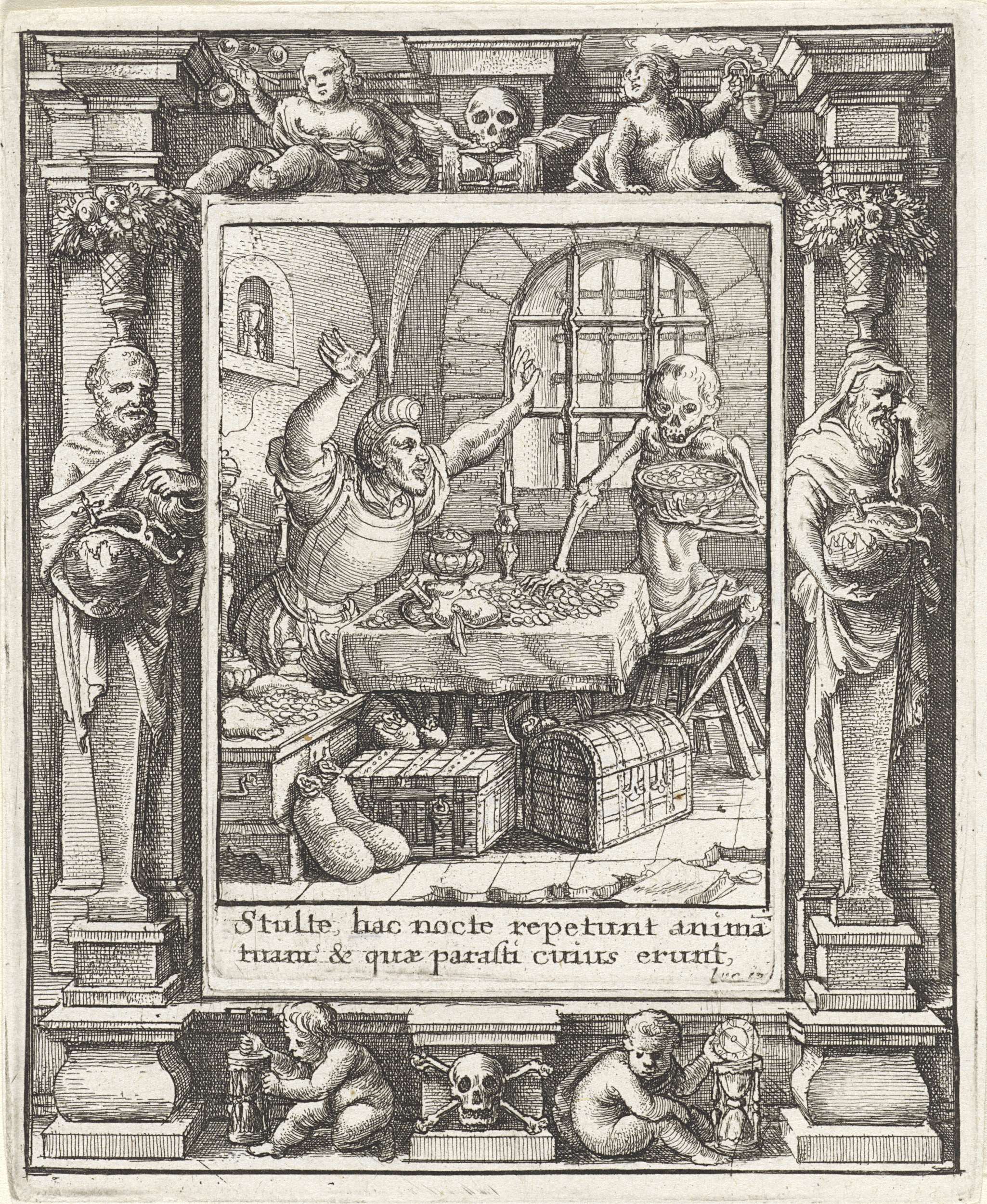
Can paint confess what words never could? In Wenceslaus Hollar's De rijke man en de Dood, the question of destiny looms large, captured in a single, poignant moment that echoes through time. Start your exploration by focusing on the somber figure of the rich man, seated at the table, his lavish surroundings contrasting starkly with the spectral presence of Death hovering nearby. Notice how the opulent details of gold and fabric serve only to amplify his imminent doom, while the pallid specter stands in shadow, an ominous reminder of mortality.
The composition invites your gaze to flow from the wealth surrounding the man to the chilling inevitability of his fate, rendered in muted tones that emphasize the gravity of the scene. Beyond the immediate clash of wealth and death lies a deeper commentary on the transience of life and material wealth. The rich man's lavish attire, adorned with intricate patterns, belies the fragility of his existence, suggesting that fortune is but a fleeting illusion. The stillness of the room contrasts with the urgency of Death's presence, creating an unsettling tension that forces the viewer to confront their own relationship with destiny.
Subtle details, like the flickering candlelight, hint at the illumination of truth amidst darkness, as both figures are caught in a moment suspended between life and the inevitable. In 1651, Hollar created this piece amidst a Europe grappling with the aftermath of the Thirty Years' War. As an artist who had witnessed the devastation and the stark realities of life and death, he infused this work with a profound understanding of human fragility. Living in England, having fled his native Bohemia, Hollar's experiences undoubtedly shaped his exploration of themes concerning mortality and the ephemeral nature of existence, which resonate powerfully in this haunting scene.