De Spaanse, Engelse en Hollandse vloten voor Deal (rechterhelft), 1639 — History & Analysis
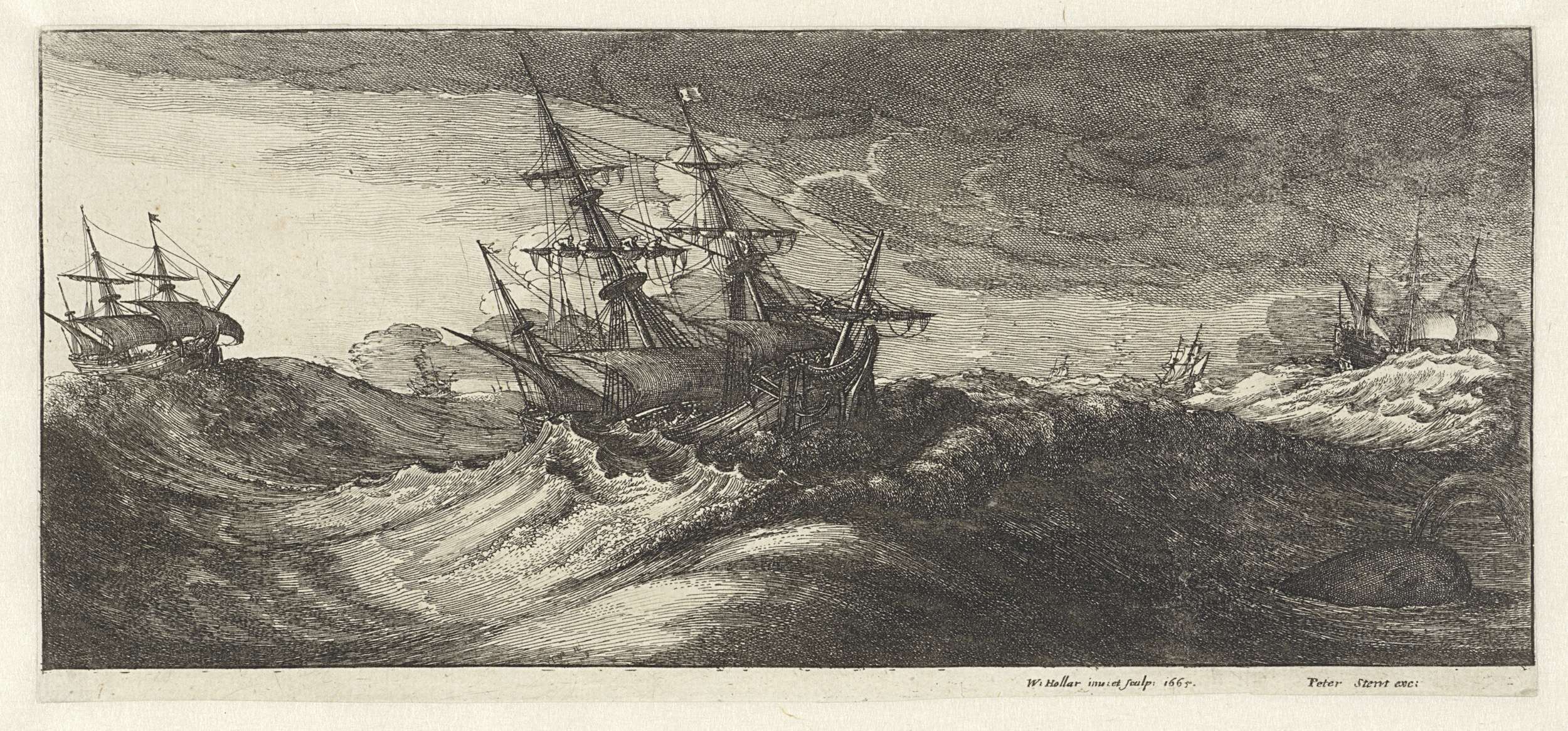
When did color learn to lie? In this curious interplay of light and shadow, the canvas invites us to question the very nature of reality and perception. Look to the center where the vessels gather, their sails taut against a backdrop of pale azure sky. Hollar’s meticulous etching technique captures the intricate rigging and the delicate undulations of the water, drawing your eye to the vivid contrasts between the white sails and the darkened hulls.
Notice how the ships form a diagonal line, their movement suggesting a narrative of impending confrontation or collaboration, framed by the gentle curves of the horizon. Each vessel tells a story, a whisper of ambition and rivalry. The English ship, proud with its flag raised high, stands in stark reminder of naval power, while the Dutch vessels seem more subdued, hinting at a history of trade and conflict. The play of light across the water reflects not just the physical but the emotional undercurrents of the time—triumph, trepidation, and the dreams afloat amidst the looming uncertainties of the sea.
In 1640, Wenceslaus Hollar was settling in London after fleeing his native Prague amid the Thirty Years' War. Engaging with the burgeoning maritime culture of England, Hollar embraced etching as a medium to document his observations of naval prowess. This work emerged during a time of growing naval rivalries, capturing not just a moment in maritime history but the undercurrents of a turbulent era that would shape Europe for centuries.