De terugkeer van de verloren zoon — History & Analysis
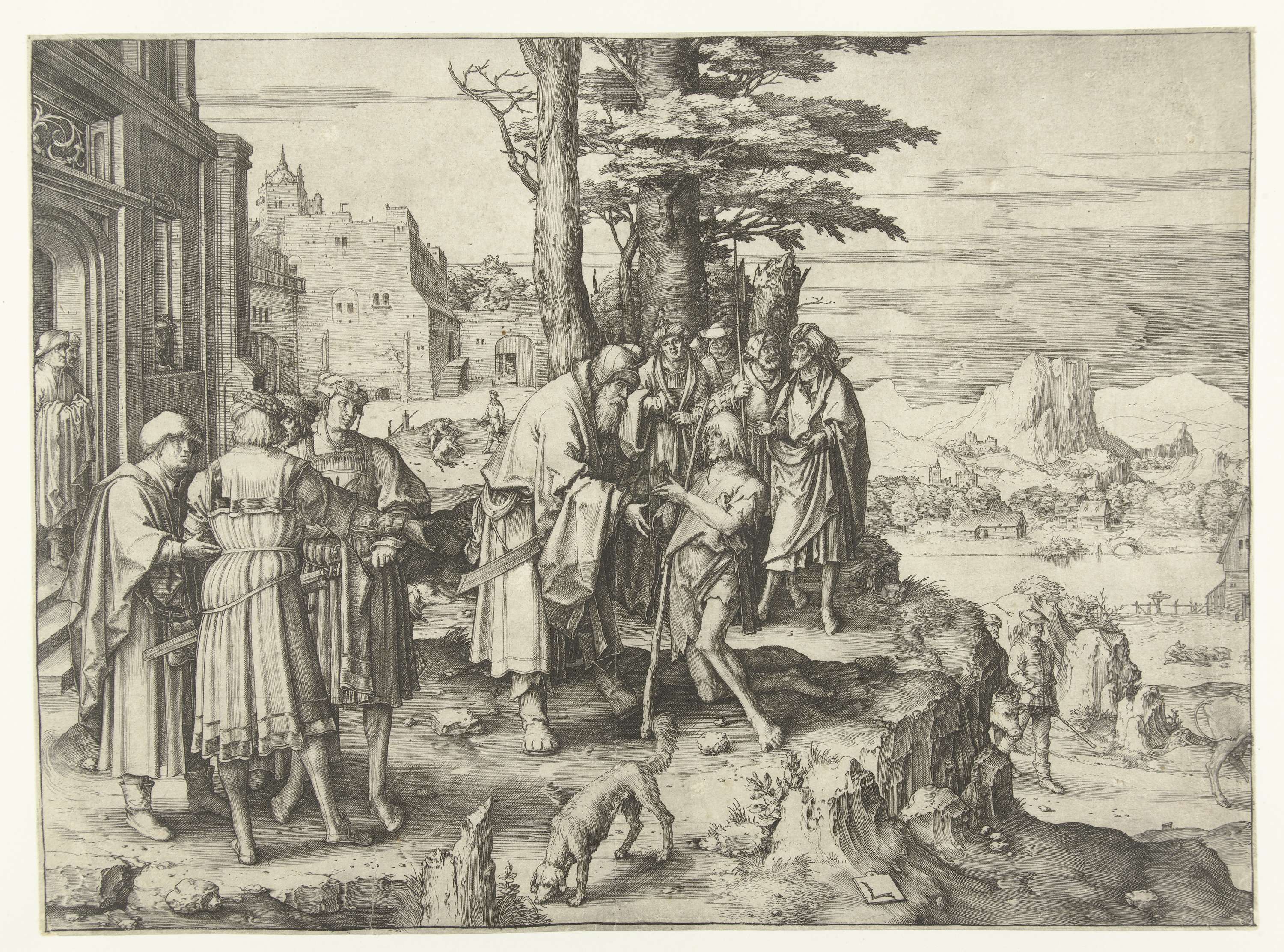
What if beauty was never meant to be finished? In the intricate details of this painting, one can sense the promise of redemption intertwined with the complexity of human relationships. Look closely at the center of the composition, where the embrace unfolds between the father and his son. The figures are enveloped in a warm, golden light, which seems to emanate from the son's weary, yet hopeful visage. Notice how the soft contours of their bodies contrast with the rigid, dark background, enhancing the emotional intensity of their reunion.
The surrounding figures, cast in shadow, silently witness the poignant moment, their expressions reflecting a blend of joy and sorrow, while the meticulous drapery and textures amplify the sense of depth. Delving deeper, one can observe the symbolism woven throughout the scene. The father's open arms signify unconditional love and forgiveness, while the son's tattered garments speak of his struggle and humility. The juxtaposition of light and dark not only highlights the emotional gravity of their reunion but also represents the broader human experience of redemption and faith.
Each detail, from the expressions to the fabric, serves as a testament to the intricate dance between loss and reconciliation. Lucas van Leyden created this profound work between 1508 and 1512 amid the flourishing of Northern Renaissance art. During this time, he was establishing his reputation as a master engraver and painter. The themes of forgiveness and familial bonds resonated deeply in an era marked by religious and social upheaval, reflecting a yearning for connection and understanding in a world often fractured by strife.