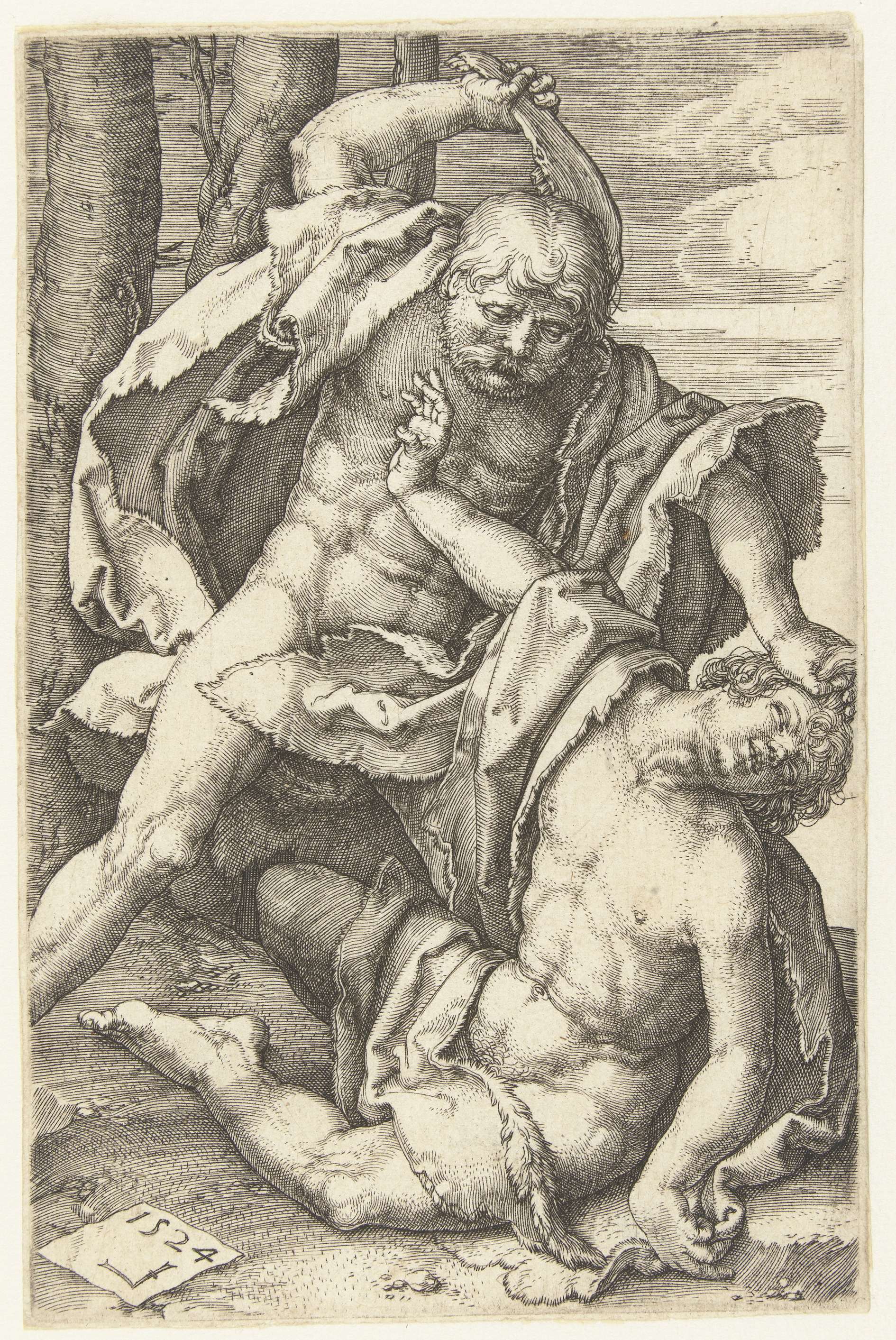
Who listens when art speaks of silence? In *Kaïn doodt Abel*, Lucas van Leyden captures a moment steeped in beauty and tragedy, a haunting tableau that transcends time and invites reflection on humanity’s darker impulses. Look to the left at the anguished face of Abel, who is cast in muted earth tones, contrasting starkly with the vivid reds and blacks surrounding him. This juxtaposition draws the viewer's eye, urging them to witness the unfolding drama. Notice how the light falls upon Abel’s lifeless form, illuminating his vulnerability while casting shadows that envelop his brother, Kaïn. The composition, with its intricate engravings and meticulous detail, reveals both artist and subject's emotional depth — the act of murder rendered in exquisite beauty. The scene unveils intricate tensions: the intimate bond of brotherhood shattered, the heavy silence of the crime echoing in the viewer's mind. Each figure tells a story; Kaïn’s clenched fist signals rage, while Abel’s stillness embodies innocence lost. The background, a sprawling landscape, reflects the world’s indifference to personal tragedy — a reminder that beauty often coexists with darkness. Lucas van Leyden crafted this work in 1524, at a time when Northern Renaissance art was flourishing. He was deeply influenced by humanist ideals, striving to elevate narrative art through technical precision and emotional resonance. This piece emerged as the artist explored the complexities of human nature amidst a landscape rich with both artistic innovation and moral questioning.