De kruisiging — History & Analysis
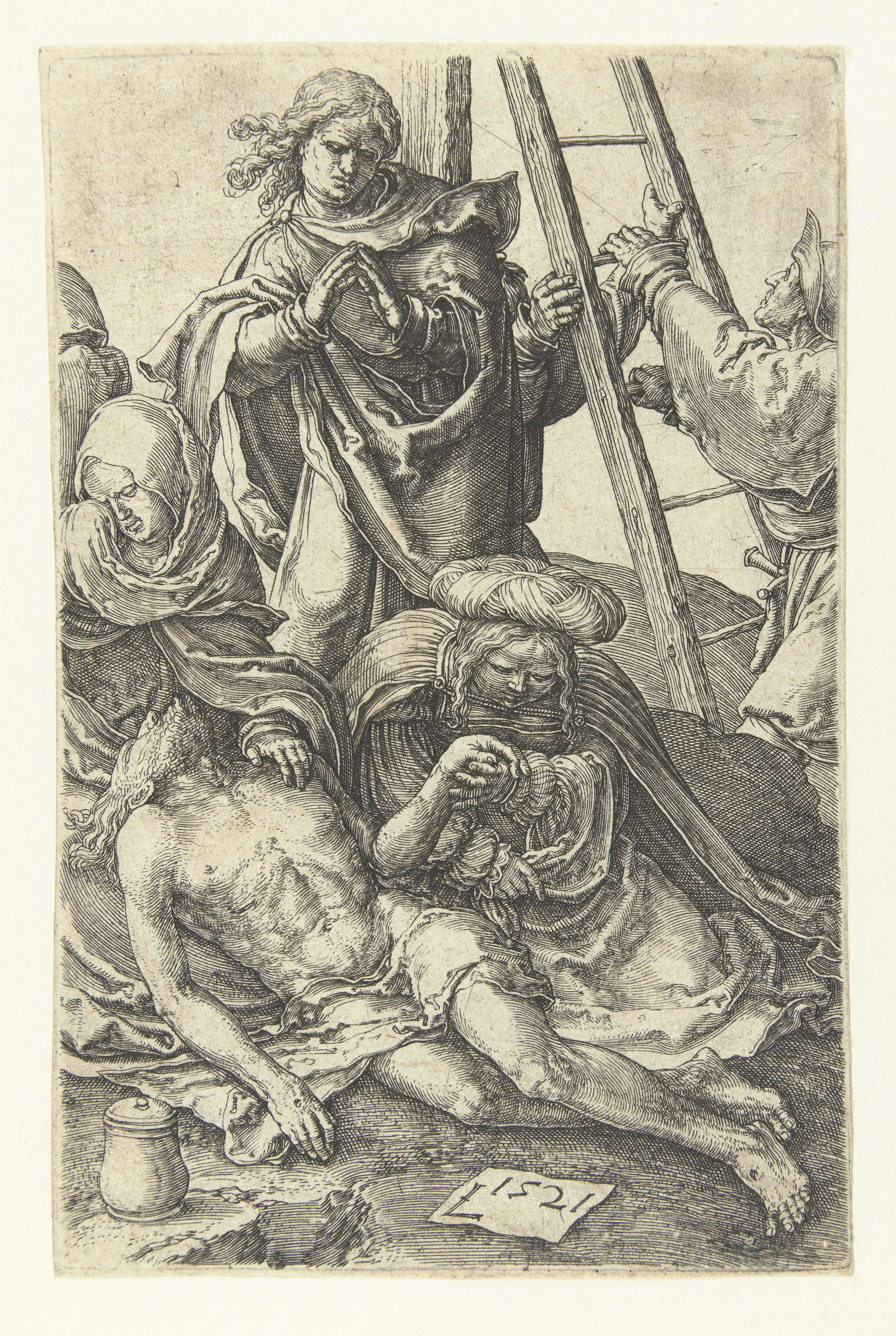
“To paint is to remember what time wants us to forget.” Loneliness envelops the soul like a shroud, echoing through every stroke of the brush. In De kruisiging, the artist captures that poignant ache, inviting us to confront the deeper human experience of isolation amidst tumult. Look to the center of the composition where the crucifixion dominates the scene, rising starkly against a pale sky, contrasting the dark, tumultuous foreground. Notice how the figures below—draped in sorrow and tension—are painted with meticulous detail, their expressions etched with anguish, yet their bodies seem distant and disconnected from one another.
The muted palette enhances this atmosphere, imbuing the scene with a somber weight, as if time itself is bearing down on them, rendering each moment heavy with grief. Upon closer examination, one can see the interplay of light and dark manifesting a profound emotional tension. The light illuminating Christ’s body suggests a sense of divine isolation, contrasting with the shadows that engulf the onlookers, reflecting their inner turmoil. The juxtaposition of the serene figure on the cross and the chaotic emotions of the crowd hints at the universal struggle with faith and despair—an eternal reminder of mankind’s isolation in suffering.
Lucas van Leyden painted De kruisiging in 1509 during a period of profound transformation in the art world, as Northern Renaissance artists began to explore complex human emotions through meticulous detail and symbolism. In his life, he was establishing himself as a master printmaker and painter, navigating the early influences of humanism while grappling with the social and religious upheaval of his time. This work stands as a testament to his ability to convey the deeply personal experiences of loneliness and devotion.