Demolition of the Great or Chapel Pier of Old London Bridge — History & Analysis
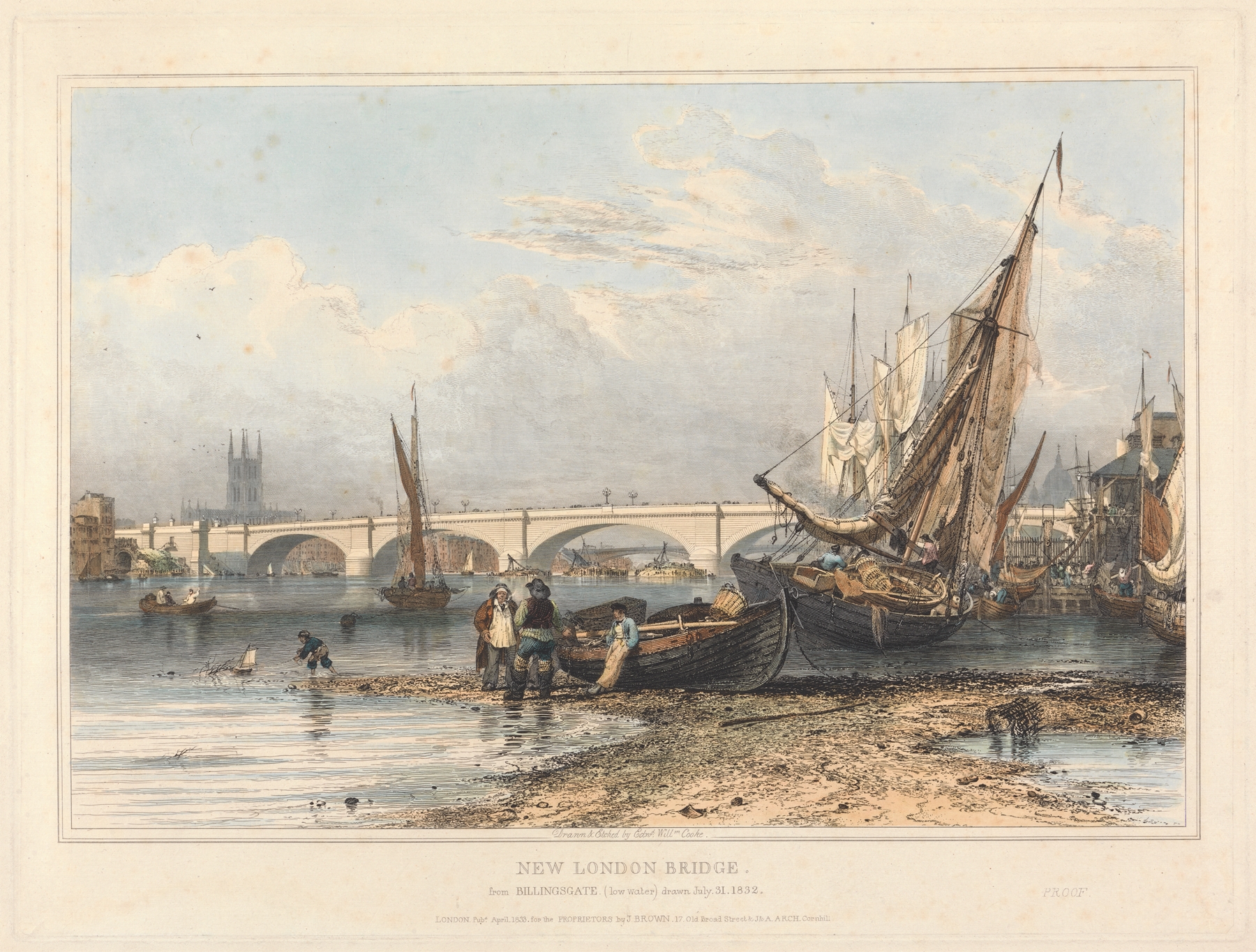
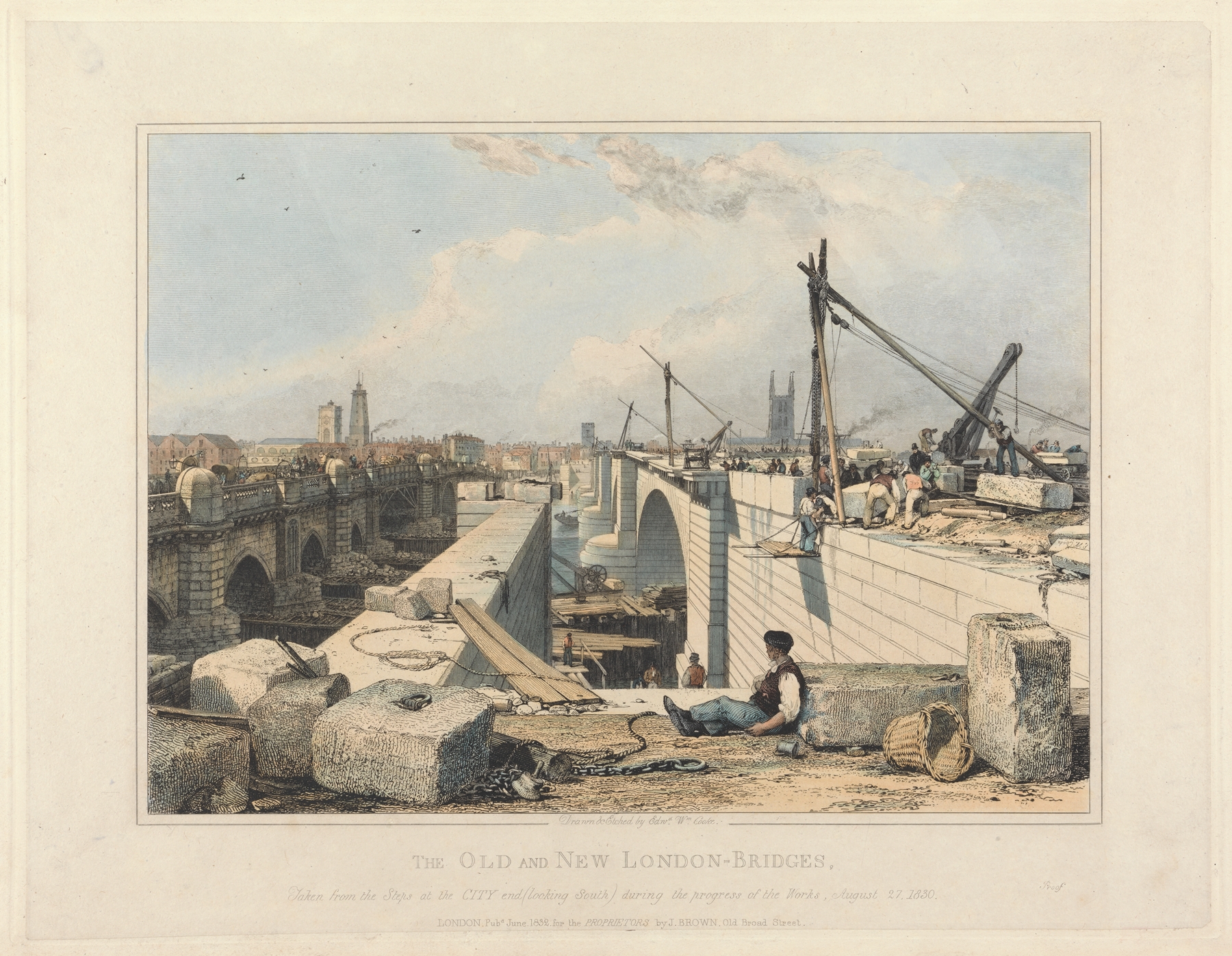
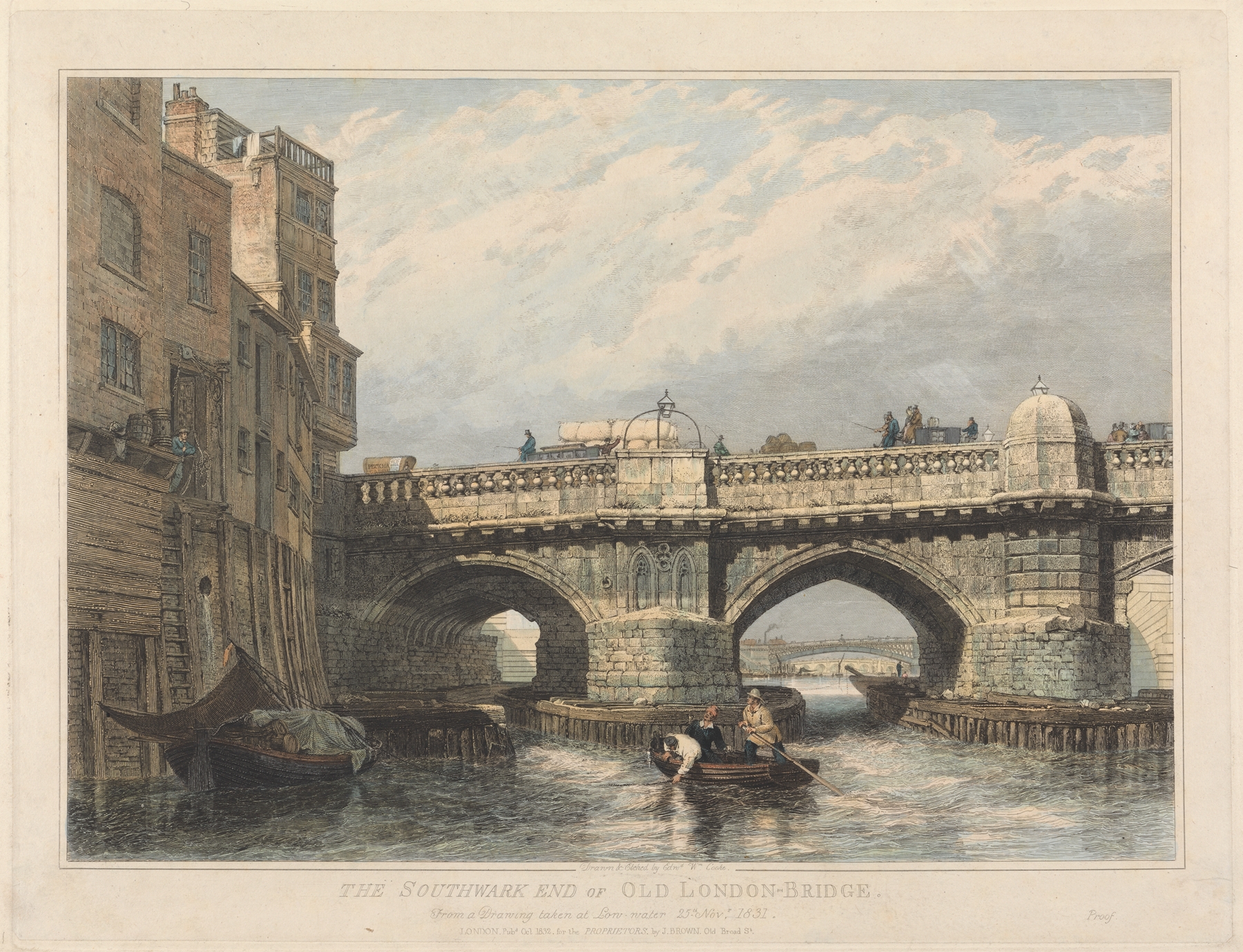
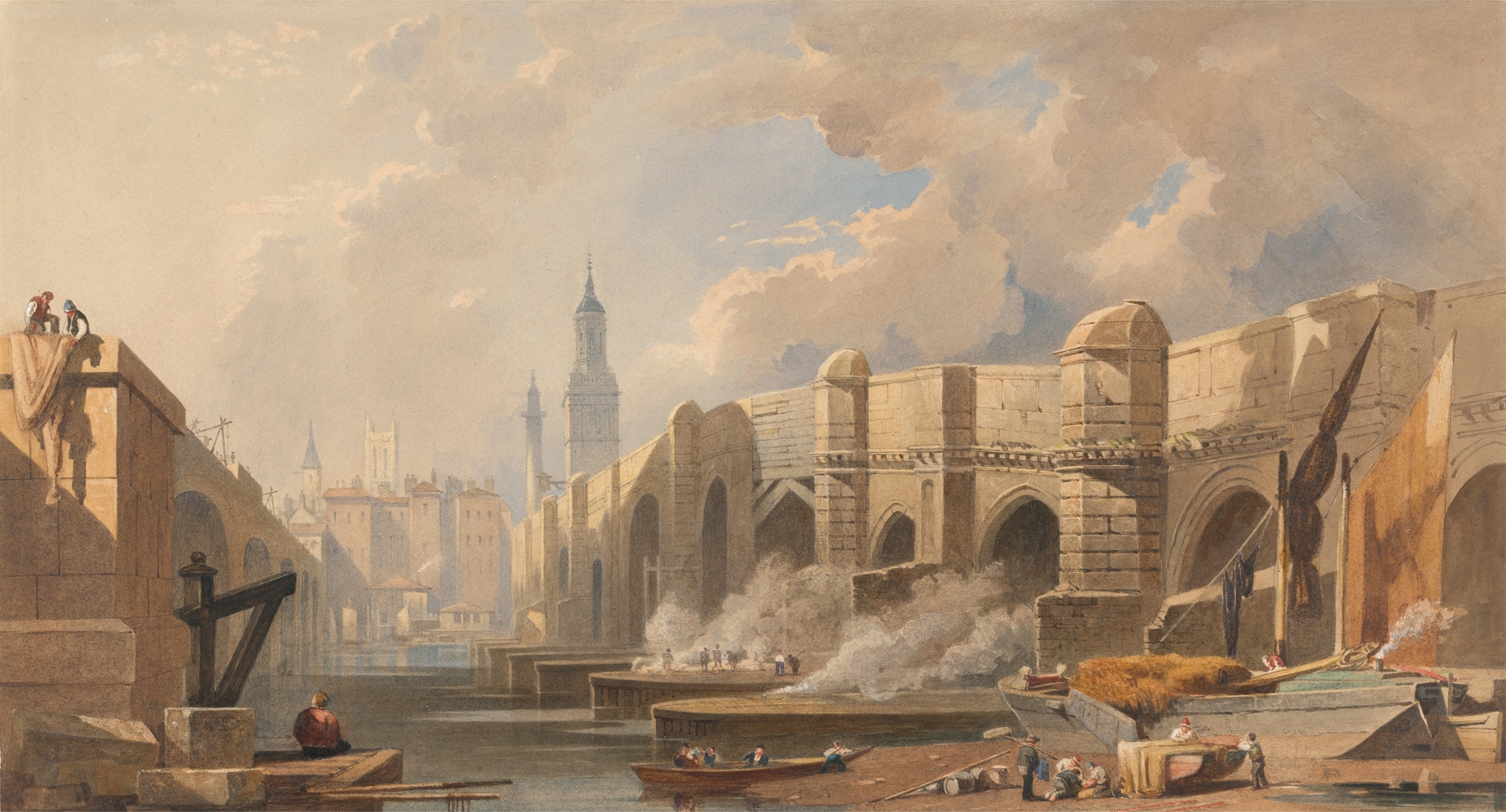
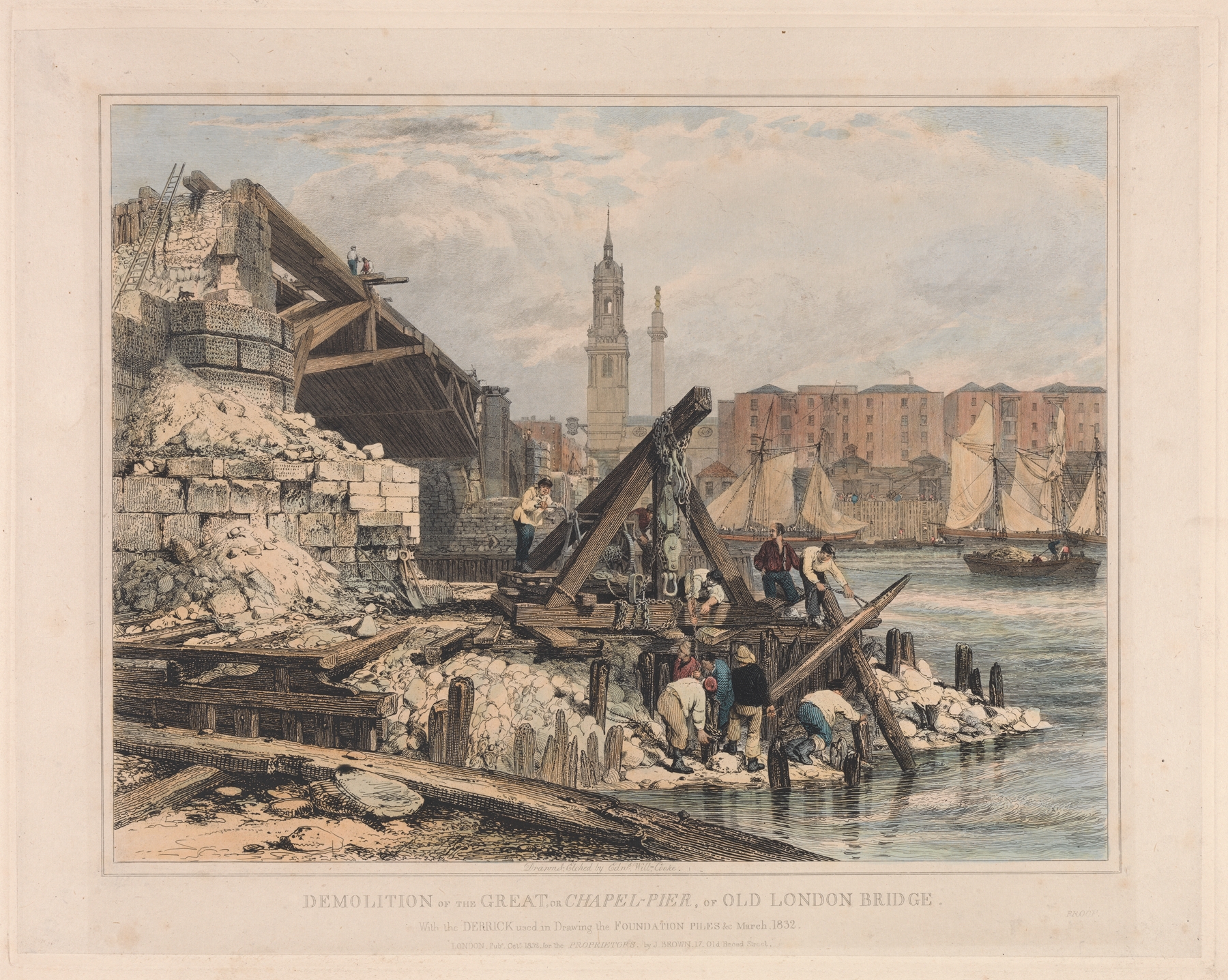
Could a single brushstroke hold eternity? In Demolition of the Great or Chapel Pier of Old London Bridge, the fleeting moment of transformation is captured, revealing the relentless passage of time and the weight of history. Look to the left at the crumbling stone pier, its rugged texture contrasting sharply with the smooth, flowing water that surrounds it. Notice how the artist employs a subdued palette of browns and grays, evoking a sense of melancholy and loss, while hints of blue and green reflect the vitality of the river.
The composition draws your eye from the old structure to the workmen laboring above, their figures almost ghostly against the backdrop, as if history itself is being excavated. This piece operates on multiple levels: the physical destruction of the bridge symbolizes the inevitability of change, while the presence of the laborers suggests both progress and disruption. The juxtaposition of the old and new reflects on societal evolution — a town caught between nostalgia and modernization.
Look closely at the wispy clouds above, which seem to blend into the scene, offering a sense of continuity even as the past is dismantled. Created in 1852, this work emerged during a period of significant industrial growth in England, where the push for modernization often collided with cultural heritage. Cooke, known for his detailed landscapes and maritime subjects, painted this scene in London, capturing a time when the old world was eroded to make way for the new, reflecting both his personal exploration of change and the broader artistic currents of the era.