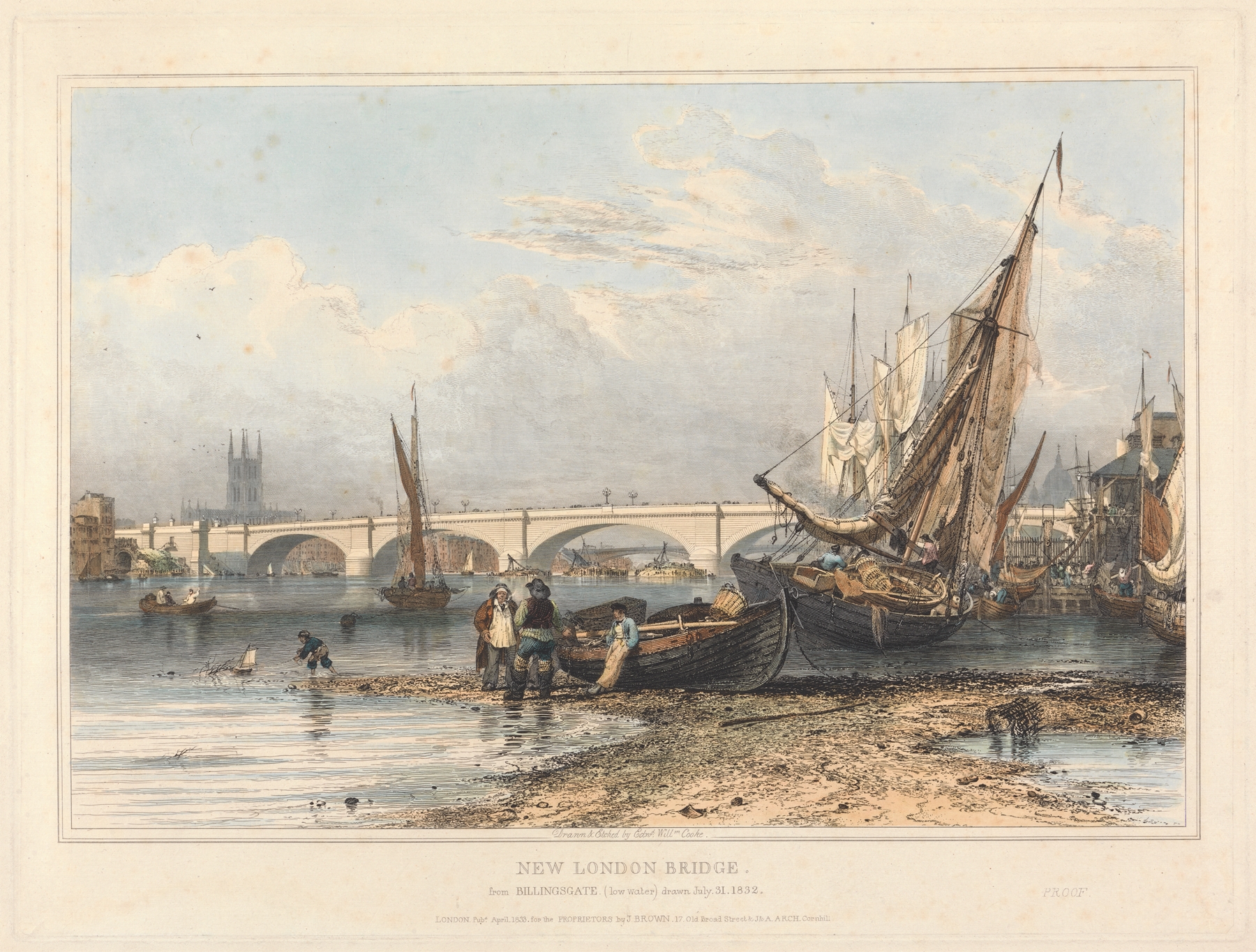
New London Bridge from Billingsgate — History & Analysis
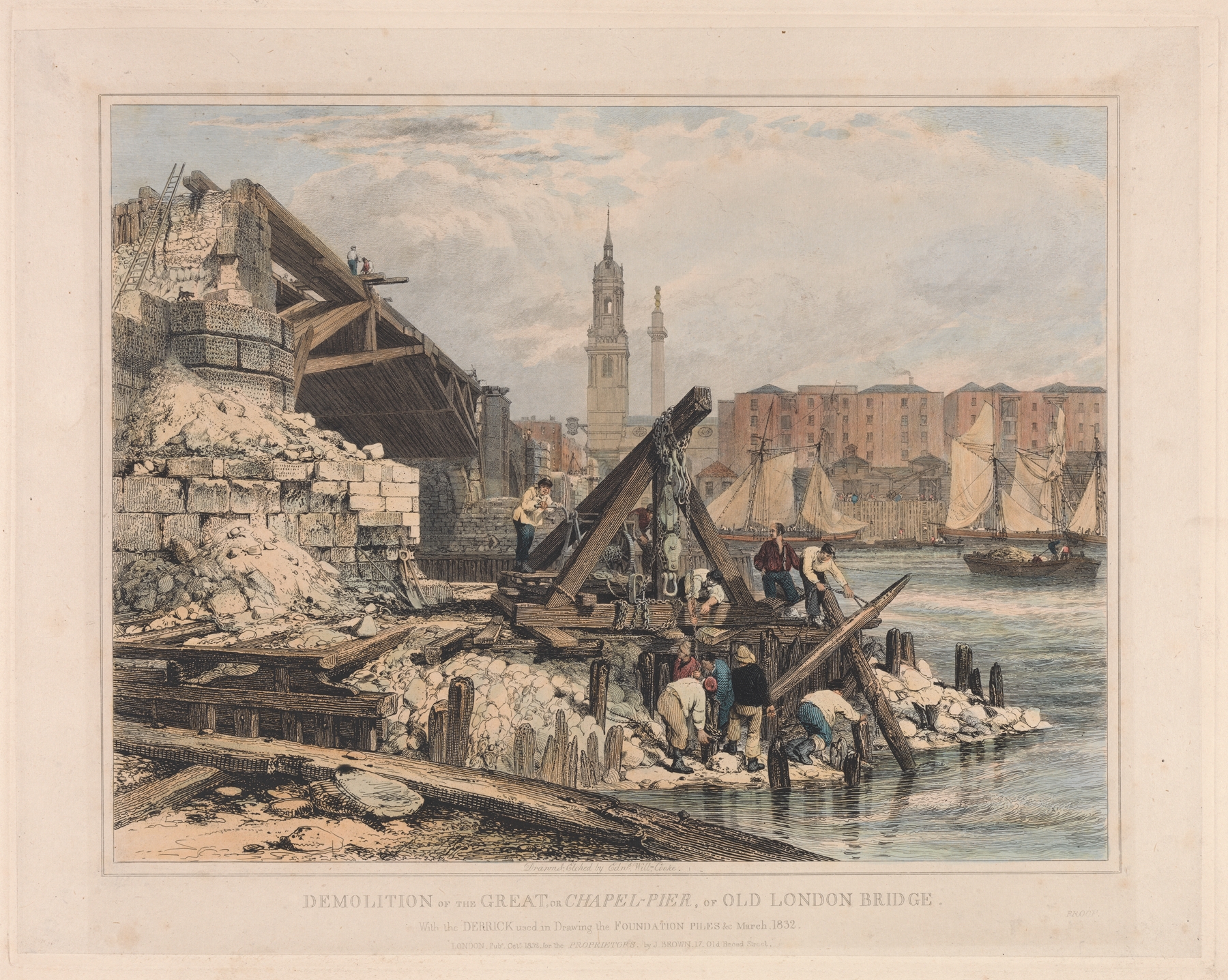
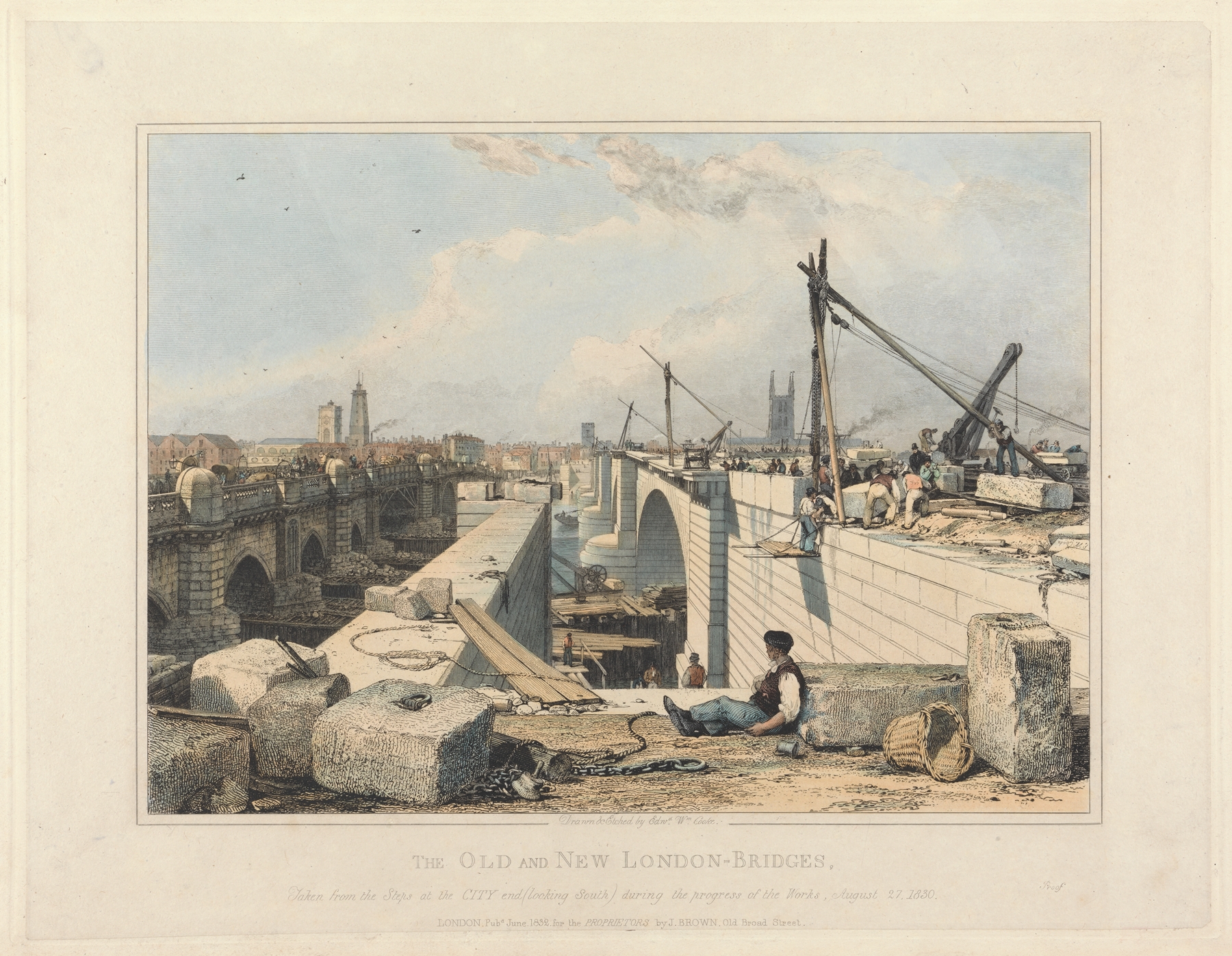
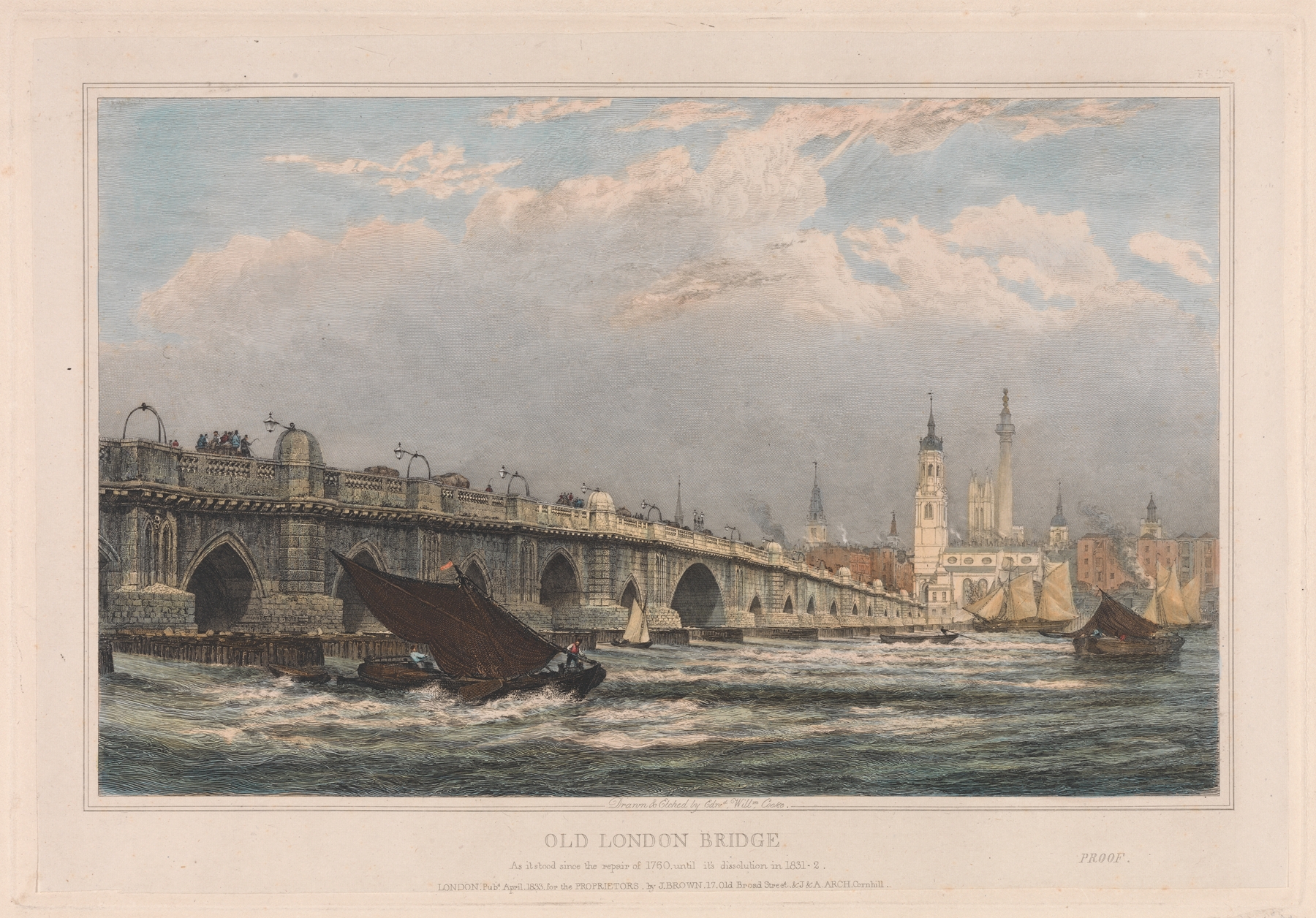
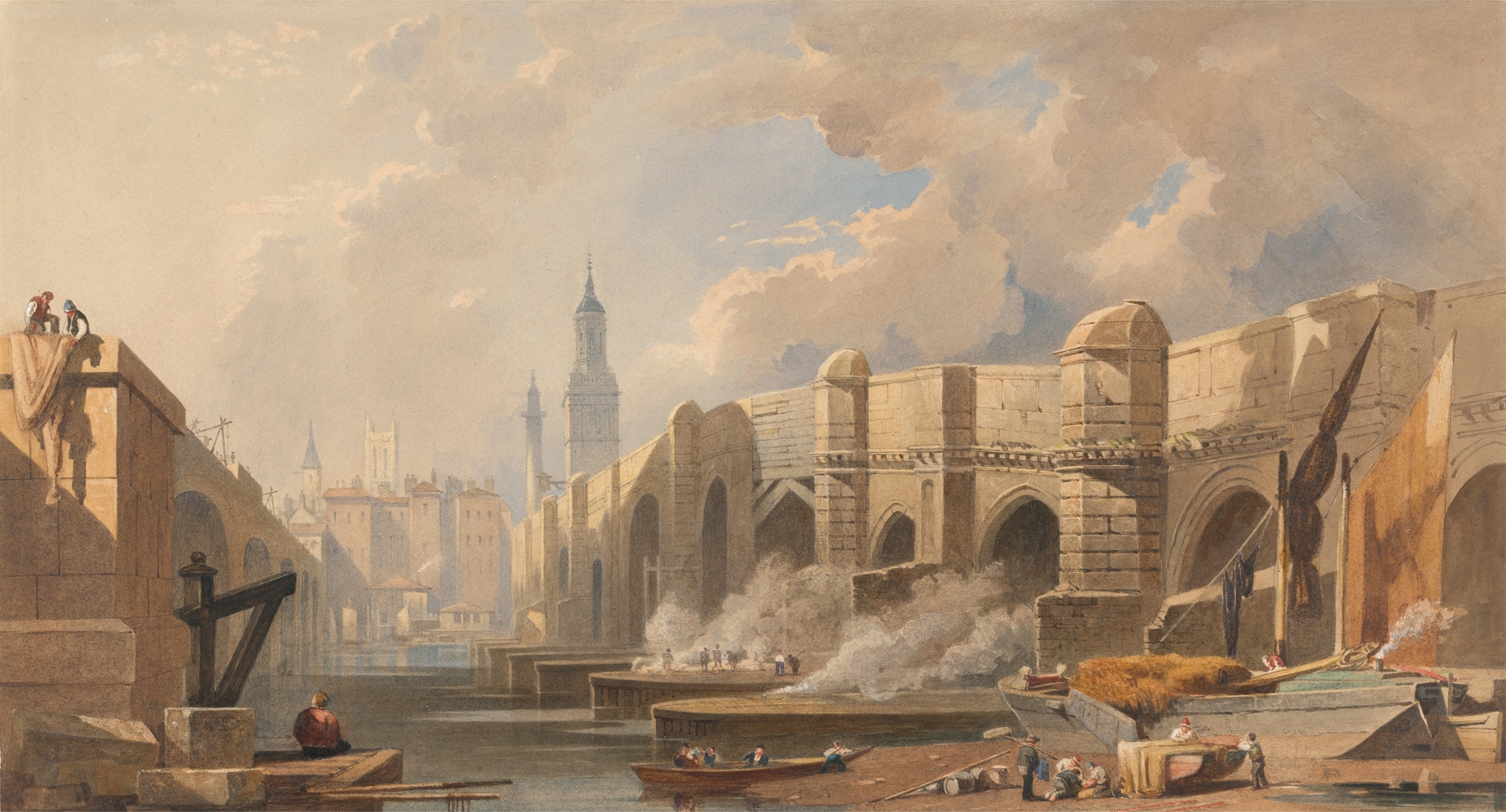
“Between color and silence, truth hides.” In the delicate interplay of light and shadow, the essence of fragility emerges. Look to the left at the towering silhouettes of the bridge's arches, where the golden hues of the sunset kiss the edges of the stonework. The sky, a canvas of soft pastels, envelops the scene in a gentle embrace. Notice how the warm tones contrast with the cooler, muted colors of the water below, reflecting the mood of the moment—a fleeting harmony that captures both the strength of the structure and the transience of the day.
Beneath this serene surface lies a poignant tension. The interplay of light reminds us that despite humanity's accomplishments, nature's omnipresence is a constant reminder of impermanence. Small vessels navigating the Thames evoke a sense of scale, underscoring the fragility of both life and man-made creations. The brushwork, with its soft strokes, conveys a sense of movement, as if the scene itself is caught in the act of changing, inviting contemplation on the balance between stability and vulnerability.
In 1832, Edward William Cooke painted this work during a time of industrial progress in England, yet also a period of reflection on the impact of such changes on society and the environment. Living in London, he was surrounded by the transformative energies of the city, where new structures began to reshape the landscape. Amidst this, his focus on the new bridge highlights both a celebration of innovation and a reverent acknowledgment of what is fleeting, making it a pivotal moment in his artistic journey.