The Rocky Beach and Cliffs at Fécamp — History & Analysis
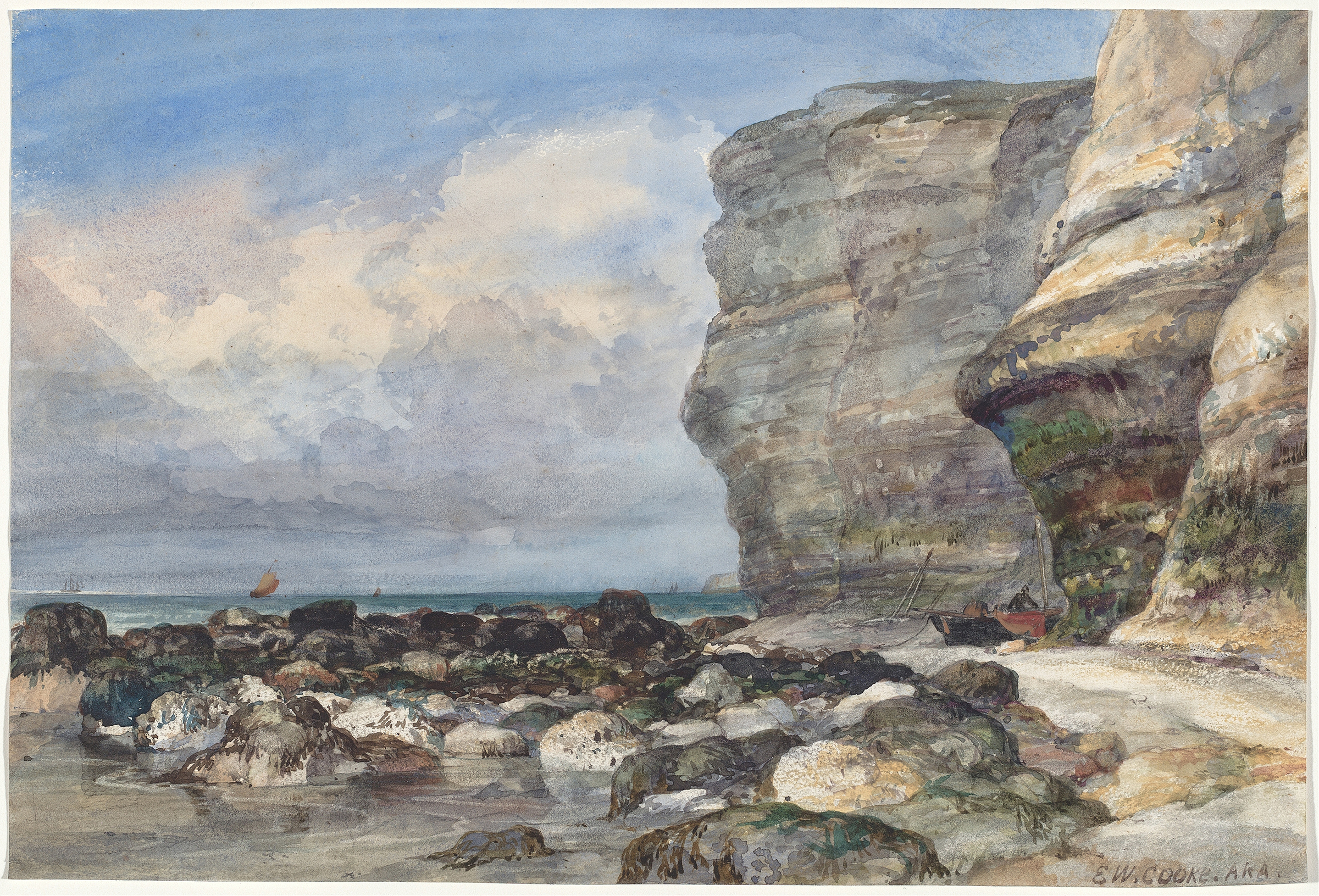
What if silence could speak through light? In the mid-1830s, a painter captured a dreamlike moment where nature’s stillness invites reflection and reverie. Look to the foreground, where the rocky beach unfolds, a canvas of earthy tones intermingling with the gentle strokes of blue waves. The cliffs rise majestically in the background, their craggy forms contrasting with the delicate touches of sunlight that dance across the water’s surface.
Notice how the pale sky, almost ethereal, envelops the scene, creating an atmosphere that feels both tranquil and charged with unvoiced emotions. The artist’s use of soft brushwork enhances the feeling of a fleeting moment, as though nature itself holds its breath. Delve deeper into the crevices of this landscape, where small details reveal its essence—a flock of seagulls takes flight, their wings stretched wide, embodying freedom yet hinting at an underlying solitude. The shadows cast by the cliffs evoke a sense of the unknown, contrasting with the bright, glistening water that seems to beckon the viewer deeper into this tranquil abyss.
This duality resonates with the viewer's own sense of longing and the delicate balance between nature's grandeur and its quiet, introspective moments. During the mid-1830s, Edward William Cooke was living in England, a time when the Romantic movement was blossoming alongside a growing interest in landscape painting. His work reflects not only a mastery of technique but also an emotional responsiveness to the natural world, showcasing a pivotal moment in his career as he sought to capture the sublime beauty of coastal scenes that resonated in a rapidly industrializing society.