Donauufer im Prater — History & Analysis
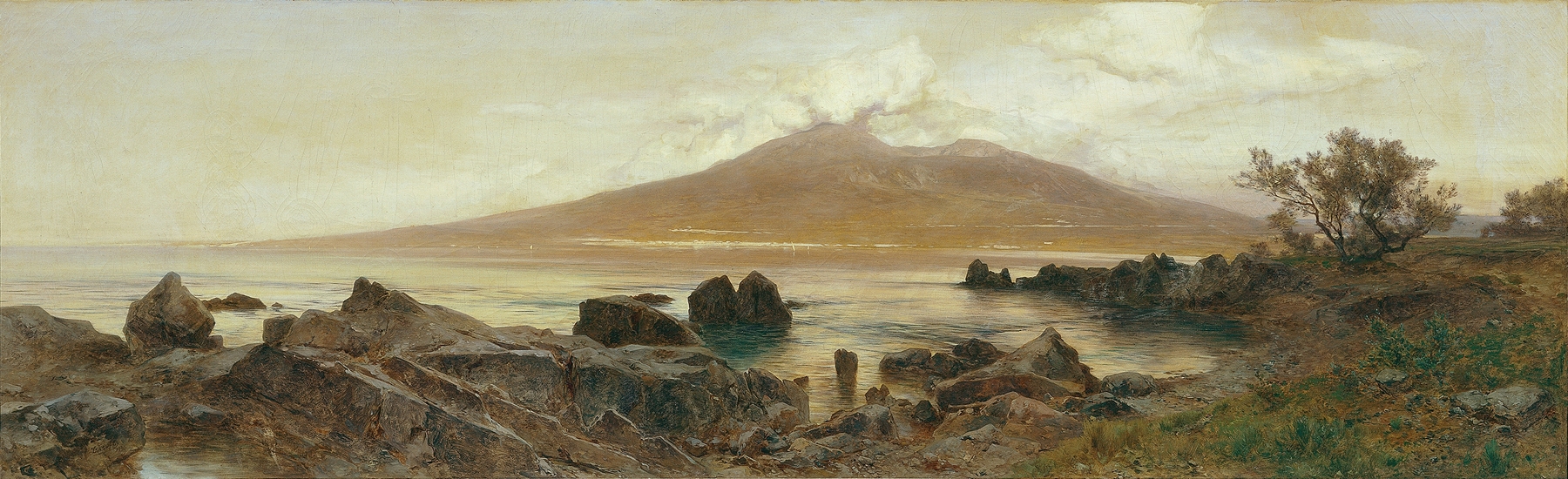
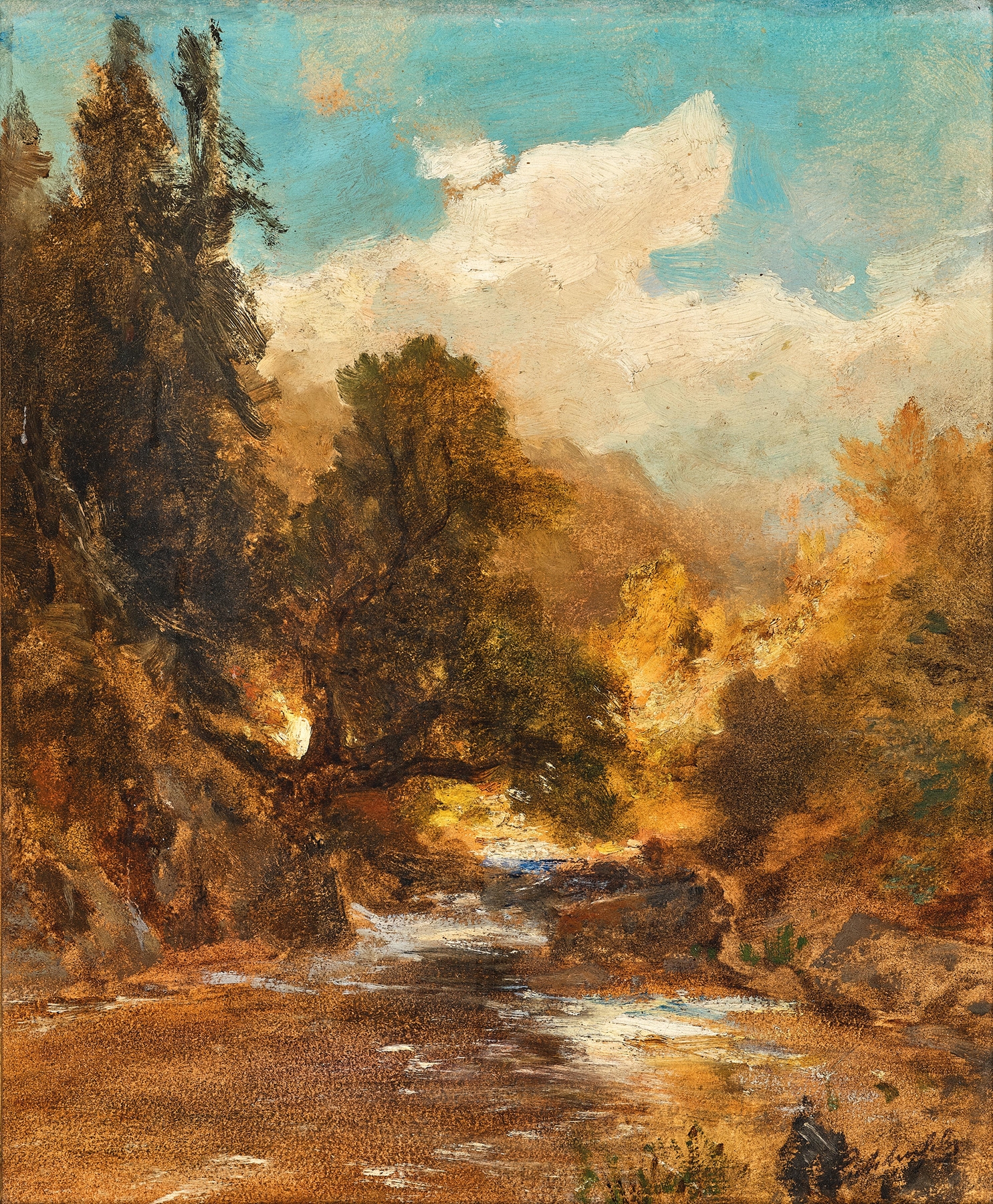
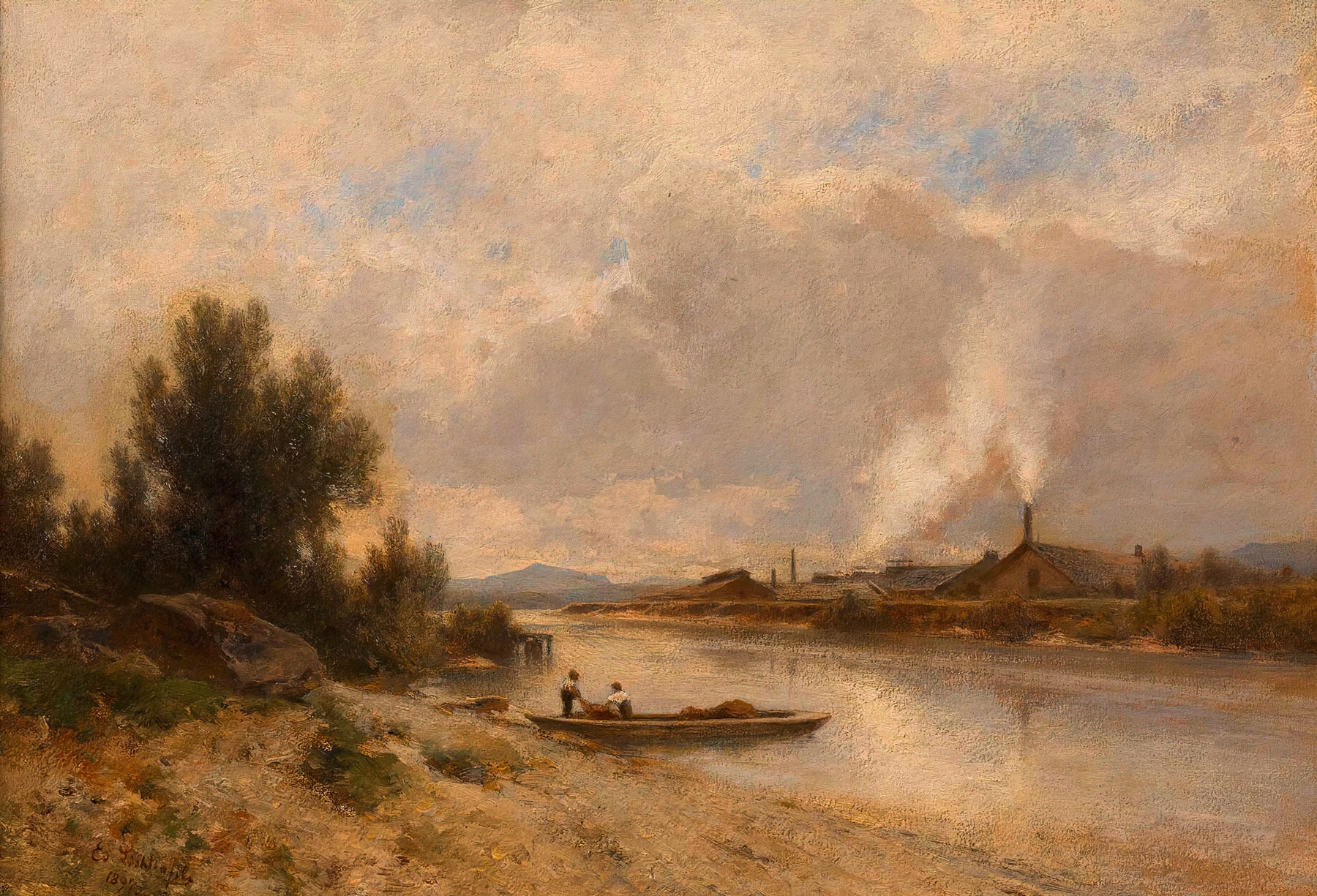
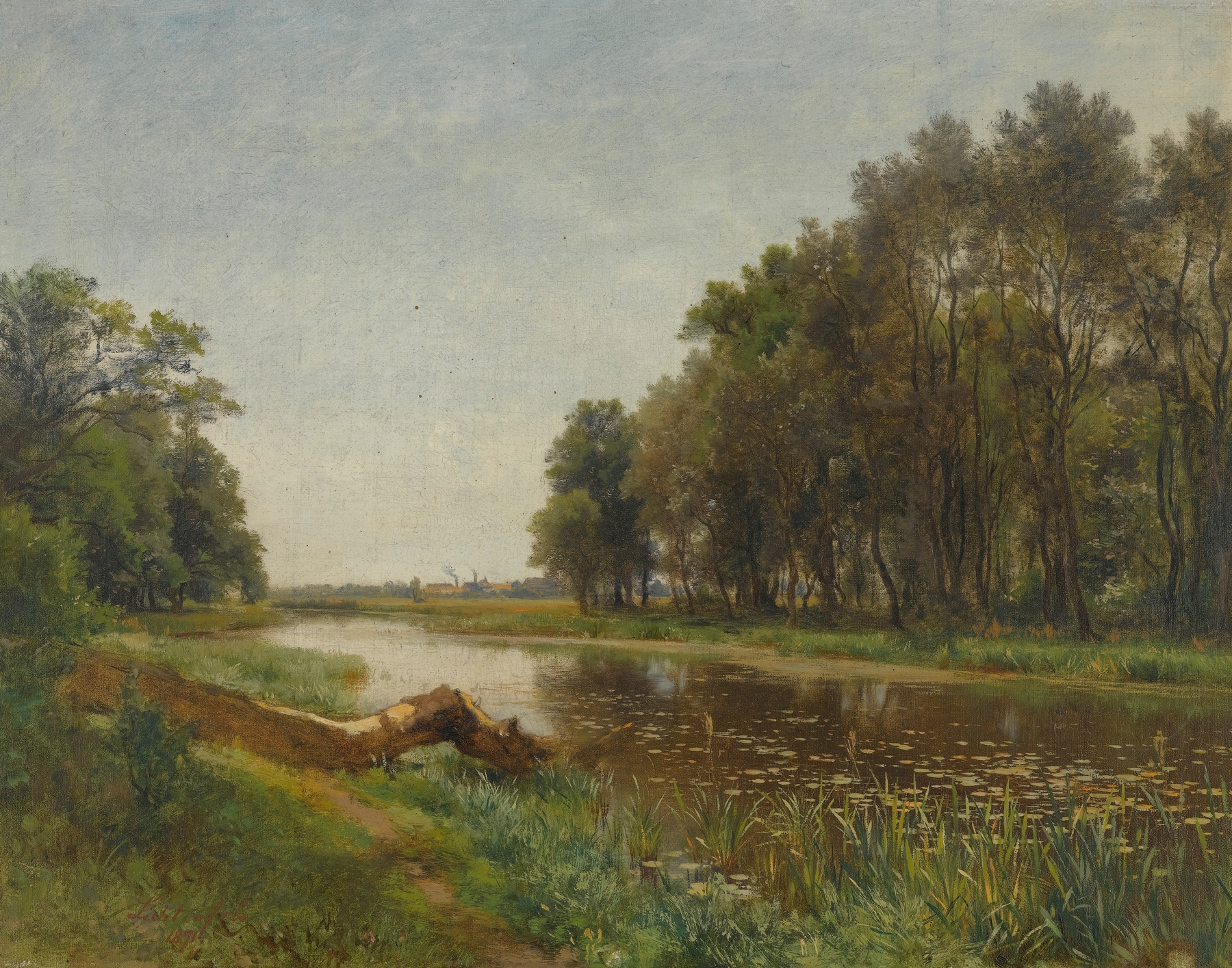
Is this a mirror — or a memory? The gentle ripples of the Danube recall whispers of betrayed promises and fleeting glances, where time becomes an echo of lost moments. Look to the left at the serene banks, where soft greens and tender ochres cradle the water's edge. Notice how the light falls upon the surface, a silken sheen that evokes both tranquility and melancholy.
The brushwork dances between impressionism and realism, with dappled strokes that conjure the play of sunlight filtering through the leaves above. The towering trees, a multitude of deep greens, frame the scene, directing your gaze toward the river that meanders into the distance, drawing you into its depths. As you explore the painting, consider the juxtaposition of the idyllic landscape with the underlying tension it may conceal. The stillness of the water contrasts with the tumult of emotions that surround it, suggesting a betrayal hidden beneath the calm facade.
The vibrant palette, while inviting peace, hints at the complexity of human relationships — the intertwining of love and loss, joy and sorrow, all reflected in nature's beauty. In 1873, the artist captured this moment in Vienna, a city on the cusp of transformation. Eduard Peithner von Lichtenfels was deeply engaged in the artistic dialogue of his time, influenced by the burgeoning trend of plein air painting. As he painted Donauufer im Prater, the world around him was shifting, a blend of silence and unrest, mirroring the quiet yet turbulent emotions embedded in his work.