Mountain stream — History & Analysis
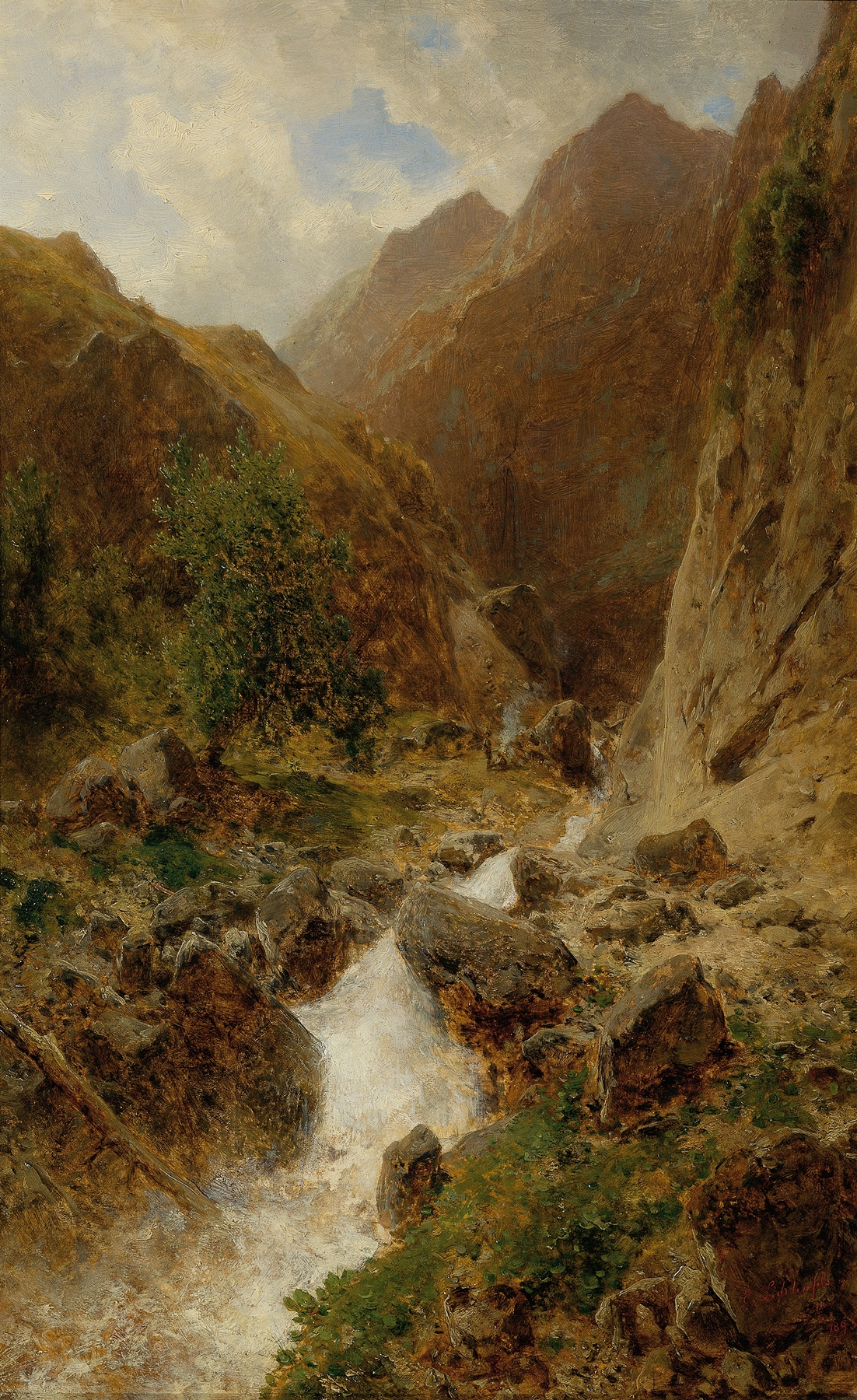
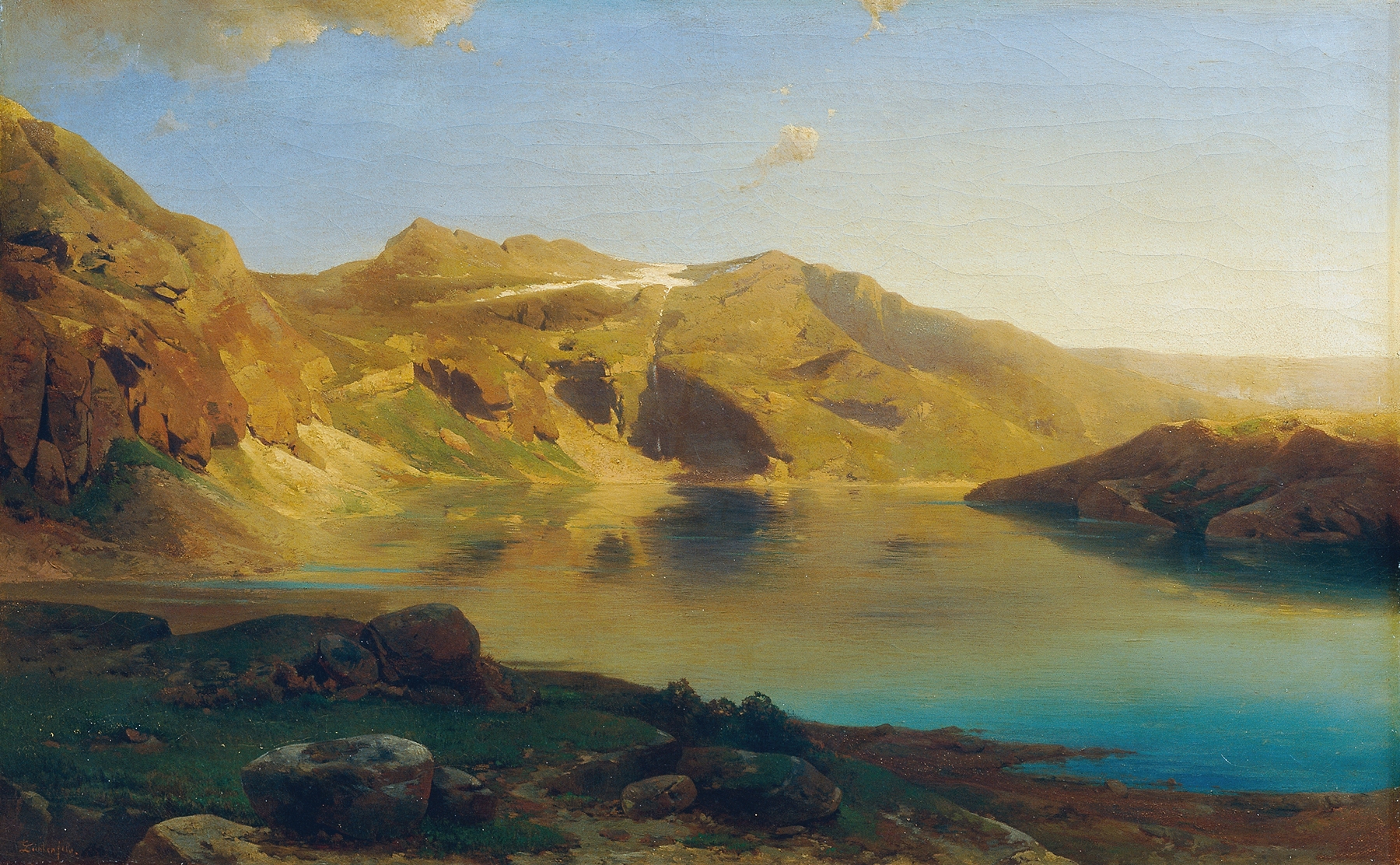
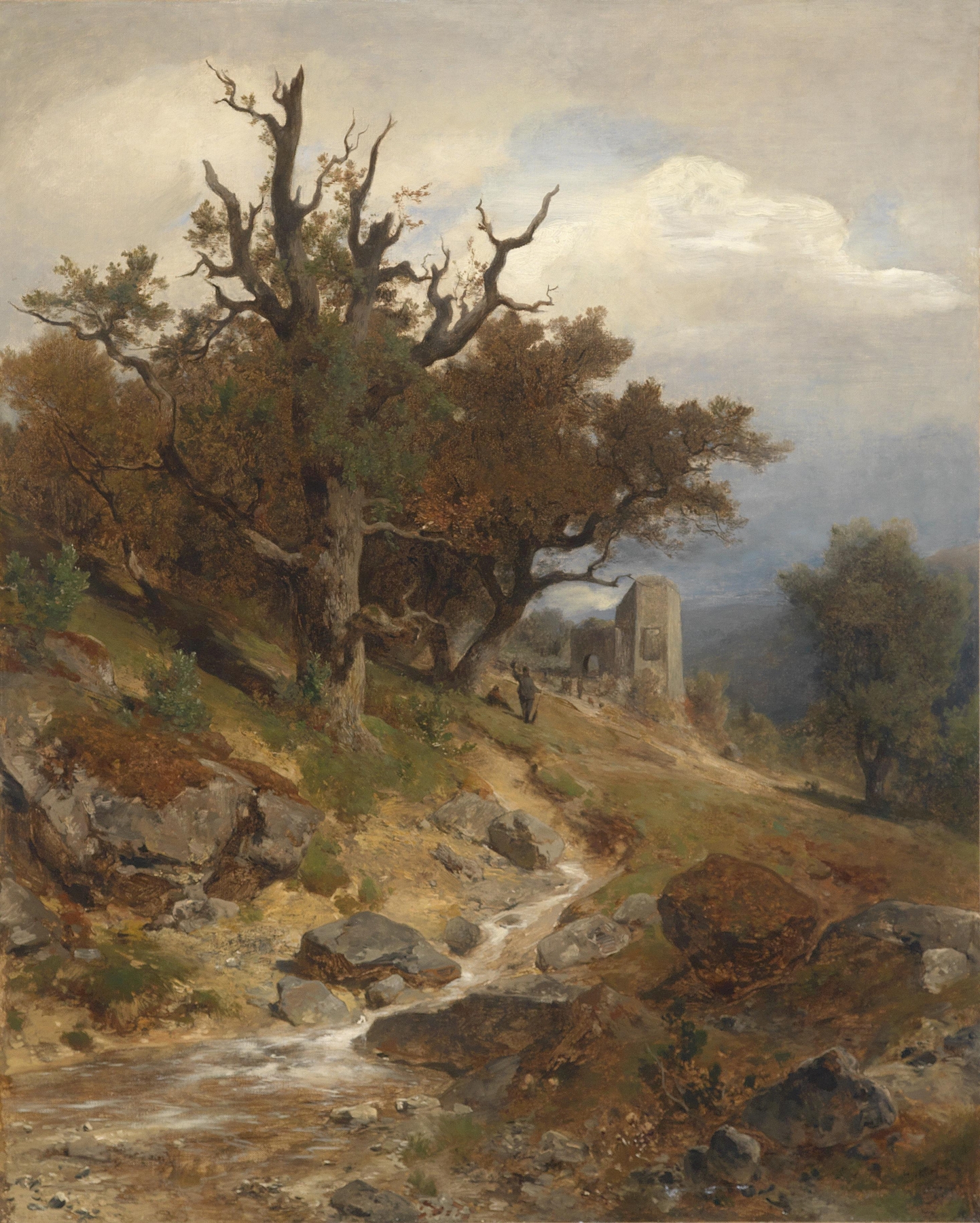
“To paint is to remember what time wants us to forget.” In the rush of a mountain stream, one may wonder what memories lie hidden beneath the surface, swirling like shadows among the rocks. Each ripple tells a story, yet not all tales are woven from threads of truth; some carry the weight of betrayal, concealed in the beauty of nature's embrace. Look to the lower left where the water cascades over smooth stones, capturing the light in brilliant flashes. The vibrant greens of the surrounding foliage create a lush frame, guiding the eye towards the crystal clarity of the stream.
Notice how the artist masterfully applies delicate brushstrokes to convey movement and texture; the shimmering water contrasts with the gentle softness of the leaves, evoking a sense of tranquility despite the undertones of unrest. A tension hums beneath the surface of this idyllic scene. The juxtaposition of the serene landscape and the chaotic rush of the stream mirrors the duality of emotion—calmness veiling treachery. The interplay of light and shadow hints at secrets lurking just out of sight, suggesting that even the most picturesque moments may harbor untold stories of disloyalty and loss, forever etched in the flowing water.
During the time Mountain stream was created, Eduard Peithner von Lichtenfels was deeply engaged in the Romantic movement, known for his evocative landscapes that sought to evoke emotional responses. While the exact date of this work is unknown, his art flourished in the 19th century, a period marked by a fascination with nature and the complexities of human emotion. The artist's personal journey was intertwined with the broader currents of his era, reflecting a world caught between the allure of beauty and the inevitability of betrayal.