Donnybrook Fair — History & Analysis
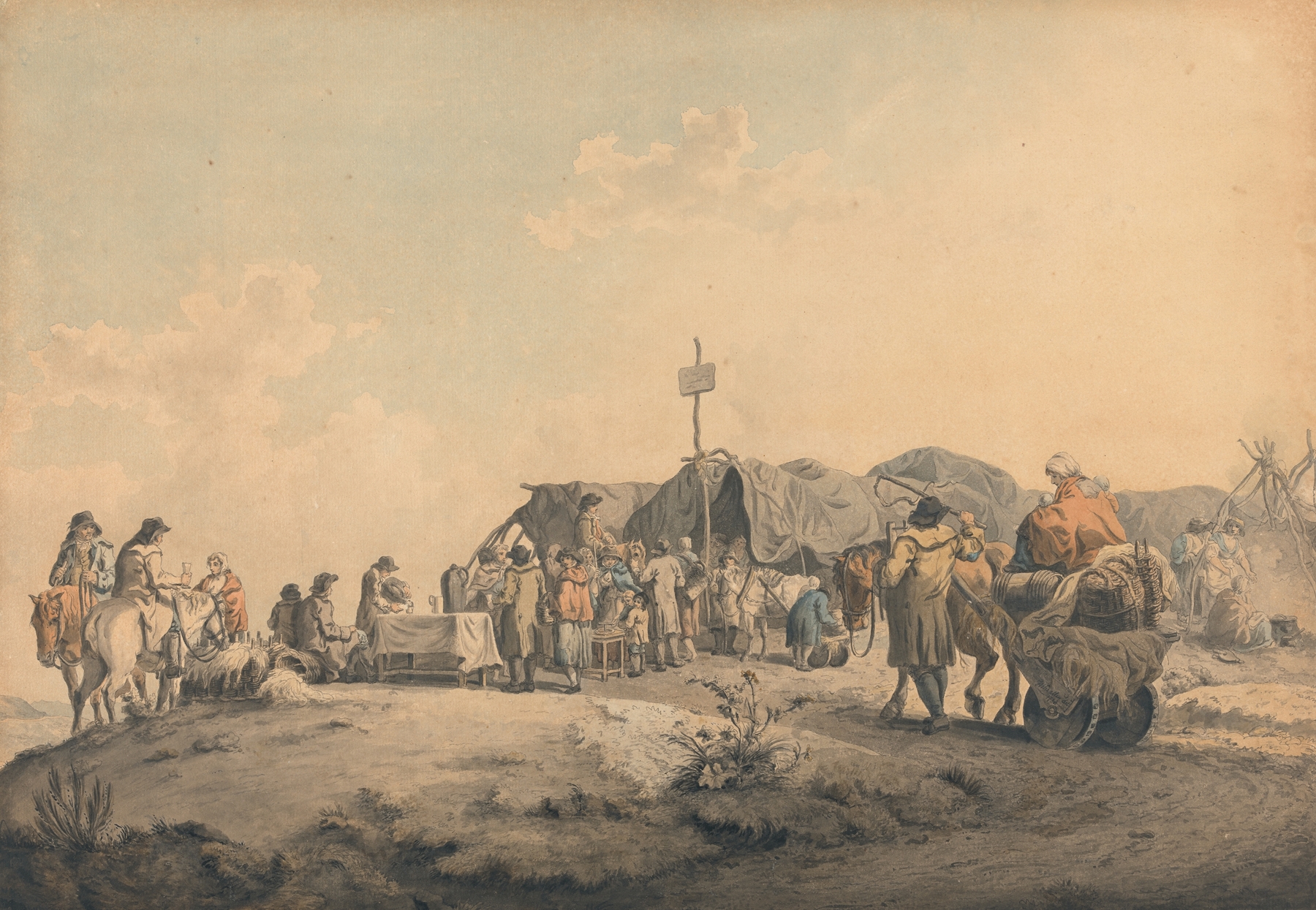
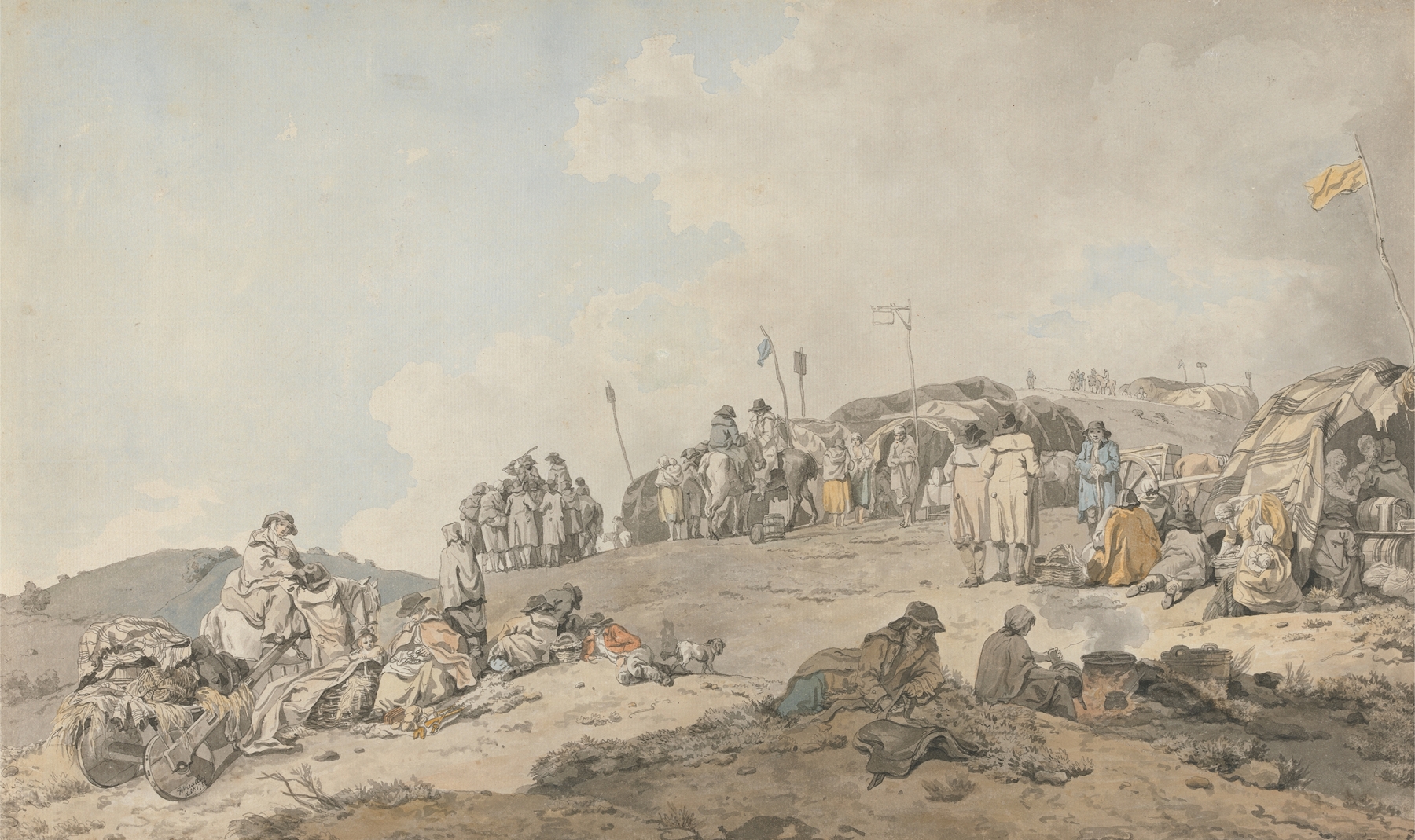
“Under the brush, chaos becomes grace.” In Donnybrook Fair, the vivid tableau of revelry and raucous energy invites us into a realm where illusion reigns supreme. Look to the center of the canvas, where a crowd of figures dances amidst a flurry of motion. The riotous colors of their garments contrast sharply with the muted greens of the surrounding countryside, drawing your eye to the joyous chaos at play. Notice how Wheatley employs light, streaming from the sun, to illuminate the scene, highlighting the festive atmosphere while casting fleeting shadows that suggest movement and life.
The artist's deft brushwork creates an illusion of depth, expertly layering figures and objects that seem to spill out of the canvas, pulling the viewer into the heart of the fair. Yet, beneath the lively facade lies an intricate interplay of themes. The jubilant celebration of community stands in stark contrast to the underlying tension of social class, as the faces of the common folk mingle with the more refined spectators. This duality hints at the complexities of 18th-century life, where joy and struggle coexisted in a delicate balance.
The way figures interact—some lost in laughter, others observing with a critical eye—invites reflection on the masks we wear in society and the realities we choose to ignore. In 1782, Francis Wheatley painted this vibrant scene during a period when art was becoming increasingly accessible to the burgeoning middle class in England. Positioned in London, Wheatley was deeply influenced by the rise of genre painting, which sought to capture everyday life and its social dynamics. This piece emerged against a backdrop of shifting societal norms, offering viewers not just a glimpse of a fair but a mirror reflecting the complexities of human experience at that time.