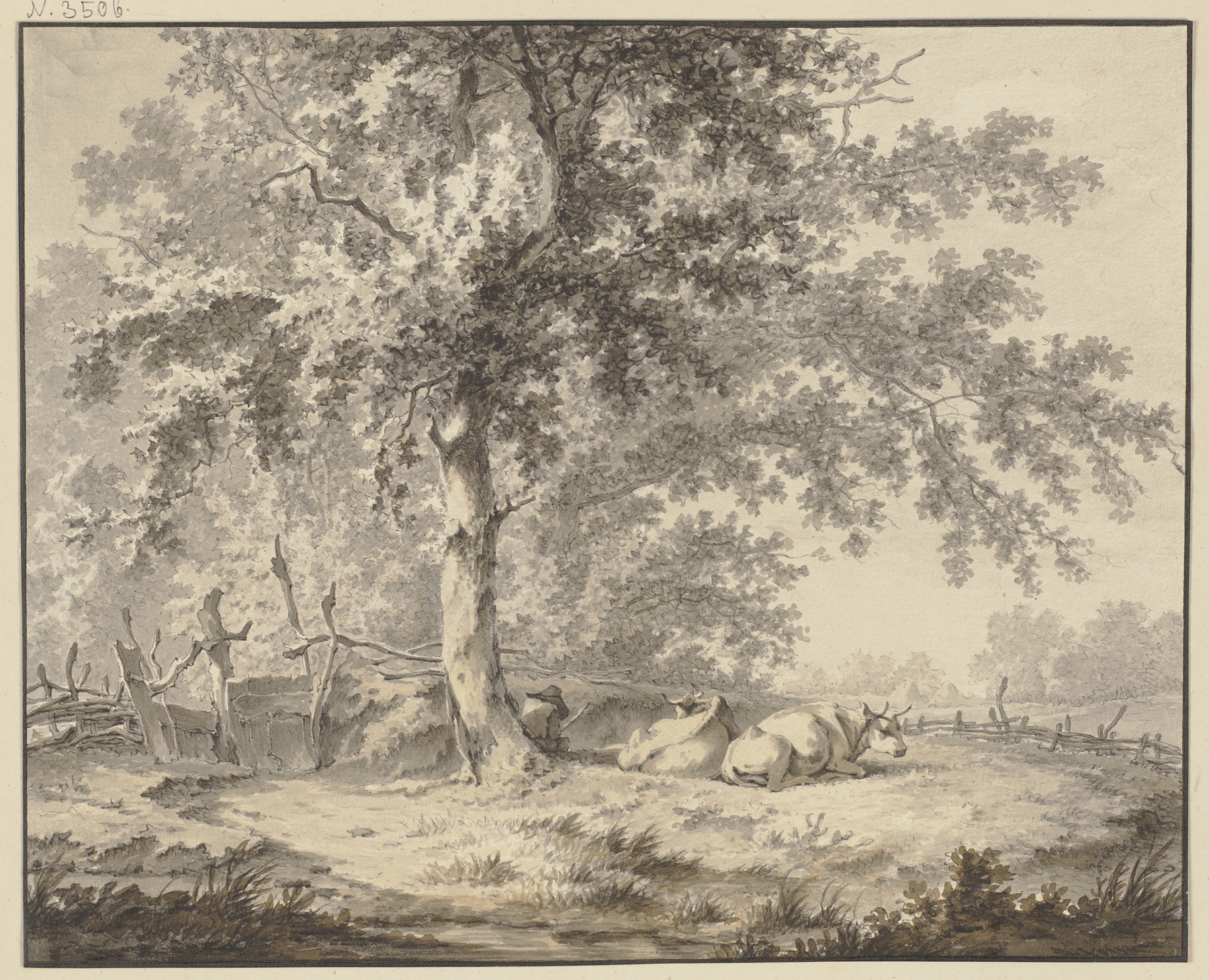
Eiche, darunter zwei Männer auf dem Weg, ein Hund bei einem Pfahl, im Licht der Abendsonne — History & Analysis
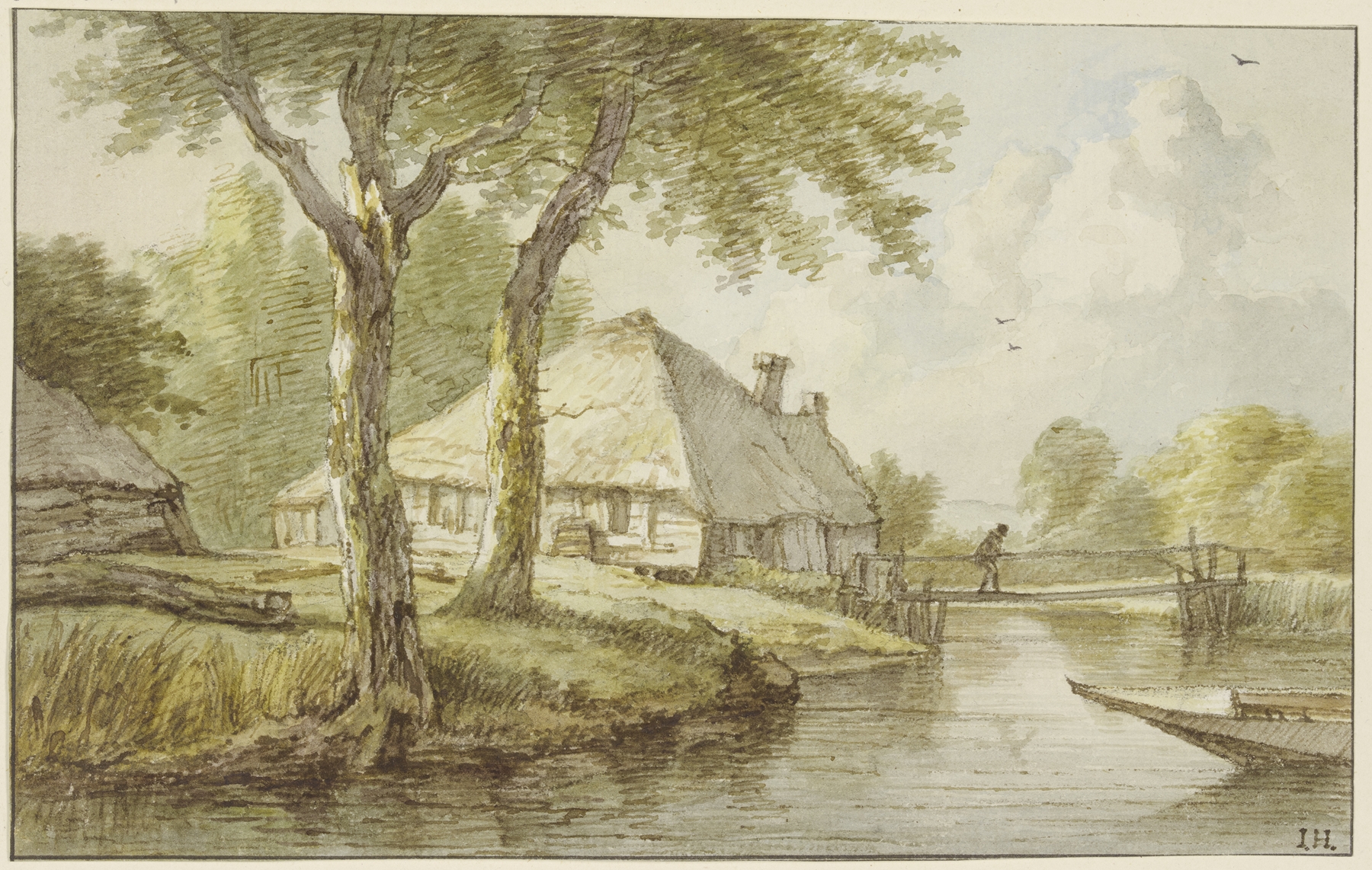
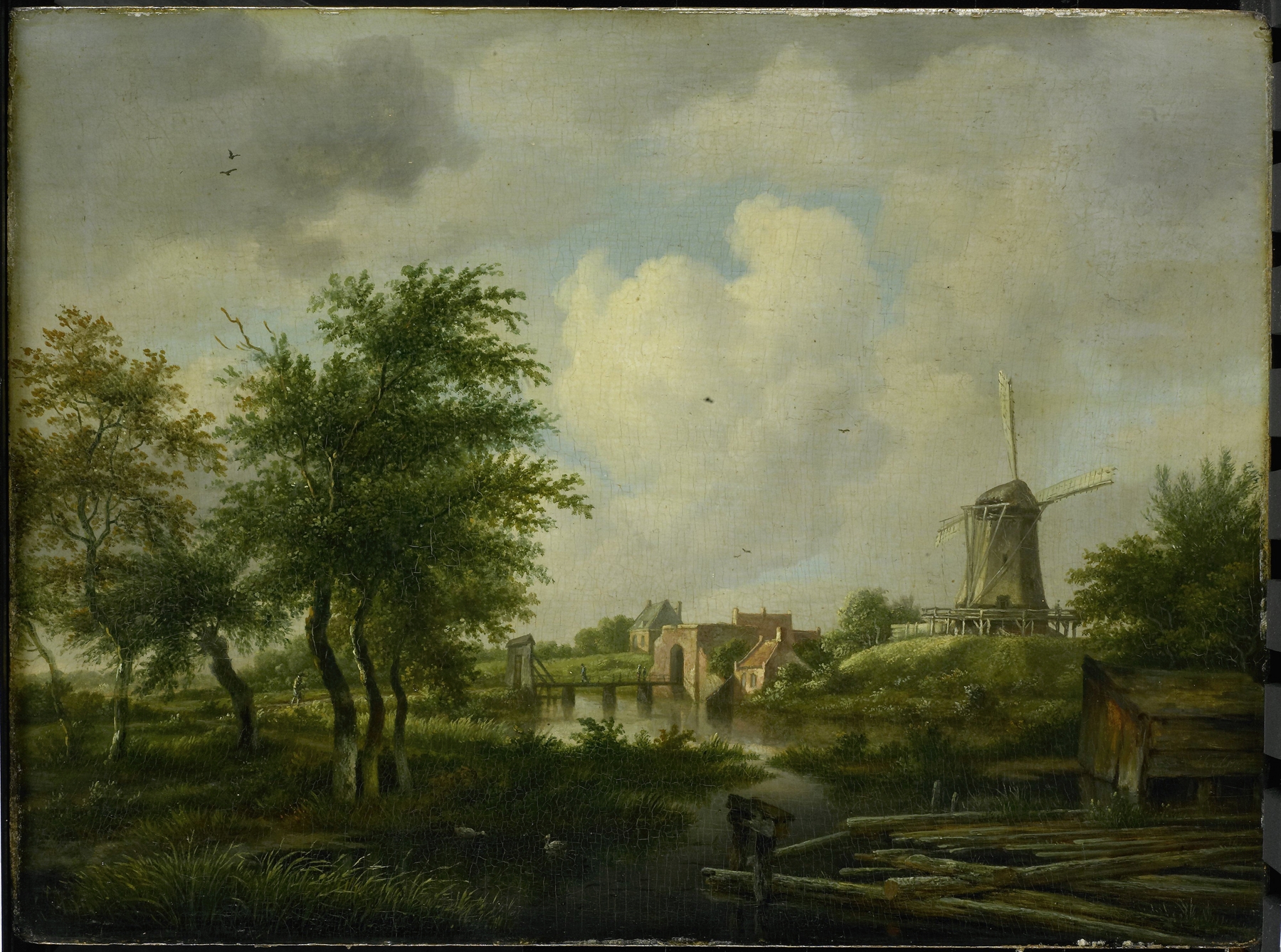
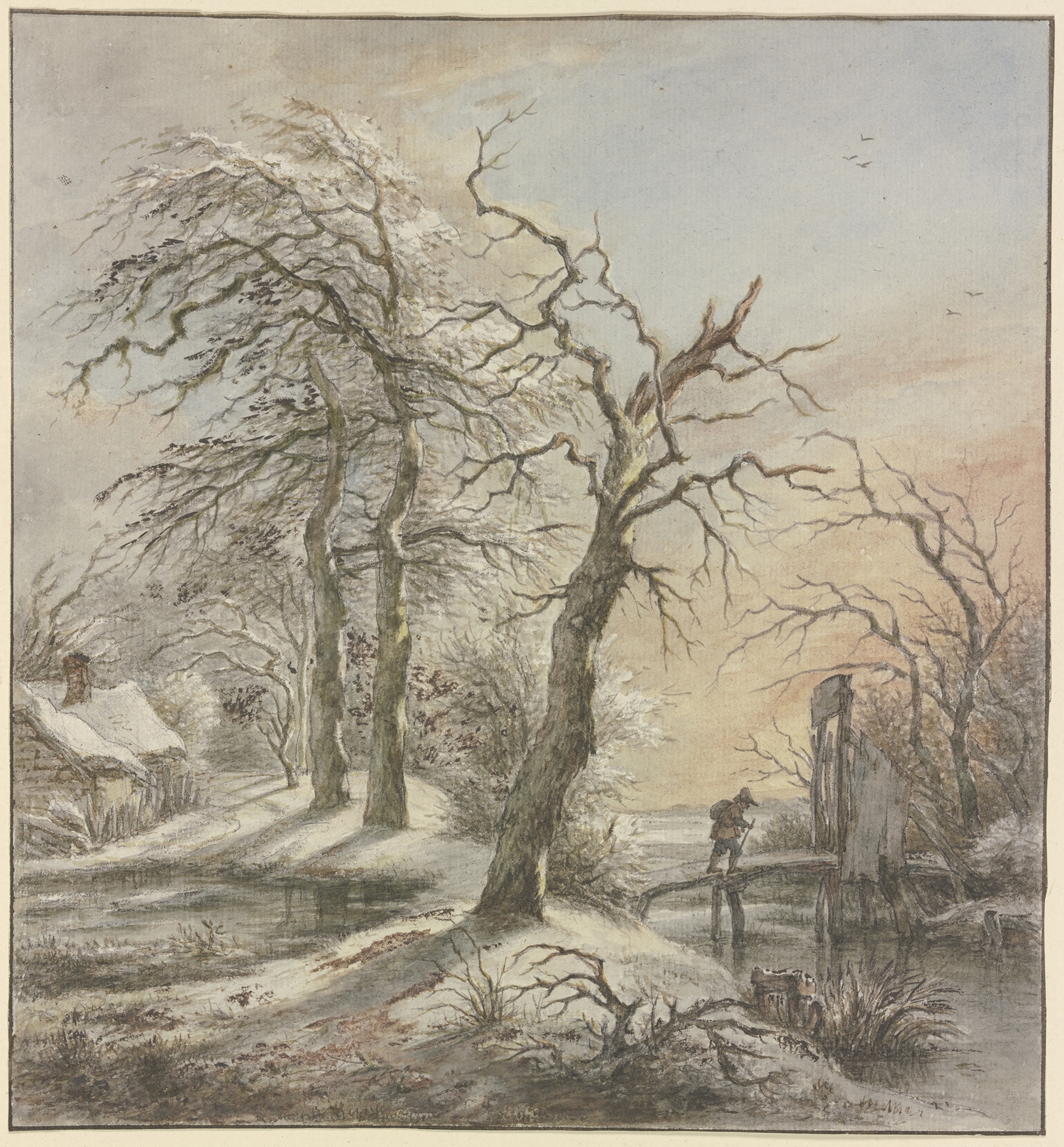
Who listens when art speaks of silence? In Eiche, darunter zwei Männer auf dem Weg, ein Hund bei einem Pfahl, im Licht der Abendsonne, a fleeting moment suspended in time unravels the complexity of presence and absence. It beckons to those who dare to peer into the quiet corners of their minds, confronting the madness that lurks in the stillness of everyday life. Look closely at the lower left corner, where the two men walk in casual companionship beneath the sprawling oak.
Their gestures are subtle yet vivid—a slight lean into one another as if sharing whispers. The evening sun drenches the scene in a golden hue, casting elongated shadows that stretch into the warm earth. Notice how the dog, loyal and watchful by a weathered post, embodies a stillness that contrasts with the men’s fleeting movement, suggesting a tethering to the moment that is both comforting and haunting. Delve deeper, and the tension emerges: the men’s carefree demeanor juxtaposes the looming weight of their surroundings.
The oak tree, a symbol of endurance, stands tall against the fiery sky, evoking thoughts of inevitability and madness entangled with nature. The post, stark and solitary, hints at a boundary—perhaps a threshold between the ordinary and the extraordinary, where sanity and chaos engage in a delicate dance. In the late 19th century, Jan Hulswit captured this moment in an era marked by rapid change, both in society and in the world of art, as naturalism and impressionism began to intertwine. He painted in a time of personal exploration amid a backdrop filled with industrialization and unrest, translating his observations of the mundane into a canvas that speaks volumes about existence itself.