View of a Canal with Three Windmills — History & Analysis
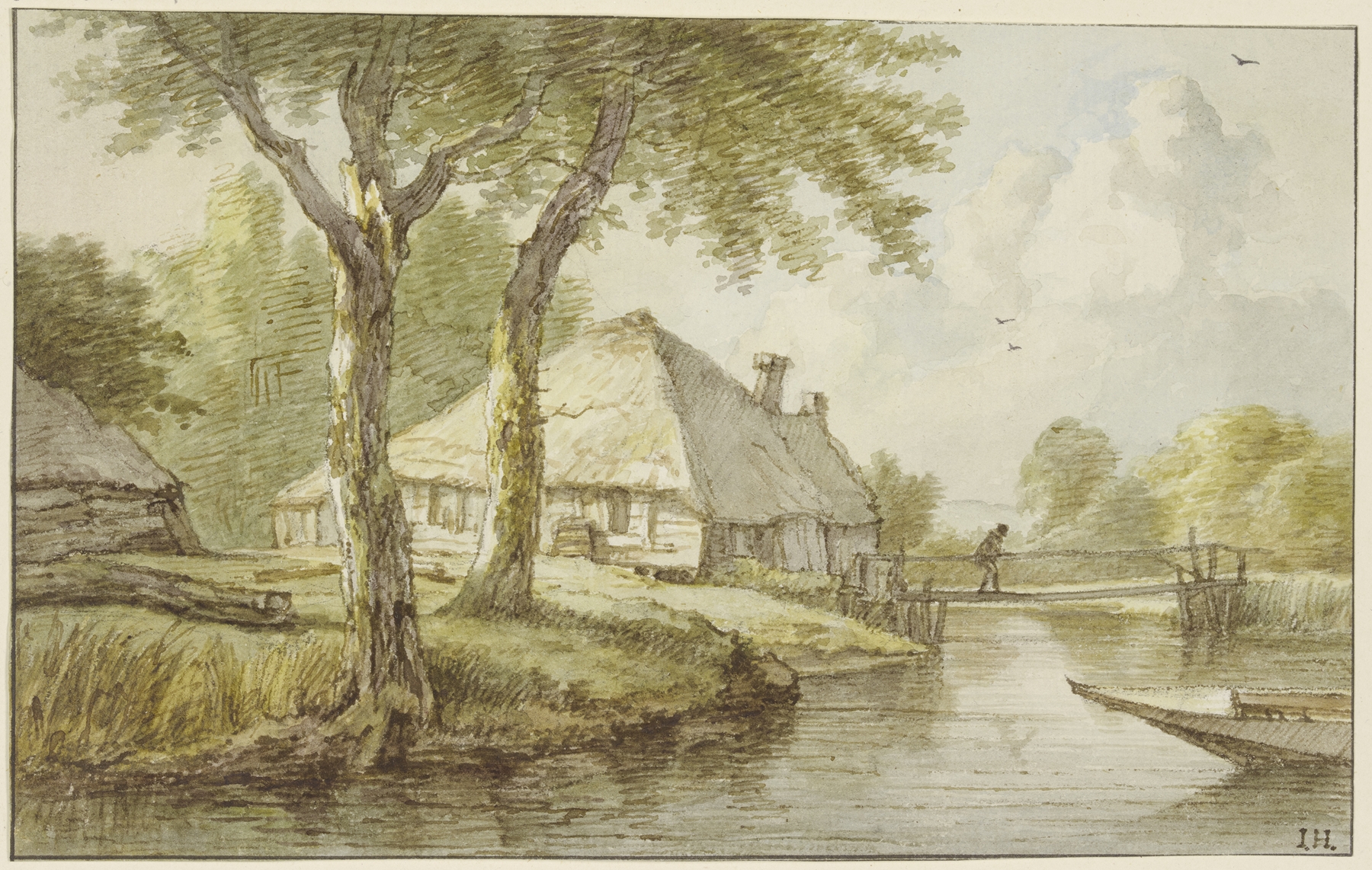
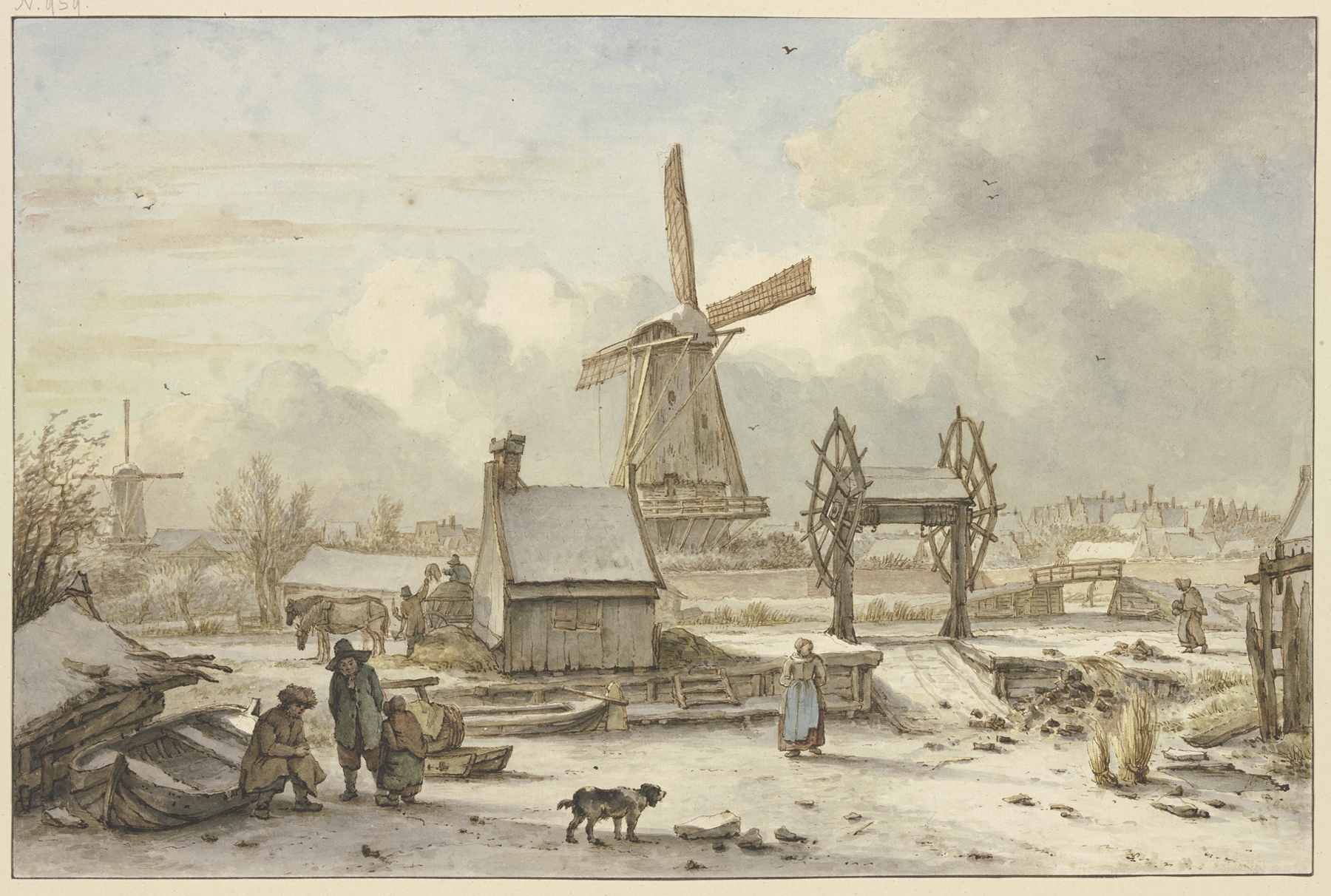
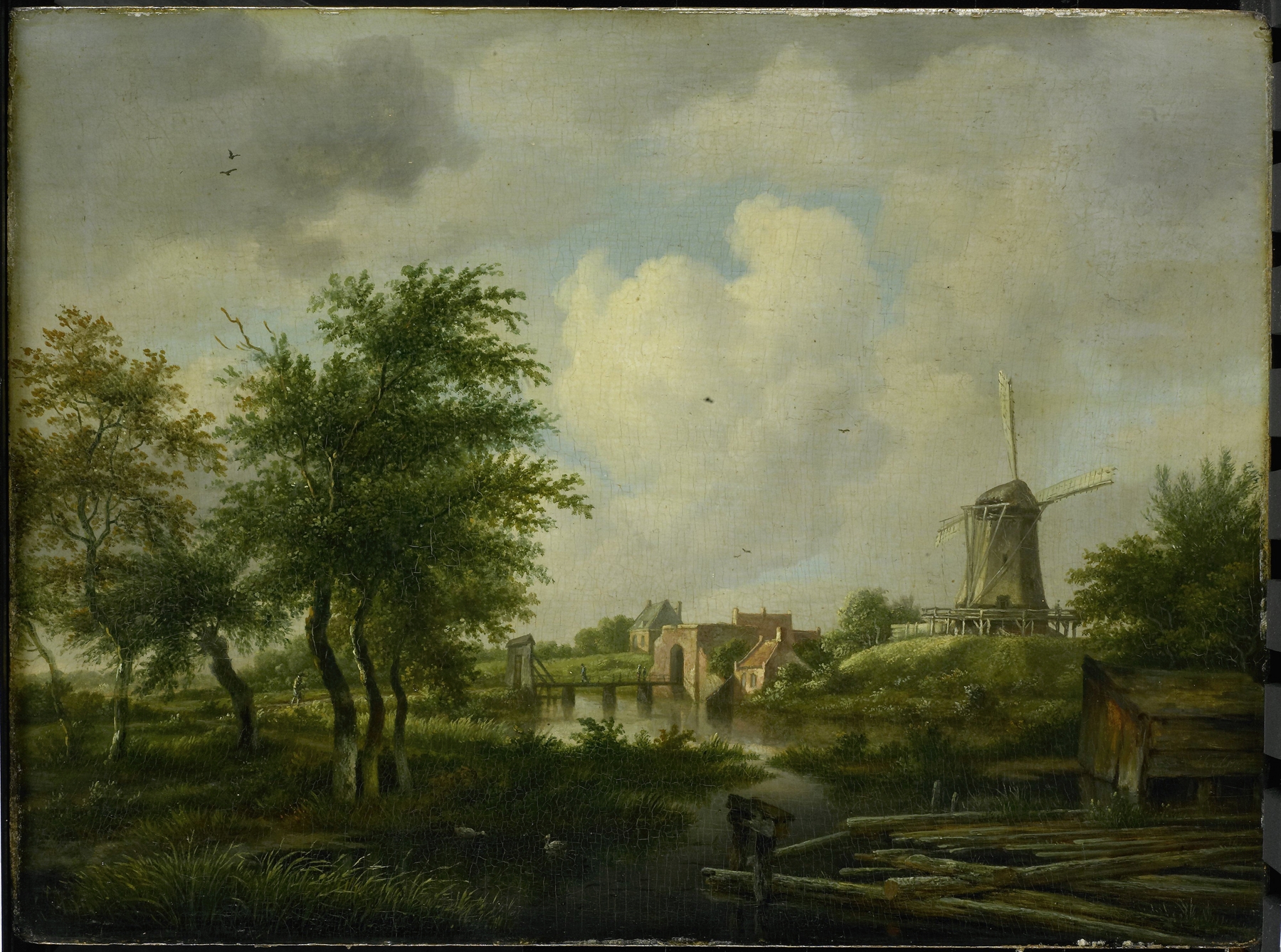
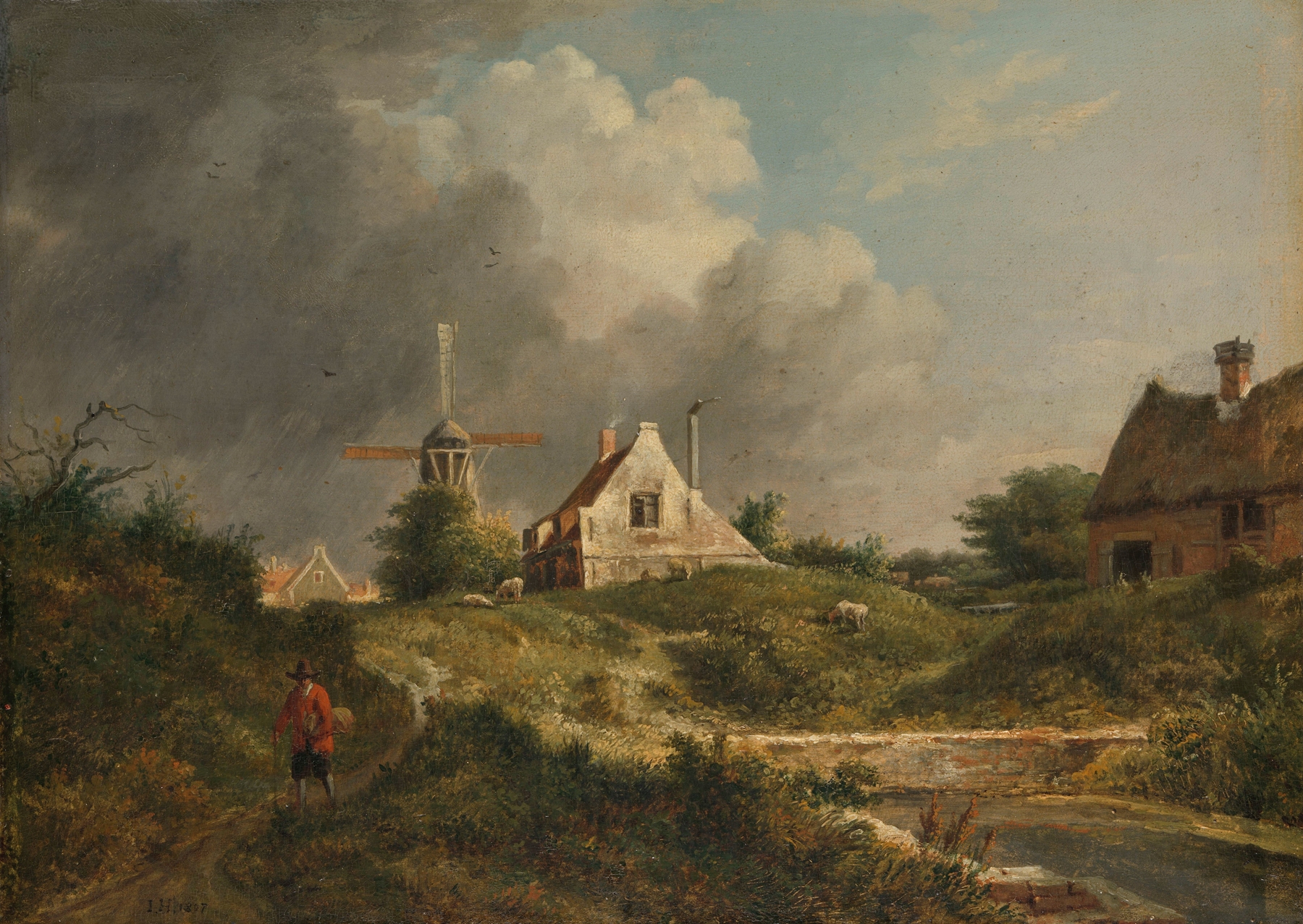
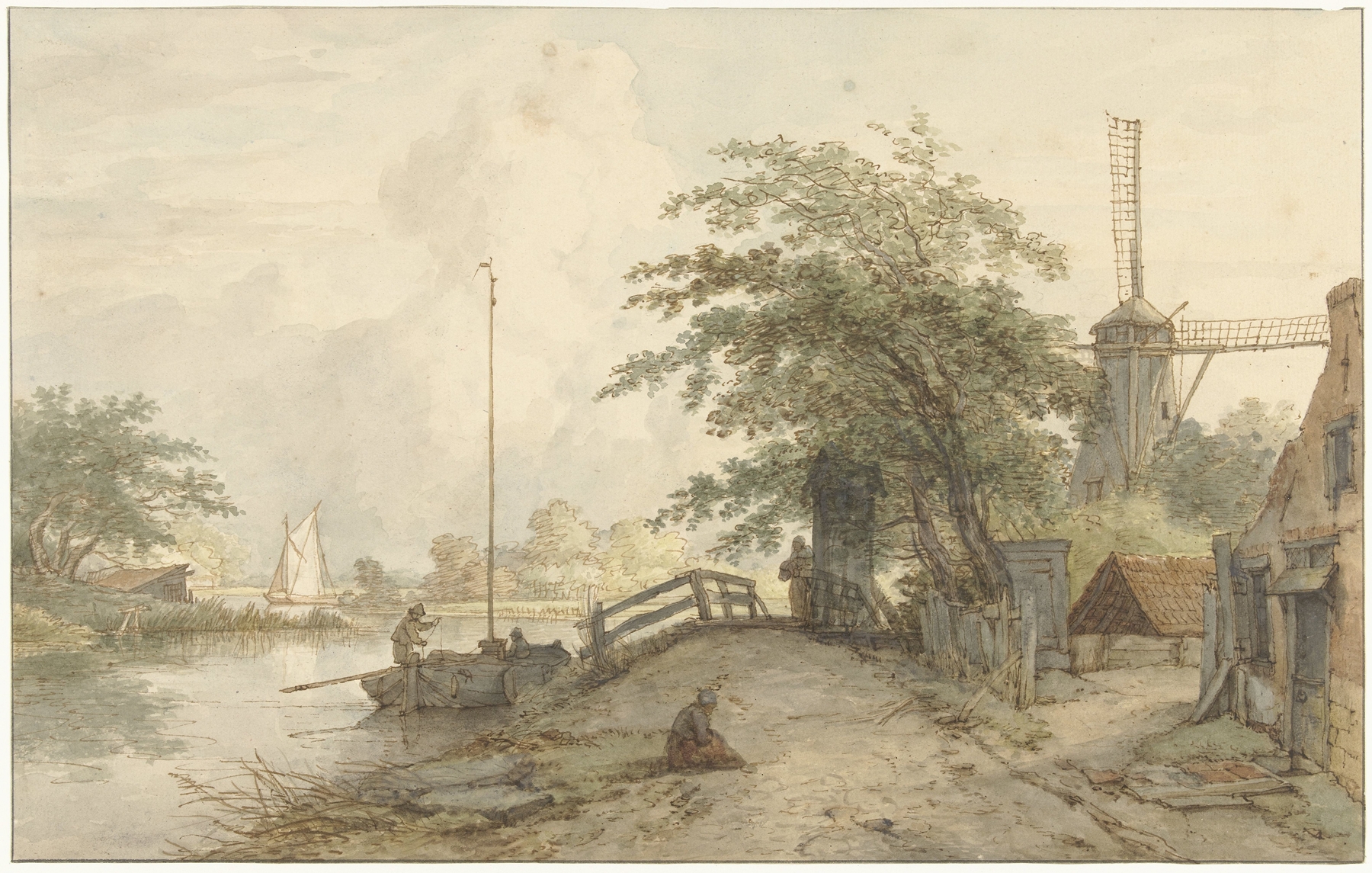
“Art reveals the soul when the world turns away.” In this tranquil landscape, reflections dance upon the water’s surface, beckoning the viewer to delve deeper into the serene harmony of windmills and canals. Focus on the shimmering waters in the foreground, where the windmills cast elongated silhouettes against the gentle ripples. Look closely at the interplay of light and shadow; the soft blues and greens of the canal contrast beautifully with the earthy tones of the windmills. The delicate brushwork suggests a breeze, giving life to the scene, while the horizon softly fades into a muted sky, inviting contemplation.
Beneath this idyllic exterior lies a subtle tension between nature and human intervention. The windmills, standing tall and steady, represent industriousness and progress, while their reflections hint at a deeper introspection—perhaps a reminder of the transient nature of existence. The calm water acts as a mirror not only for the structures above but for the viewer's own thoughts, encouraging a personal connection to the artwork. The balance of tranquility and reflection suggests a dialogue between the viewer and the landscape, urging us to pause and consider our own place within it.
Created in the late 18th to early 19th century, this piece emerged from Jan Hulswit’s time in the Netherlands, an era marked by both artistic evolution and environmental change. The Dutch landscape tradition was thriving, with artists capturing the intricate beauty of their surroundings amidst emerging industrialization. Hulswit, influenced by both romantic ideals and practical observation, reflects the serenity of the canals while addressing the human touch on nature.