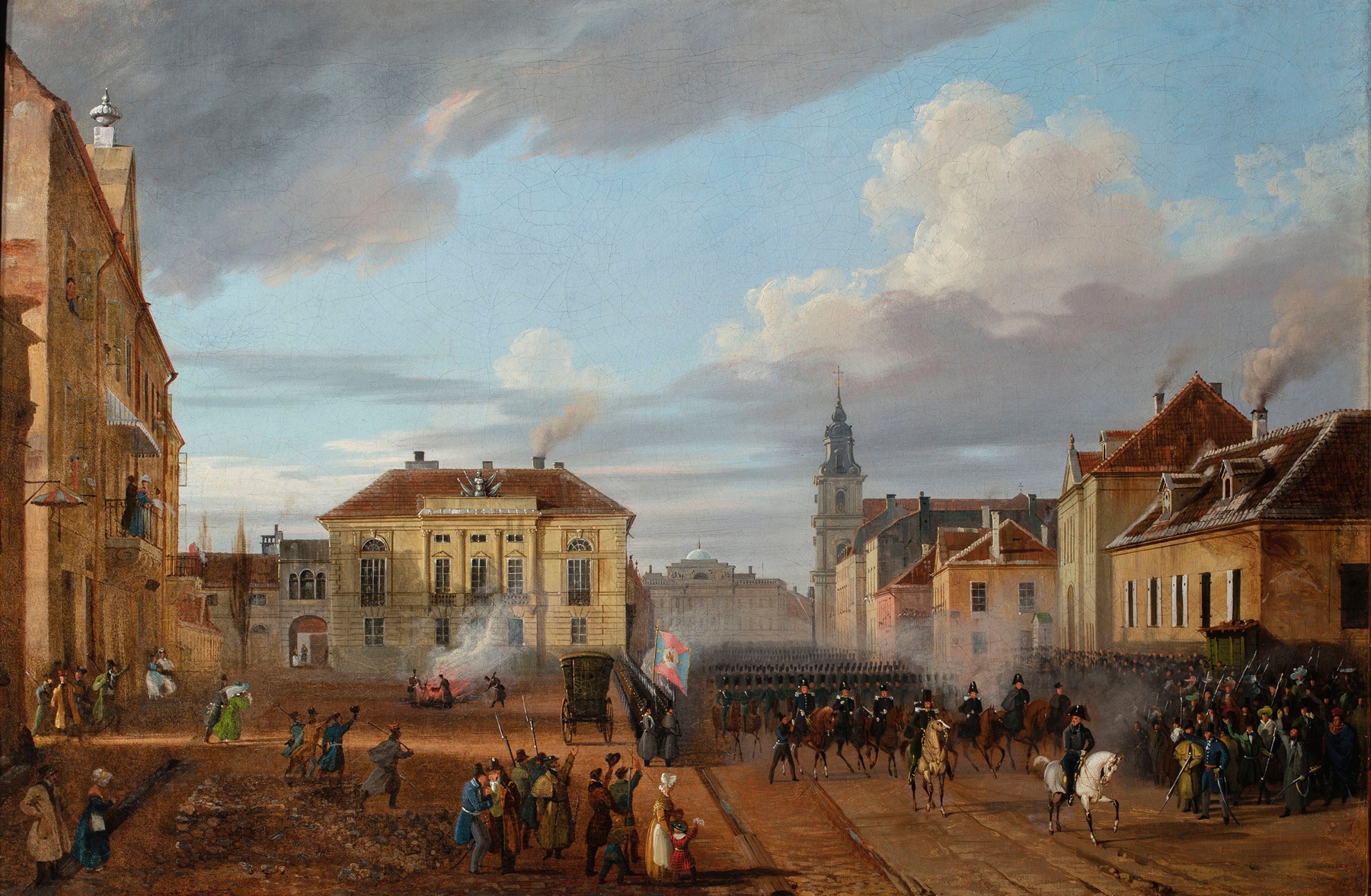
Entry to Warsaw with captives and standards won in the battles of Wawer and Dąb Wielki on 2 April 1831 — History & Analysis
A cloud of dust swirls in the air as a procession moves through the streets of Warsaw. Soldiers march with resolute determination, their faces a mixture of pride and weariness, while a few captives, shackled and solemn, follow in their wake. The tension between victory and loss hangs heavily, illuminated by the harsh sunlight filtering through the trees, casting long shadows that stretch across the cobblestones. Focus on the soldiers to the left, their uniforms vibrant, adorned with the spoils of battle — tattered flags and standards that flutter faintly in the breeze.
Notice how Zaleski captures the raw energy of the moment through dynamic brushstrokes, with the sharp contrast of deep reds and muted earth tones communicating both triumph and sorrow. The expressions on the soldiers' faces reveal layers of emotion, drawing the viewer into the moral complexities of war. Hidden in the composition are reflections of innocence amidst the chaos. The juxtaposition of the proud soldiers and the subdued captives elicits a profound sense of empathy, prompting us to question the price of glory.
The flags, symbols of conquest, seem to whisper stories of the lives forever altered by conflict, while the lightness of the sky contrasts starkly with the heavy burdens carried by both victors and the vanquished. Marcin Zaleski painted this work in 1831 during a tumultuous period in Polish history, marked by uprisings and the struggle for independence. As Warsaw stood on the brink of change, Zaleski's portrayal of the aftermath of battle reflects both the fervent spirit of nationalism and the sobering realities of warfare. The painting, steeped in context, serves as a poignant reminder of the innocence lost in the pursuit of freedom.