Evening Blue (Tending the Lobster Traps, Early Morning) — History & Analysis
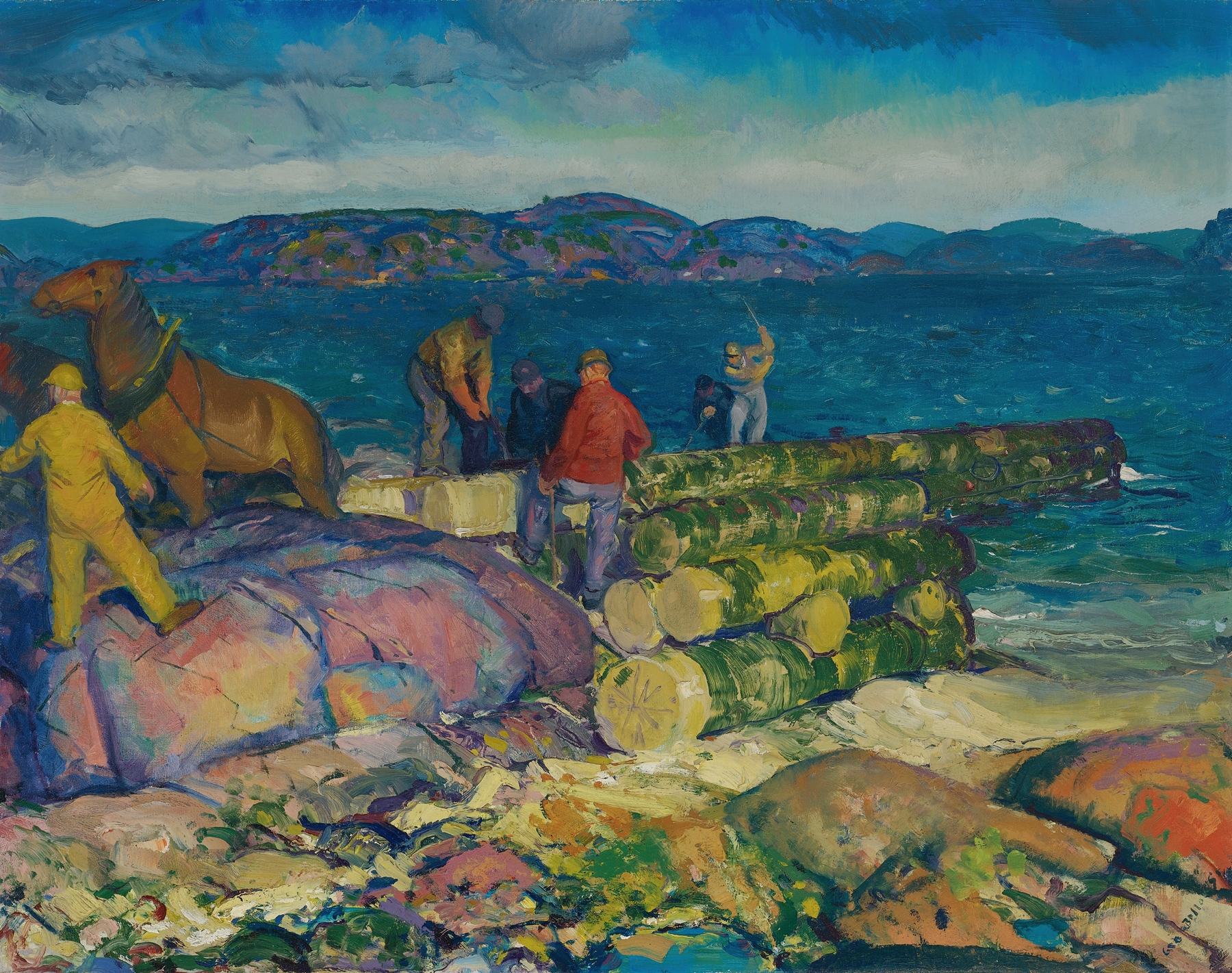
Did the painter know this moment would outlive them? In Evening Blue (Tending the Lobster Traps, Early Morning), George Wesley Bellows captures not merely a task, but an obsession—a fleeting ritual that echoes through time, marking the intersection of labor and the sublime. Focus on the deep blues enveloping the fishermen as they navigate the bounds of their daybreak duties. Notice how the light dances on the water, casting delicate reflections that shimmer like diamonds against the somber hues. The figures, silhouetted against the dawn, bend and twist with a grace that betrays the weight of their labor.
Bellows’ use of bold brushstrokes lends movement to the scene, pulling the viewer’s eye through the composition, inviting us to share in this shared ritual of existence. Beneath the surface of this tranquil moment lies a tension between human persistence and nature's indifference. The lobster traps, heavy with the promise of sustenance, symbolize both the bounty of the sea and the burden of survival. Each brushstroke is infused with a sense of urgency, reflecting the relentless march of time and the obsession that drives these men to rise before dawn, to toil against the elements, and to secure their livelihoods.
The deep blues encapsulate a feeling of melancholy, as if suggesting that every effort is fleeting in the grand scheme of life. In 1916, Bellows worked during a time when American art was shifting towards capturing the realities of modern life. Living in New York, he was immersed in the Ashcan School movement, which emphasized everyday subjects and a gritty realism. This piece emerged from his fascination with the working class, embodying both an appreciation for their labor and an acknowledgment of the larger existential themes at play in an ever-changing world.