Vine Clad Shore–Monhegan Island — History & Analysis
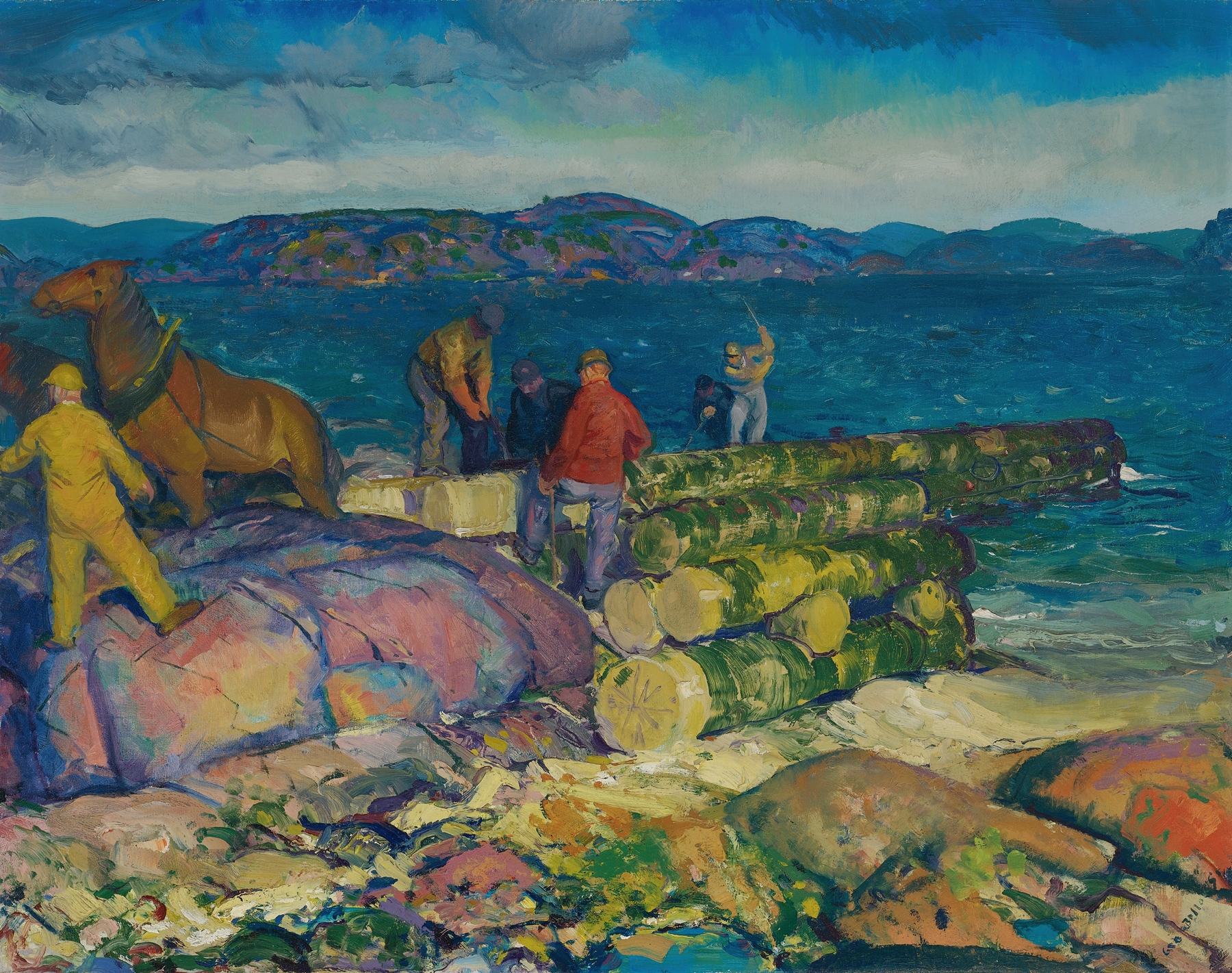
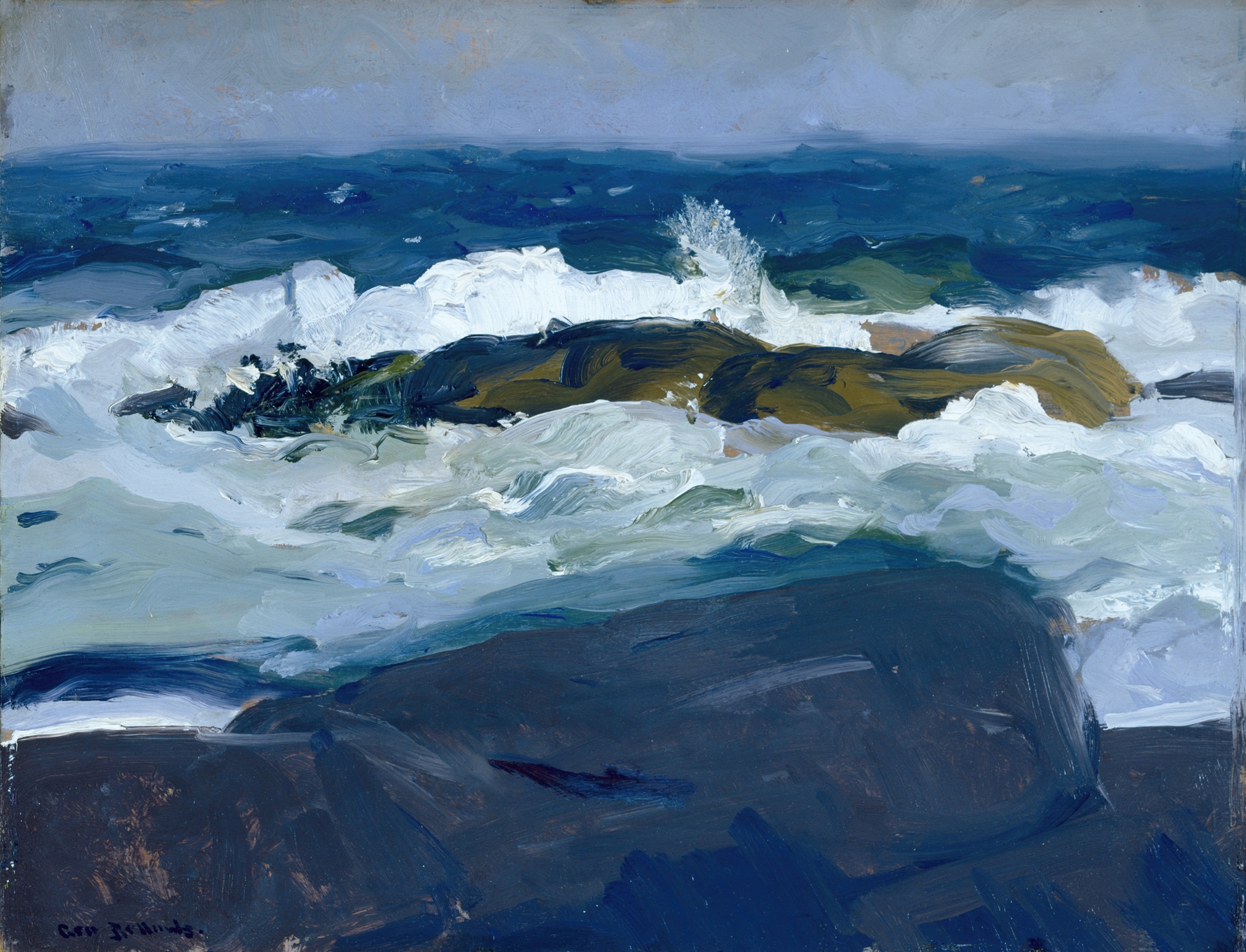
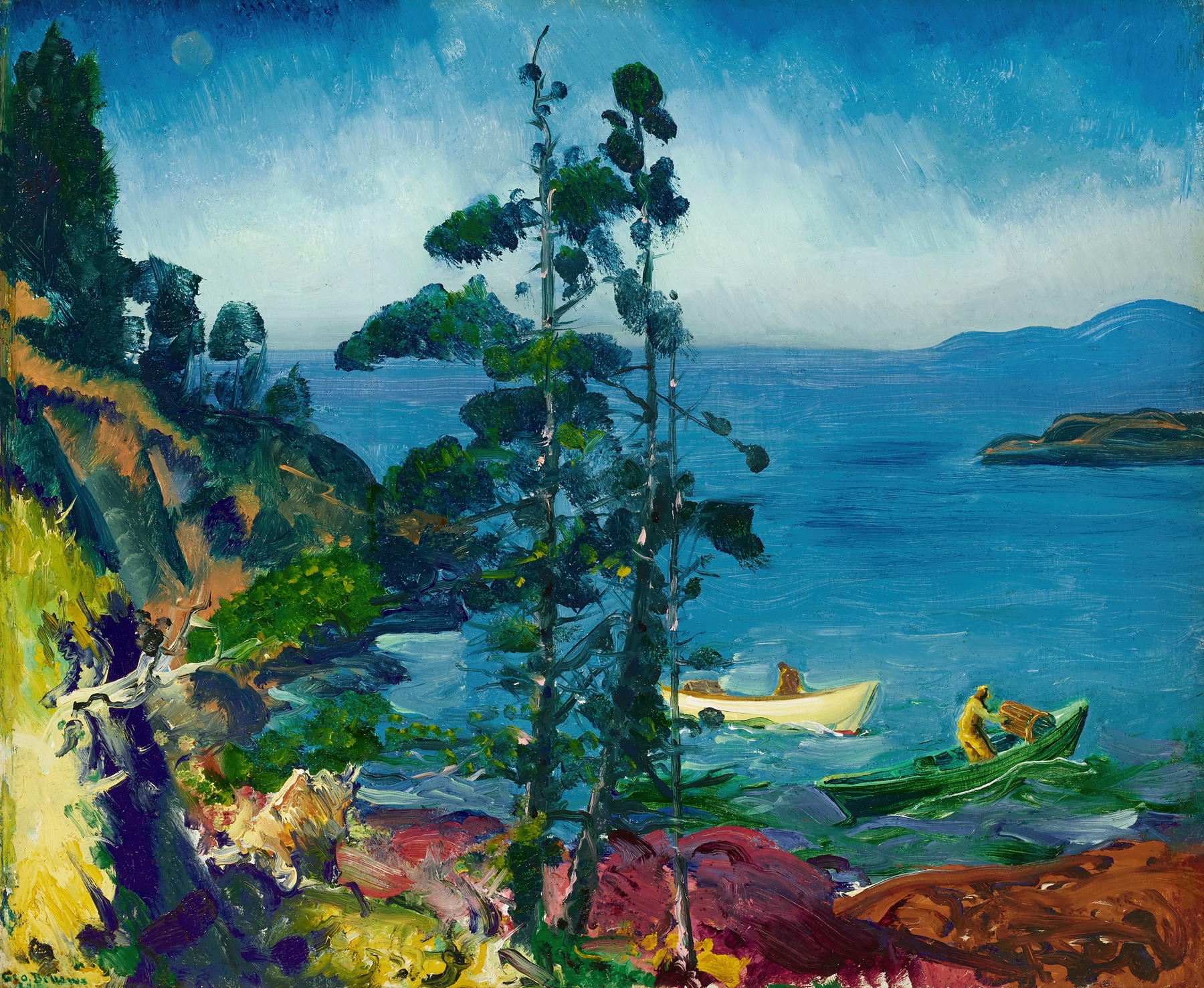
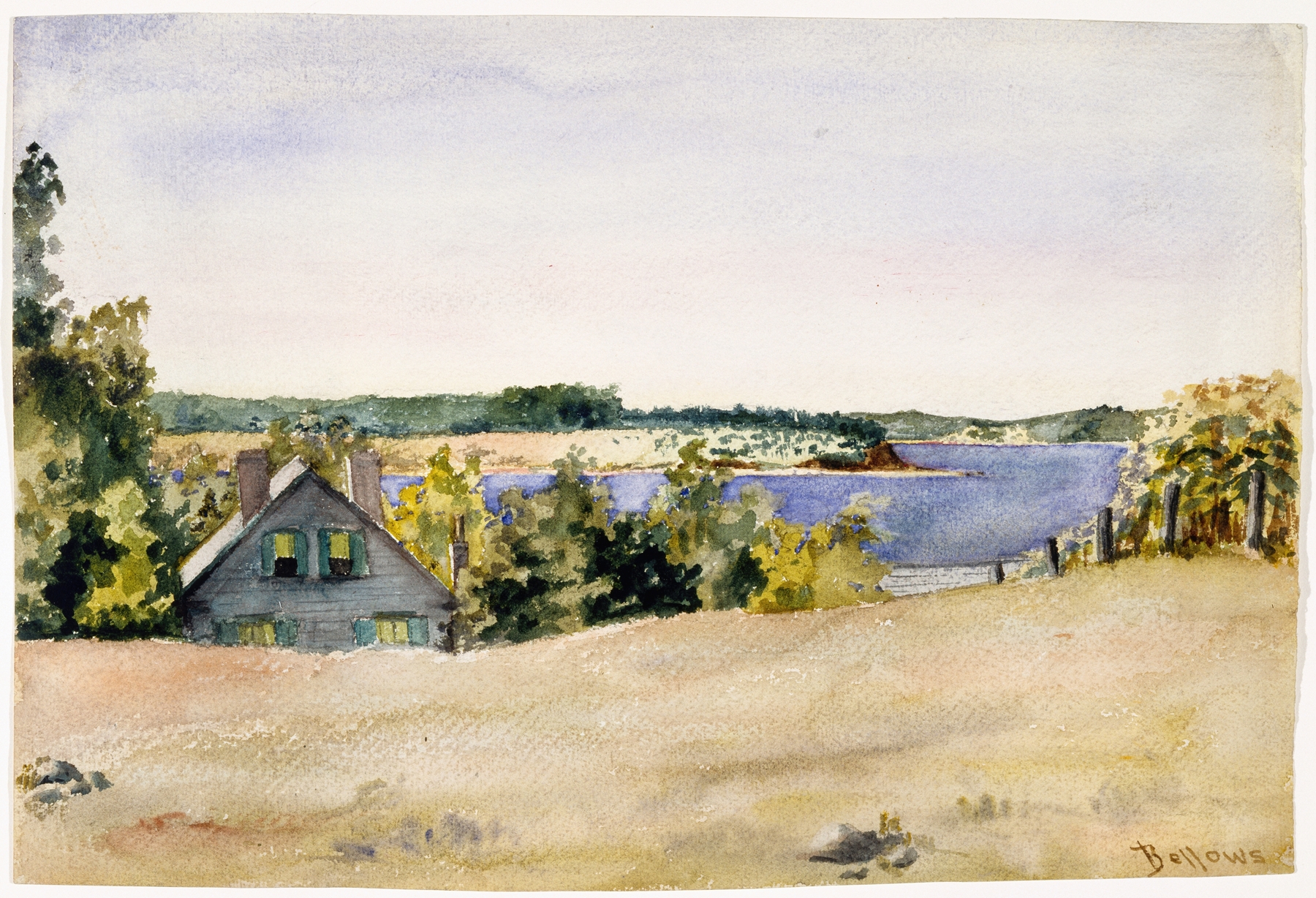
Could a single brushstroke hold eternity? In the gentle embrace of Vine Clad Shore–Monhegan Island, innocence blooms amidst nature’s wild glory, a moment captured in time that resonates deeply with the soul. Look to the left at the lush, green foliage, where light filters through leaves, creating a dappled dance of shadow and illumination. The vibrant hues of blue in the water contrast sharply with the earthy tones of the shoreline, drawing your gaze across the canvas.
Notice the layers of paint, thick and expressive, which reveal Bellows' vigorous technique, almost like an invitation to feel the texture of nature. Each stroke conveys movement, as if the very air is alive, whispering secrets of the island’s untamed beauty. In this work, a subtle tension arises between the serenity of the landscape and the hints of tumultuous waves crashing against the rocks. The juxtaposition of the soft, inviting shore against the formidable ocean suggests the fragility of innocence in the face of nature's raw power.
One might sense the weight of past storms and the promise of future calm, encapsulating both vulnerability and strength in a single scene. Created in 1913, this piece emerged during a period of artistic evolution for George Wesley Bellows, a key figure in the Ashcan School known for depicting urban life. His move to the coast of Maine coincided with a growing fascination for landscapes, a pivot from his earlier urban themes, as America was grappling with rapid change and modernity. This transition, coupled with the island's untouched beauty, allowed Bellows to explore a new realm of artistry, blending innocence with the elemental forces of nature.