Pennsylvania Station Excavation — History & Analysis
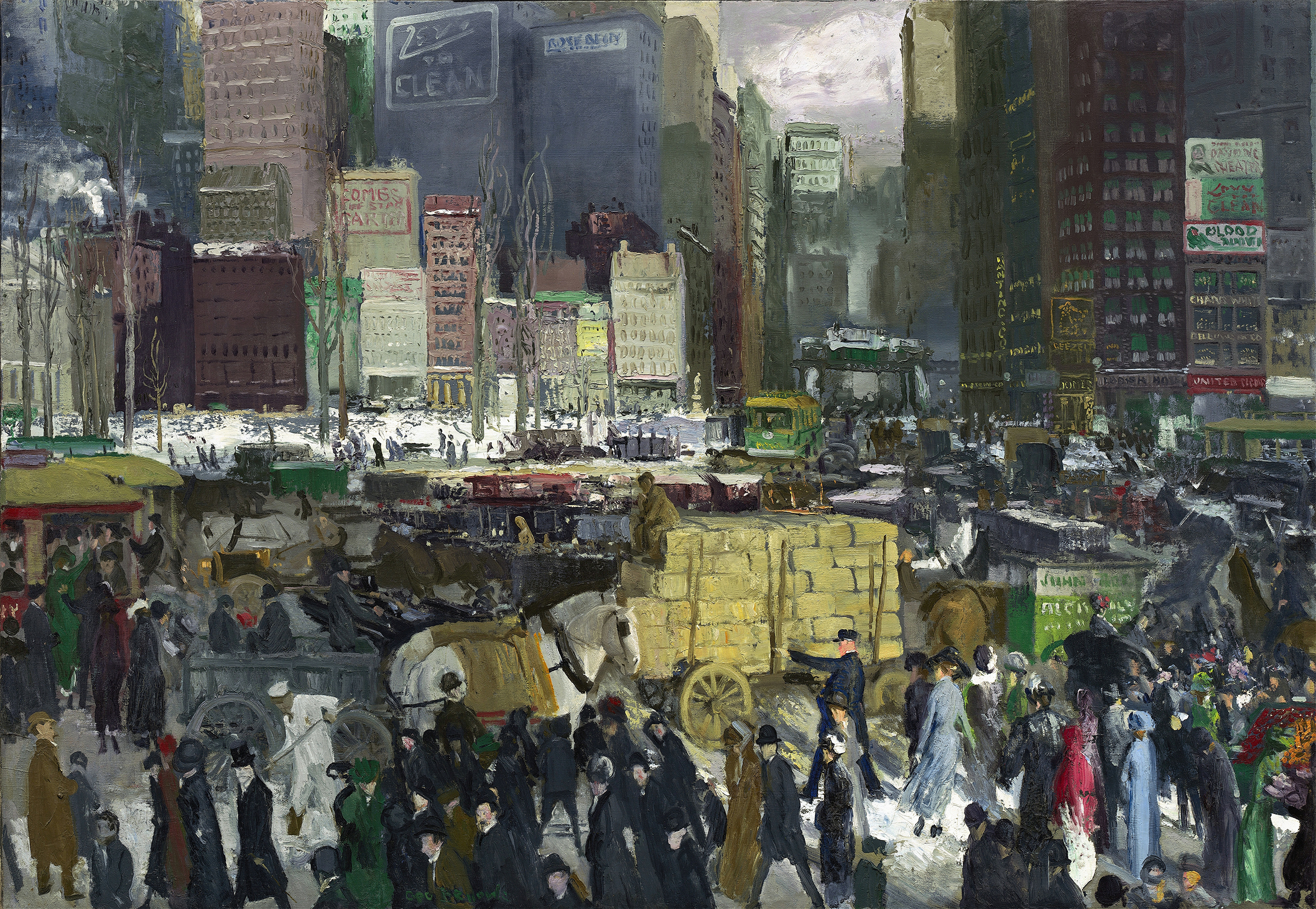
What secret hides in the quiet of the canvas? Beneath layers of muted earth tones and rugged brushstrokes lies a powerful testament to creation amidst chaos. Focus on the center of the composition, where the figures labor tirelessly, their forms etched in dynamic movement against the backdrop of solid stone and bustling urban construction. Notice how the artist captures the interplay of light and shadow, illuminating the workers’ determined faces while casting deep shadows that hint at the weight of their task.
The palette, dominated by browns and grays, evokes a sense of grit and toil, immediately drawing the viewer into the heart of this monumental endeavor. The tension between man and nature emerges as workers, engulfed in grime, confront the raw earth, their industry transforming it into a space for human achievement. The rugged texture of the canvas speaks to the struggle inherent in creation, while the distant outlines of buildings in the background hint at the inevitable encroachment of civilization. This juxtaposition invites contemplation on the cost of progress, and the quiet dignity of those whose labor often goes unnoticed in the grander narrative of urban development.
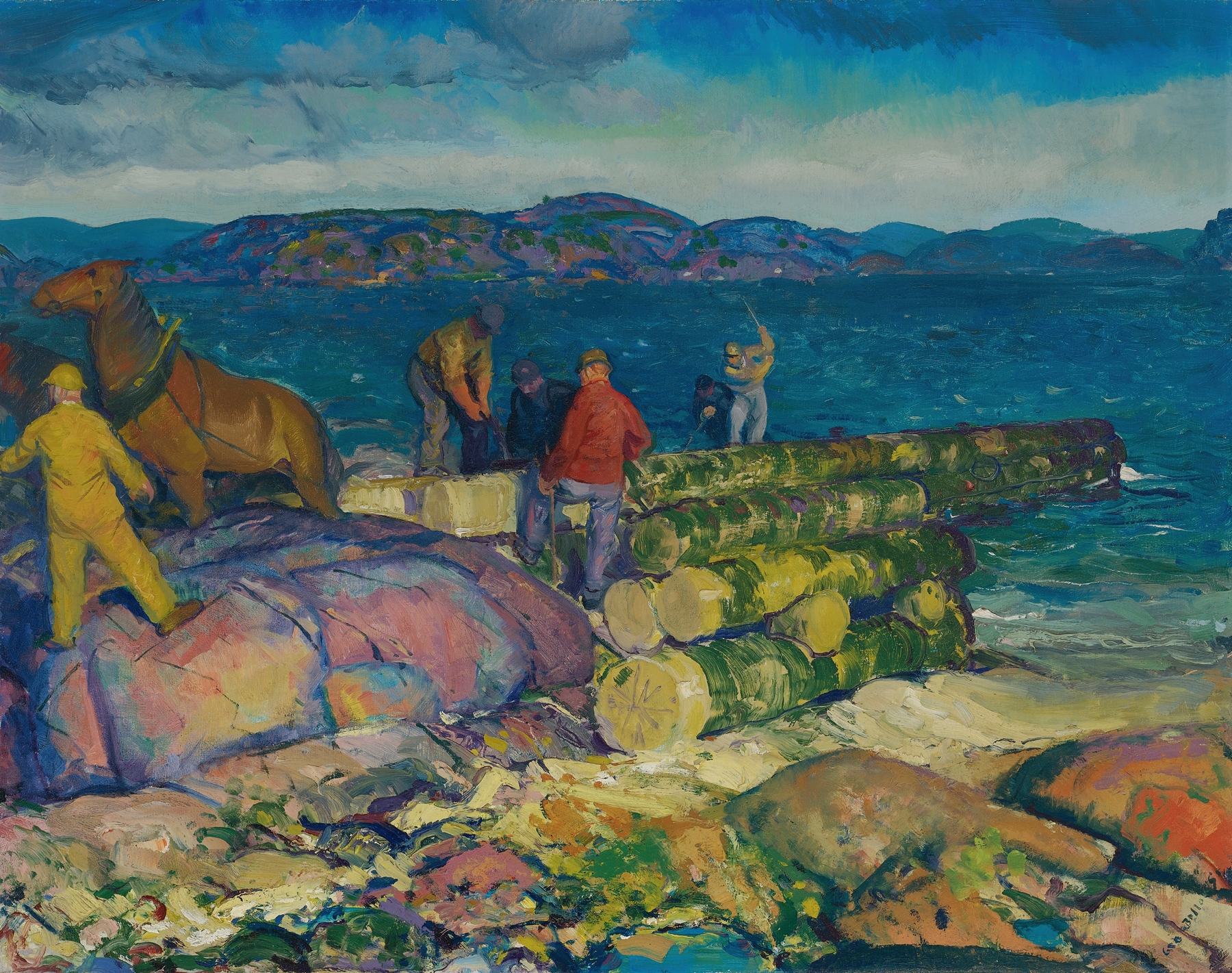
George Wesley Bellows painted this work during the early 20th century, a time when America was grappling with rapid industrial growth and urbanization. Living in New York City, he was deeply influenced by the energetic scene around him, capturing both the vibrancy and the struggles of city life. This period marked a pivotal moment in art history, as artists began to explore themes of social realism, and Bellows emerged as a prominent voice, using his art to reflect on the human experience in a rapidly changing world.