Evening, Honfleur — History & Analysis
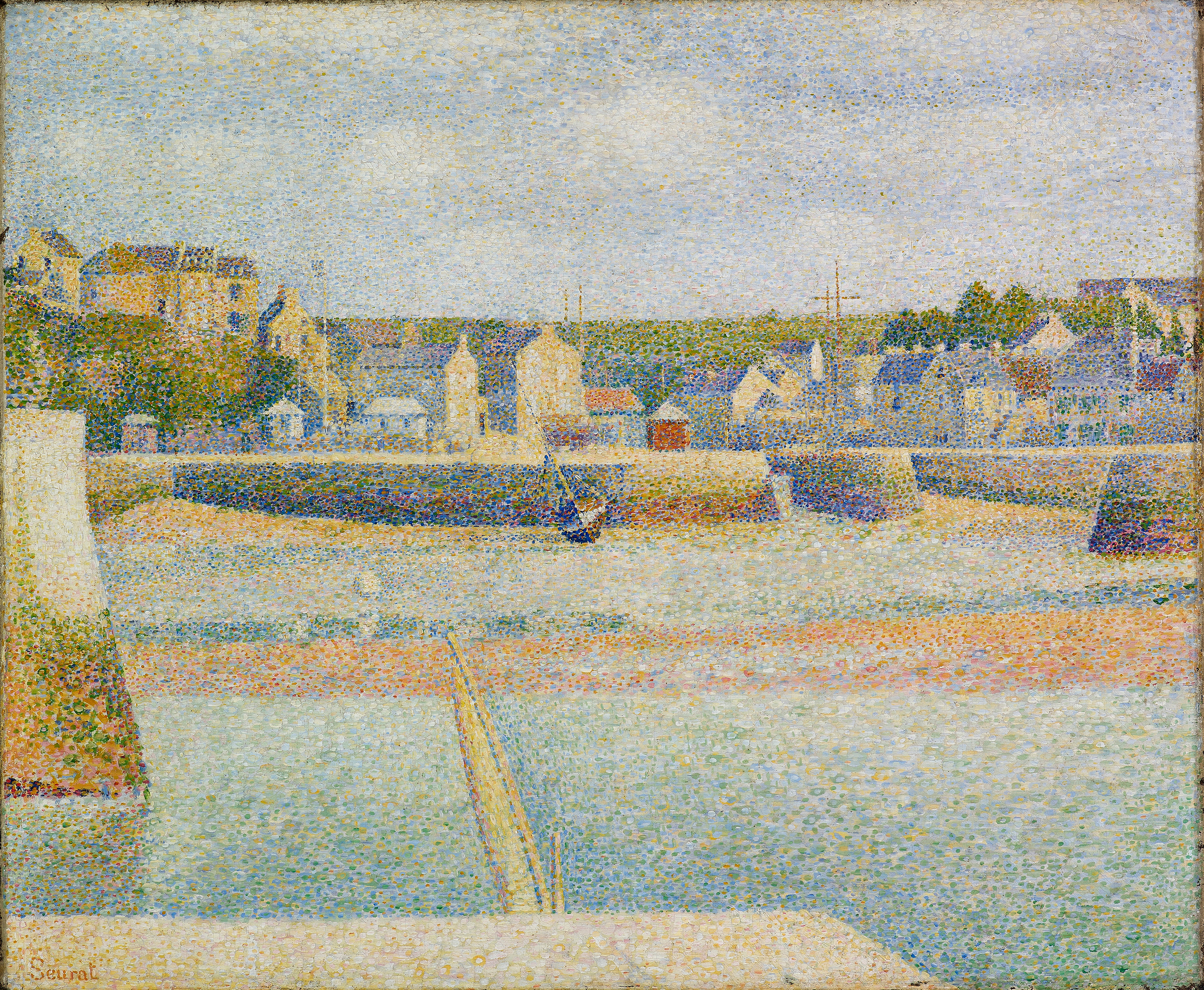
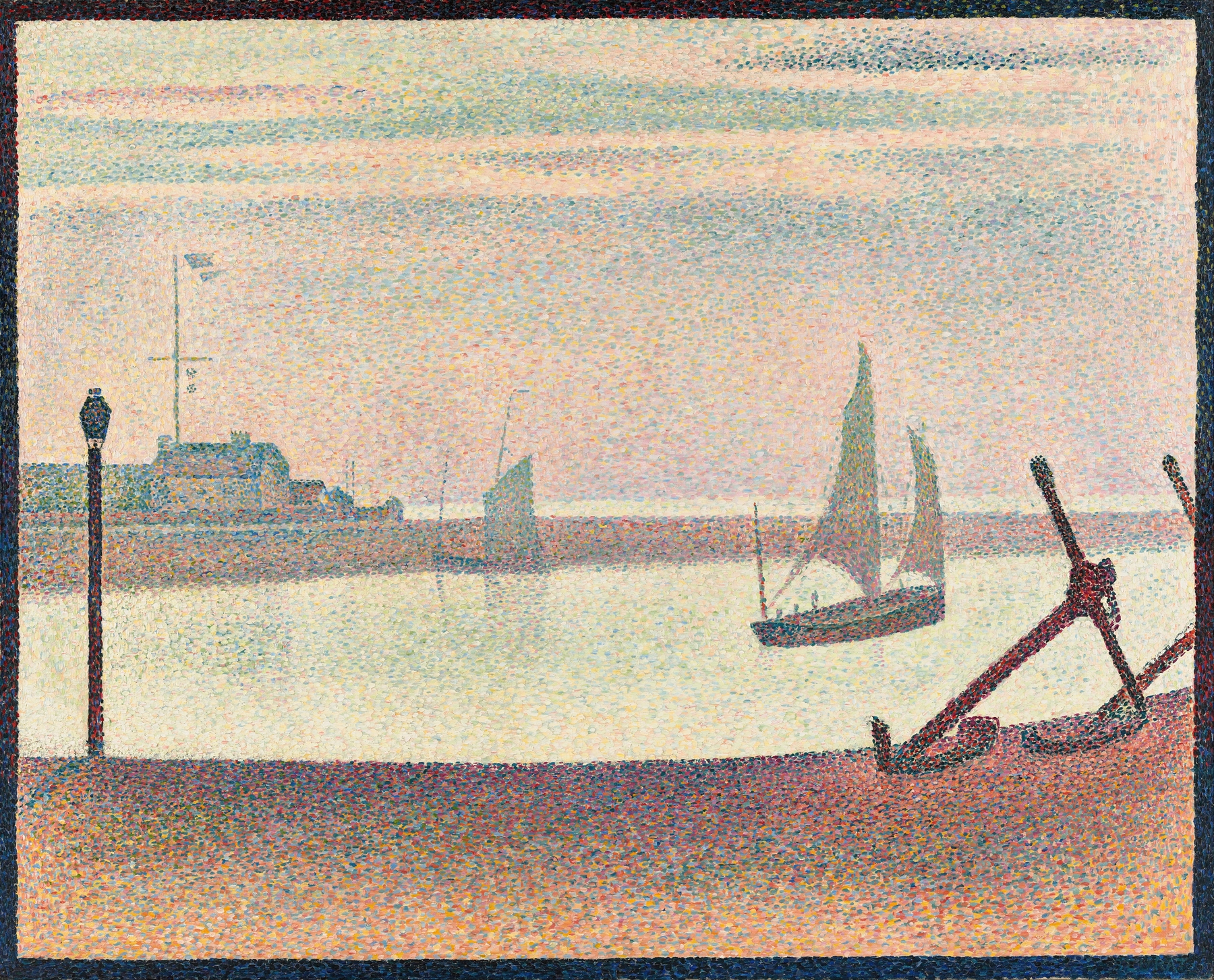
“Every silence here is a confession.” In the hush of twilight, the world pauses, exhaling a breath of stillness that whispers secrets of the day. Georges Seurat captures this fleeting moment of serenity, where the colors of the sky blend with the water's gentle embrace, creating an atmosphere thick with unspoken thoughts and reflections. To understand the essence of the work, look to the horizon first, where soft hues of lavender and amber converge. Notice how the brushstrokes, composed of tiny dots, invite you to explore the subtle transitions of light. The tranquil water mirrors the sky, while the silhouettes of boats and the distant shore add a delicate balance, drawing your gaze into the tranquil depths of evening.
Seurat's pointillist technique creates both vibrancy and softness, perfectly embodying the fleeting nature of twilight. Beneath the serene exterior, a contrast emerges between the bustling lives left behind and the quietude of the twilight landscape. The distant figures, seemingly frozen in time, evoke a sense of longing and introspection. Each dot, while contributing to the overall composition, also serves as a reminder of the isolation we often feel in moments of silence.
The painting offers a space for contemplation amidst the chaos of existence, challenging viewers to confront their own silence. In 1886, during a period of artistic innovation and exploration, the artist painted this piece in Honfleur, a picturesque fishing port in Normandy. At this time, he was deeply engaged in the pointillist technique, influenced by scientific studies of color and light. The art world was undergoing significant changes, and Seurat’s approach marked a departure from traditional methods, heralding a new era of modernism and paving the way for future movements.