Evening; Landscape with an Aqueduct — History & Analysis
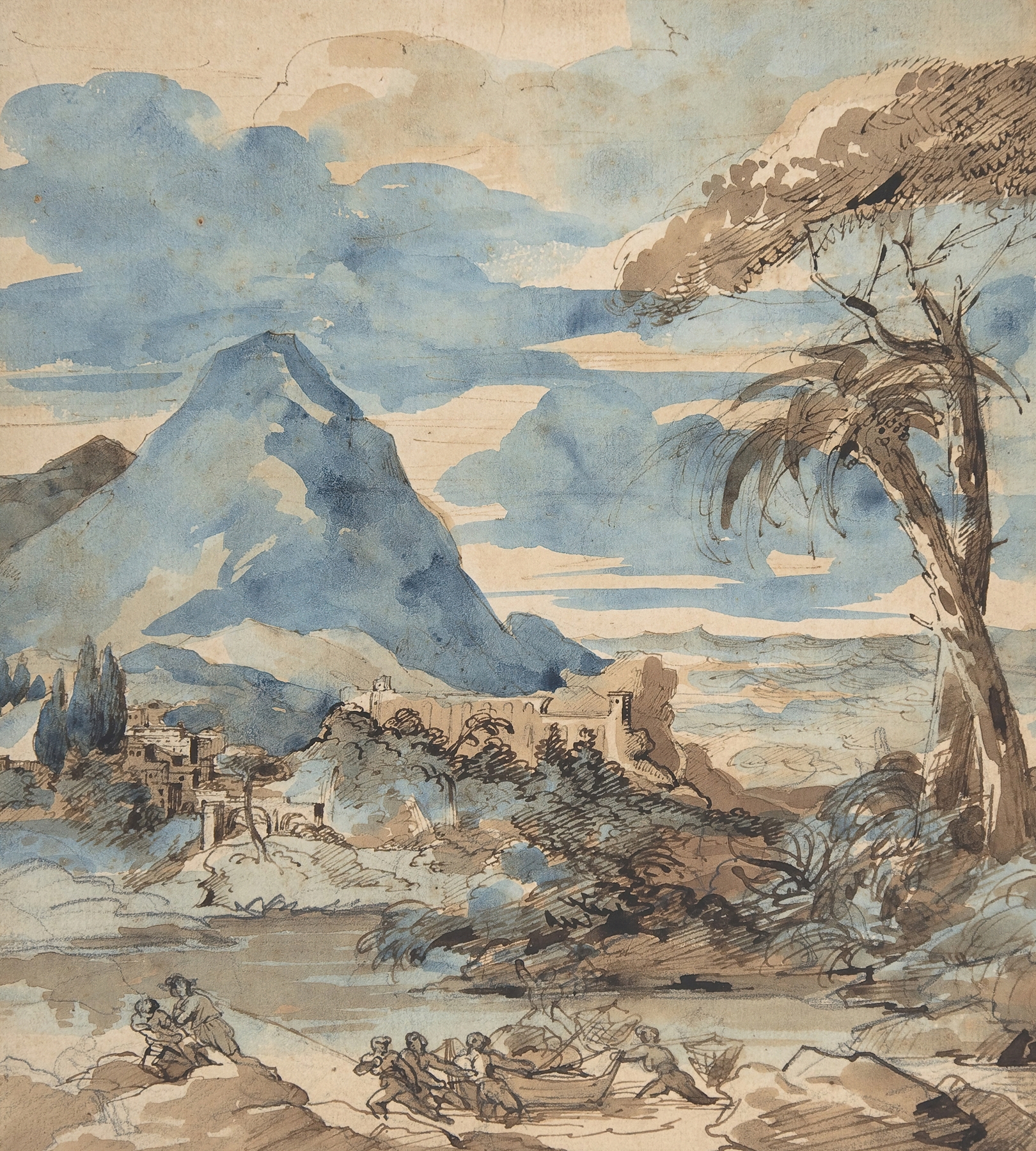
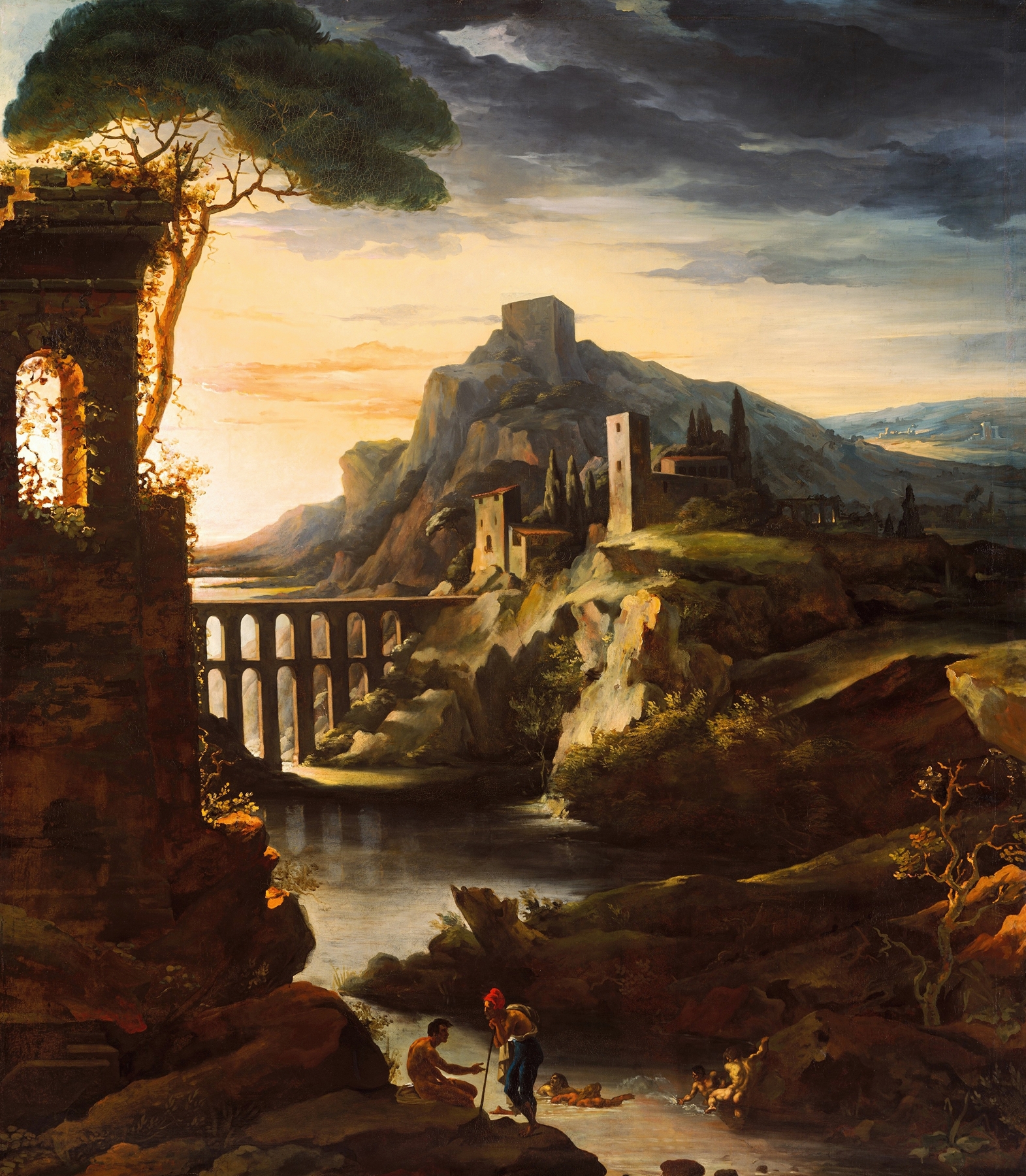
Could beauty survive in a century of chaos? In Evening; Landscape with an Aqueduct, the artist captures a tranquil moment that hints at nature’s resilient grace amidst the turmoil of early 19th-century Europe. Look closely at the aqueduct that stretches across the canvas, dominating the scene with its grand, ancient architecture. Notice how the warm, golden hues of the setting sun envelop the structure, casting long shadows that stretch towards the lush, rolling hills. The soft brushstrokes create a sense of movement in the clouds, while a delicate palette of greens and browns infuses the landscape with life.
The balance between the monumental aqueduct and the serene countryside invites contemplation about humanity’s relationship with nature. Beneath the surface, a poignant contrast emerges. The aqueduct, a symbol of human ingenuity, stands steadfastly against the encroaching darkness of night, evoking themes of endurance and permanence. The fading light, however, suggests the inevitability of change, highlighting an emotional tension between civilization and the natural world.
These elements speak to the fragility of beauty in a time marked by unrest and revolution, where the harmony of the landscape serves as both a refuge and a reminder of what is at stake. In 1818, Géricault was in Paris, where he was deeply influenced by Romanticism and the shifting landscape of contemporary art. His explorations into the human condition were evolving, as were his innovative techniques, which sought to capture not just the physical realm but the emotions surrounding it. As Europe faced political upheaval, this work emerged as a meditation on the balance between chaos and beauty, resonating with the spirit of its time.