Shipwrecked on a Beach (The Tempest) — History & Analysis
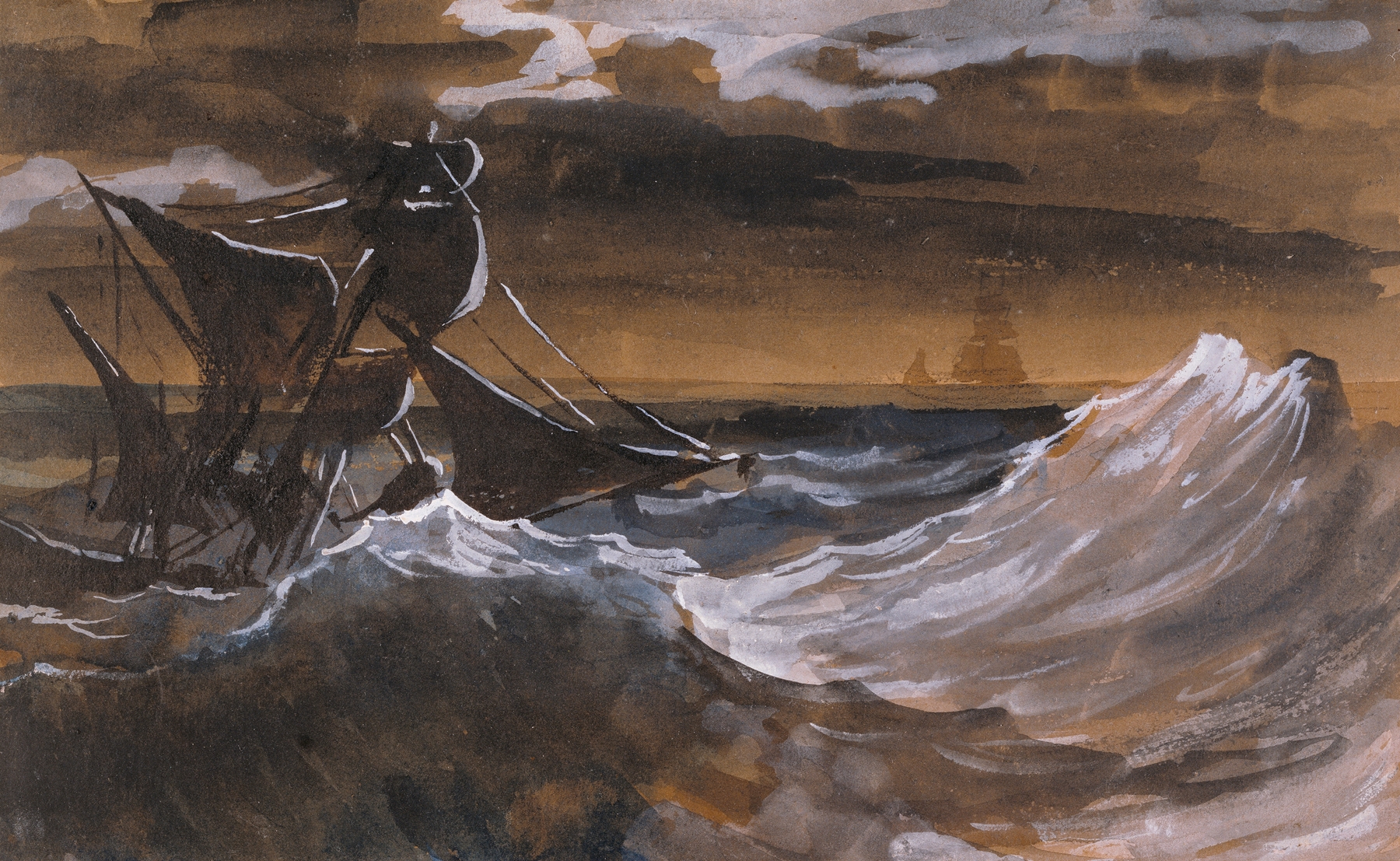
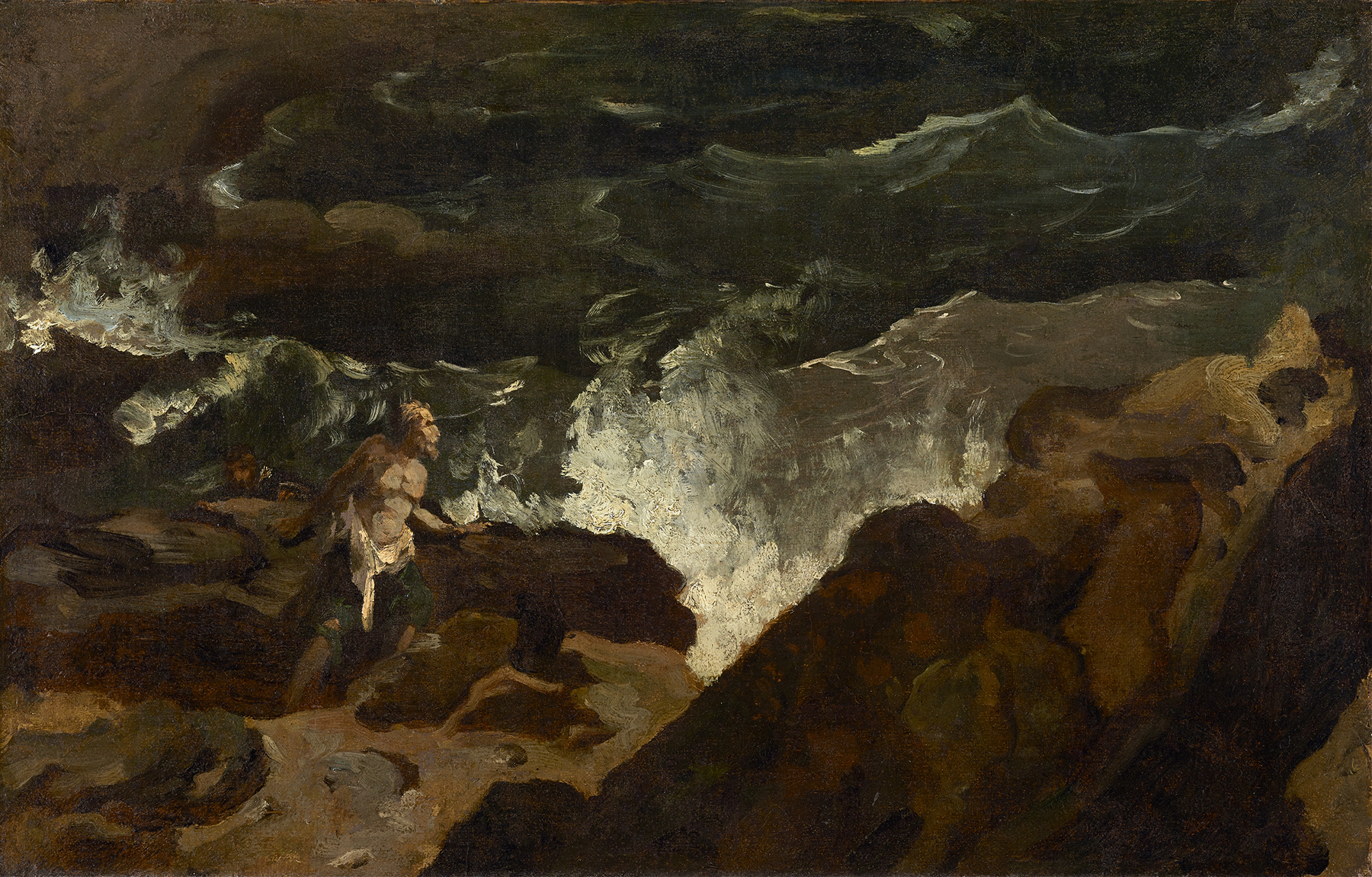
Where does light end, and longing begin? The horizon, blurred by relentless waves, beckons with the promise of solace while invoking a haunting sense of fear. Look at the tumultuous sea that dominates the canvas, its crashing waves a tempest of emotions. The sun breaks through the clouds, casting a brilliant light upon the wreckage of a ship, illuminating not just the physical debris but the remnants of hope.
Focus on the figures, desperate yet resilient, clinging to the flotsam of their forsaken vessel, their outstretched arms revealing a raw, primal instinct for survival. Within this chaotic scene lies a poignant contrast: the vibrancy of sunlight juxtaposed against the dark shadows of despair. The color palette—a mix of deep blues and fiery oranges—represents not only nature’s fury but also the inner turmoil of those marooned. Each figure's expression reveals the tension between fear and determination, underscoring the fragility of human life in the face of overwhelming odds.
The artist captures a moment where dread and hope intersect, making the viewer acutely aware of the existential struggle. During the years 1822 to 1823, Shipwrecked on a Beach emerged from Géricault’s profound engagement with the themes of human suffering and resilience. Living in Paris, Géricault was deeply influenced by the Romantic movement's emotional intensity, as well as contemporary shipwrecks that stirred public sentiment. His work not only reflects personal concerns but also resonates within the broader context of an era grappling with the unpredictability of life and nature.