Fischerkate — History & Analysis
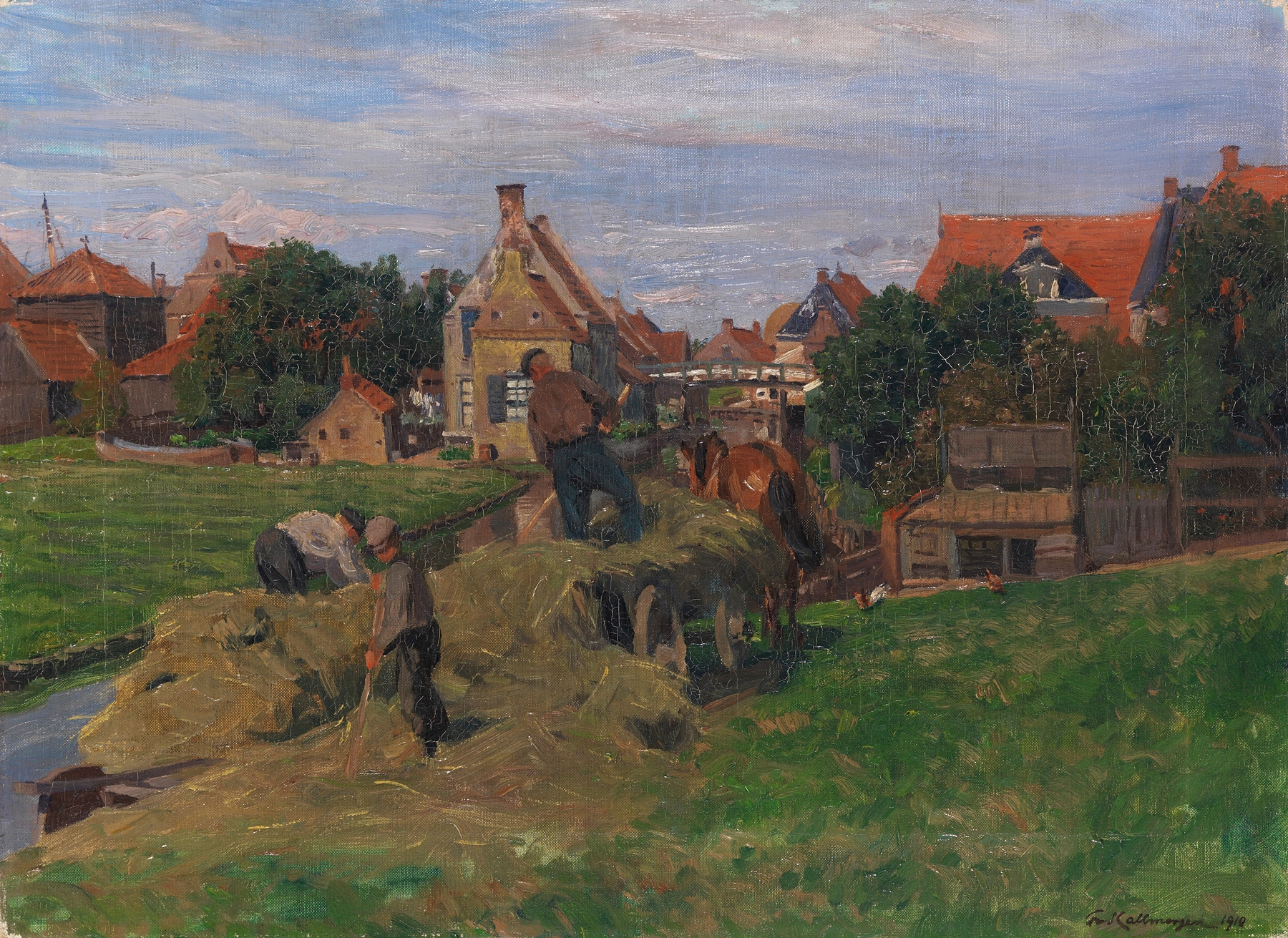
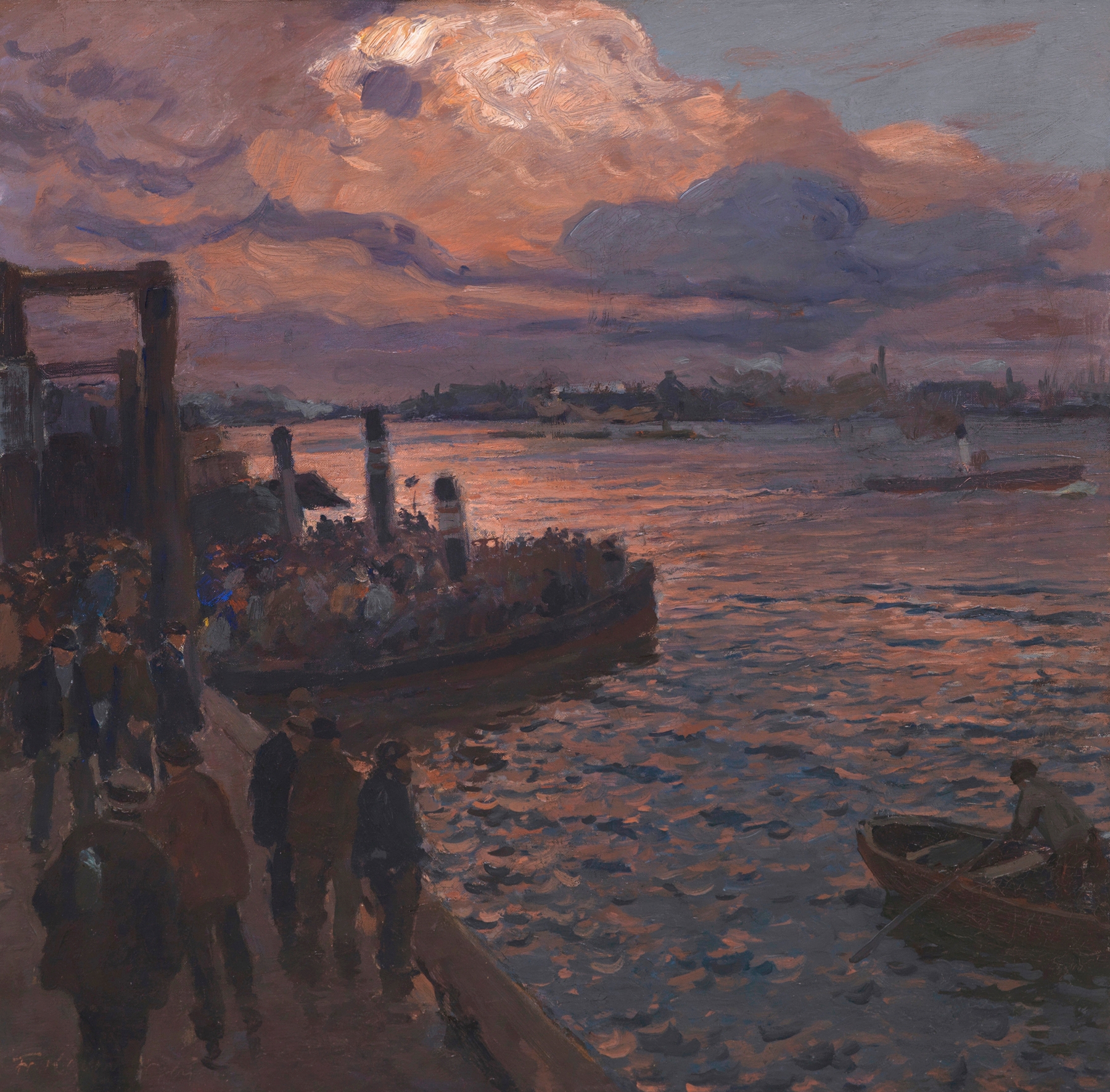
When did color learn to lie? In the soft embrace of twilight, the very essence of emptiness is captured, leaving the viewer in a contemplative silence. Look to the left at the quaint fisherman's cottage, nestled against the tranquil shoreline. The muted palette of blues and grays creates an atmosphere of desolation, while strokes of orange in the sky hint at a fleeting sunset. Notice how the horizon blurs, the boundary between land and sea dissolving into ambiguity, evoking a sense of isolation.
The gentle waves lap against the shore, a reminder of the passage of time, offering both refuge and solitude. Delve deeper into the focal elements—the solitary figure of the fisherman stands motionless, his back turned to the viewer, embodying the weight of solitude. This gesture suggests introspection, as if he grapples with his thoughts against the vastness that surrounds him. The empty rowboat draws the eye, its stillness a stark contrast to the lively sea, emphasizing the theme of abandonment and the ache of longing.
In these details lies the tension between existence and absence—an exploration of human vulnerability in nature’s indifferent embrace. Friedrich Kallmorgen painted Fischerkate in 1900, during a period marked by the waning of the 19th-century Romantic movement. At this time, Kallmorgen was based in Germany, where he explored the interplay of light and atmosphere in his landscapes. The burgeoning interest in capturing emotional depth through nature reflected a wider artistic shift, paving the way for modern interpretations of existential themes in art.