Schiffe im Amsterdamer Hafen — History & Analysis
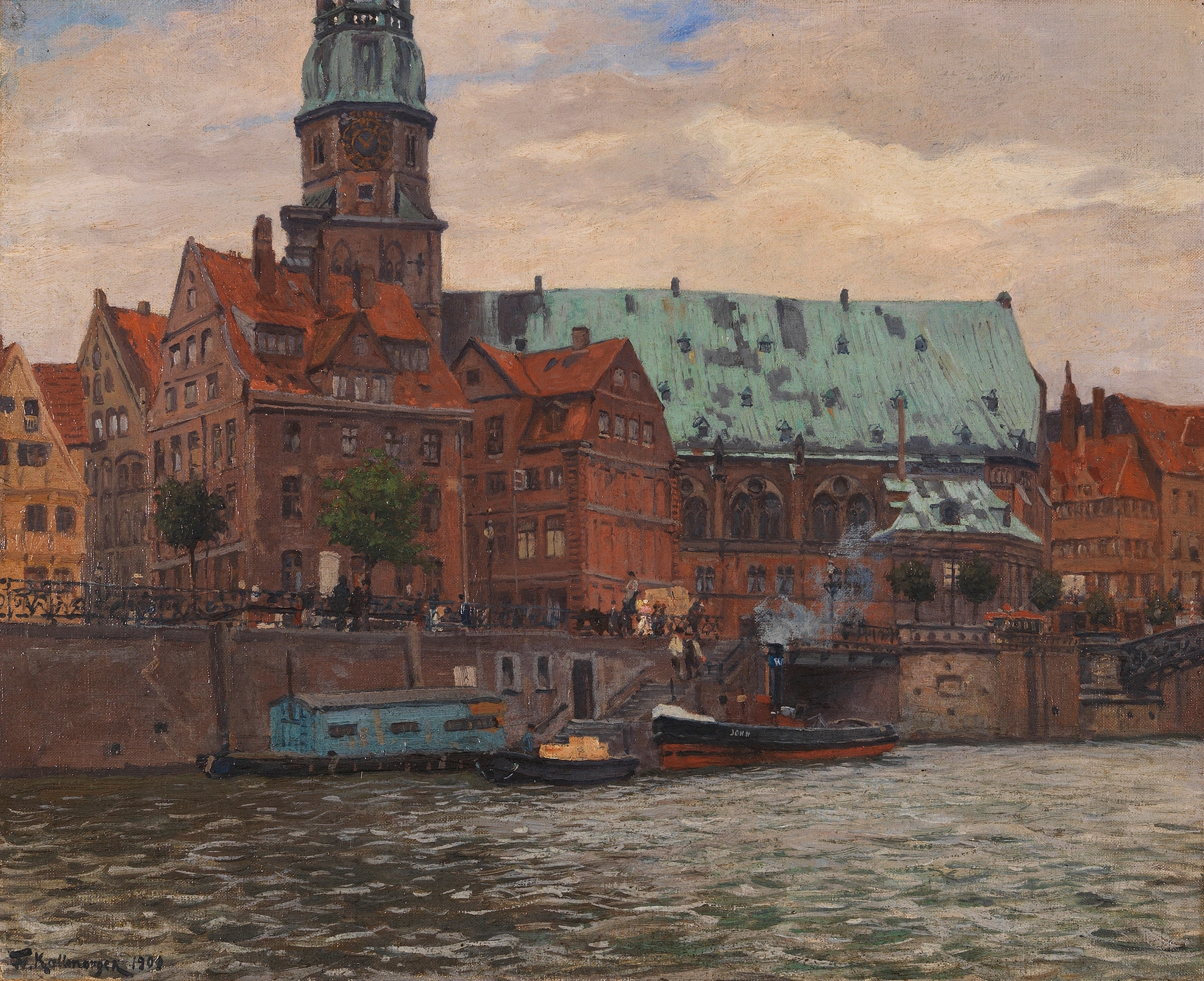
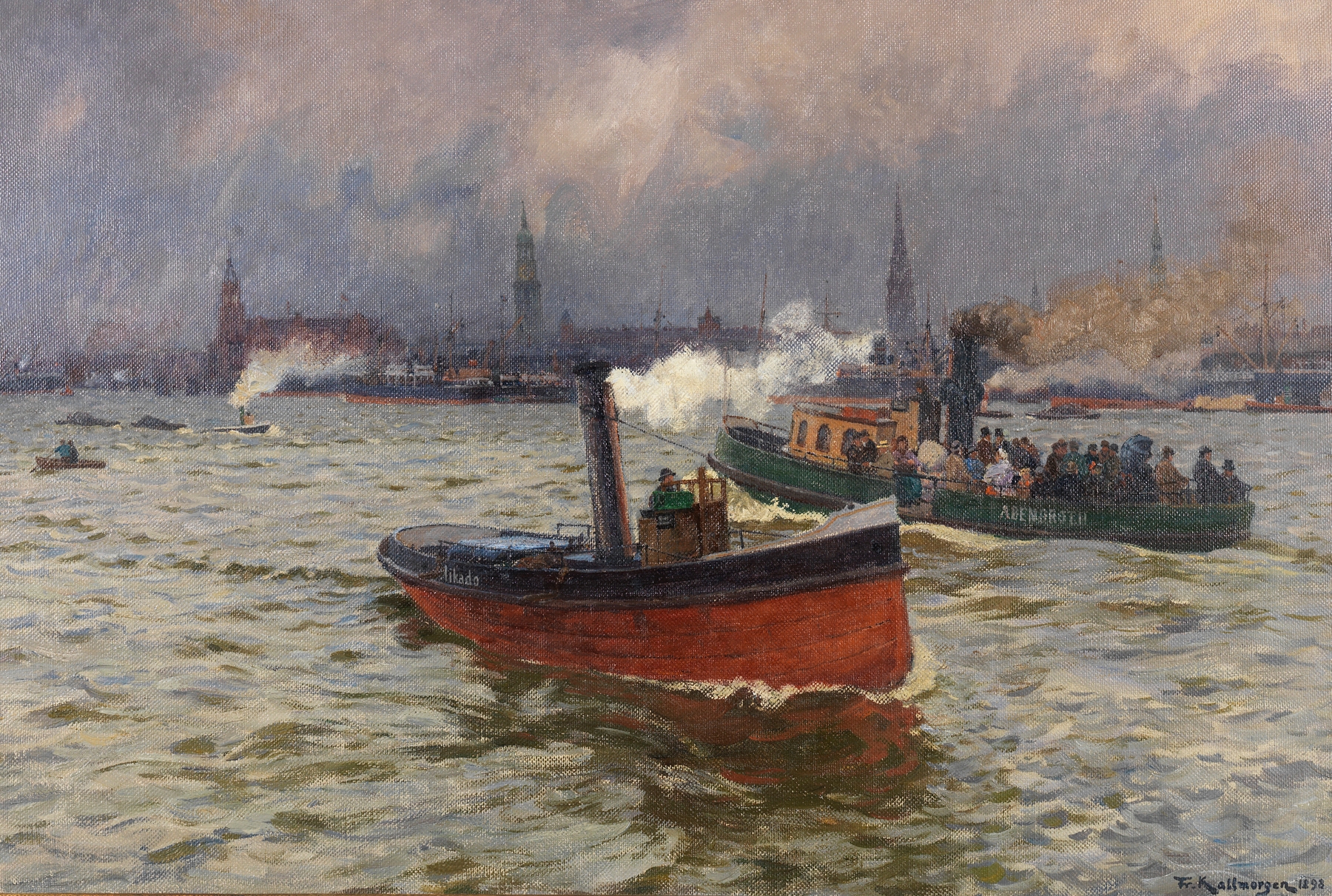
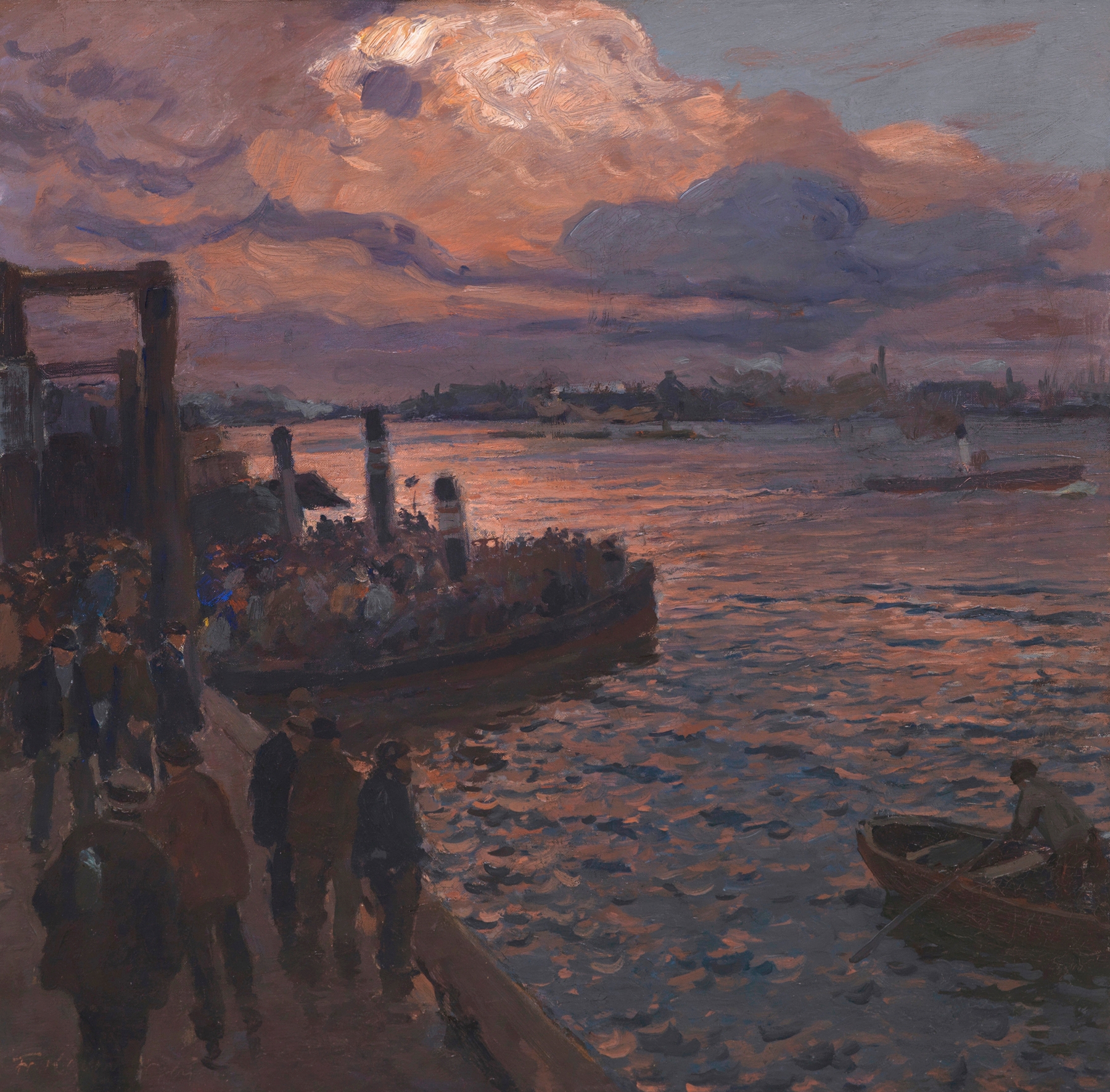
Did the painter know this moment would outlive them? A fleeting silence envelops the harbor, where ships rest in peaceful defiance against the encroaching emptiness of the world beyond. Look to the foreground, where the rough texture of the moored vessels draws your gaze. The interplay of light and shadow dances gently across their surfaces, revealing the worn, weather-beaten wood that speaks of countless journeys and stories.
Notice the muted blues and greys that dominate the canvas, evoking a sense of serenity, yet hinting at something deeper—an underlying melancholy that resonates with the stillness of the water. As you explore further, the reflections ripple across the harbor, distorting the shapes above and suggesting the fragility of existence. The absence of bustling activity feels both tranquil and unnerving, as if the harbor holds its breath, awaiting a future that may never come. In this quiet moment, Kallmorgen captures an unsettling juxtaposition between the permanence of the ships and the transience of time, reminding us that emptiness can coalesce into profound beauty.
Friedrich Kallmorgen painted this work in 1889 while living in Berlin, amidst a period marked by significant shifts in the art world. This was an era of burgeoning modernism, yet Kallmorgen remained rooted in the realism of his scenes. The industrial revolution was reshaping landscapes and lives across Europe, providing a backdrop of both opportunity and uncertainty, feeding into the atmosphere of stillness captured in his portrayal of the Amsterdam harbor.