Hamburger Hafen im Abendlicht — History & Analysis
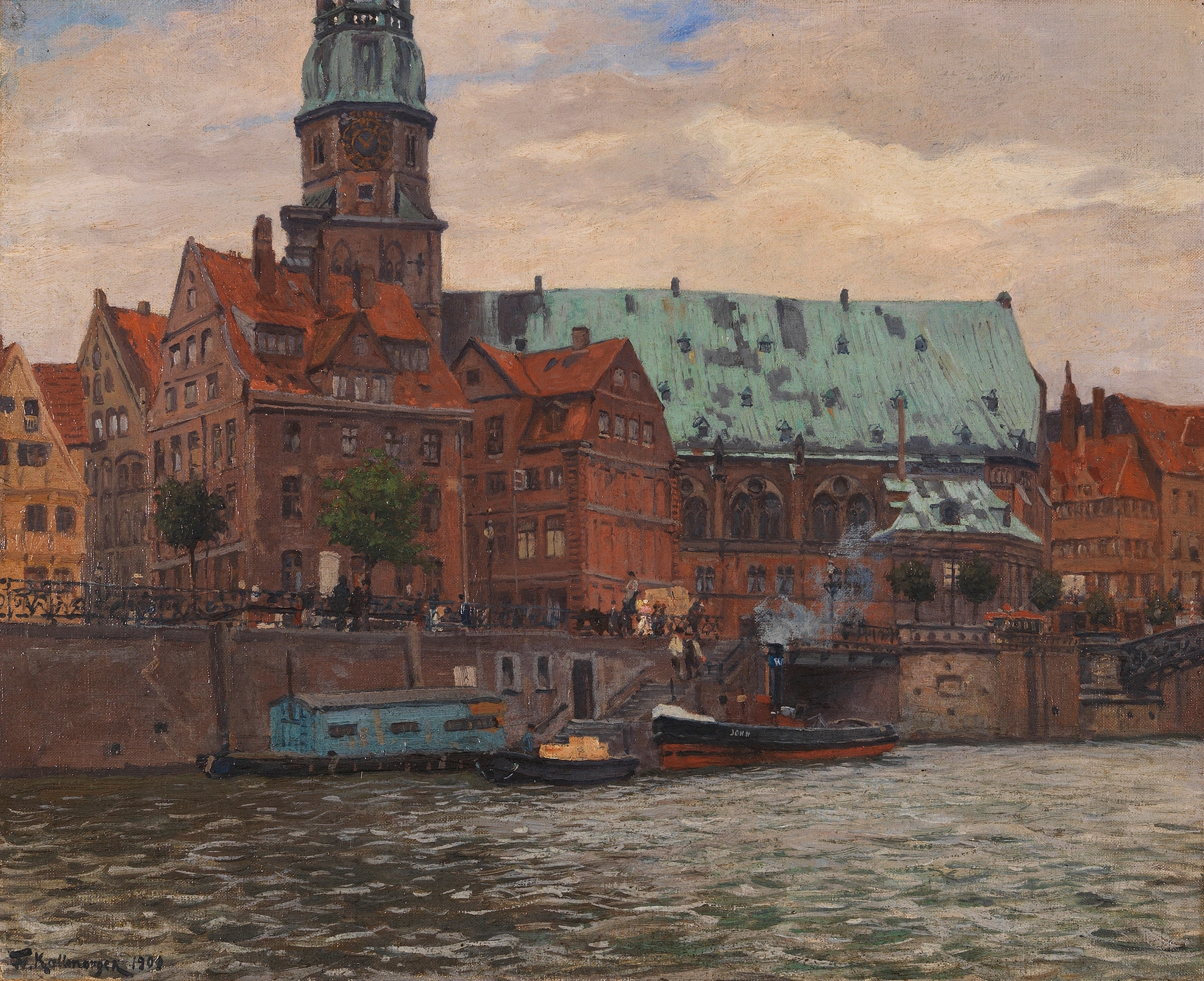
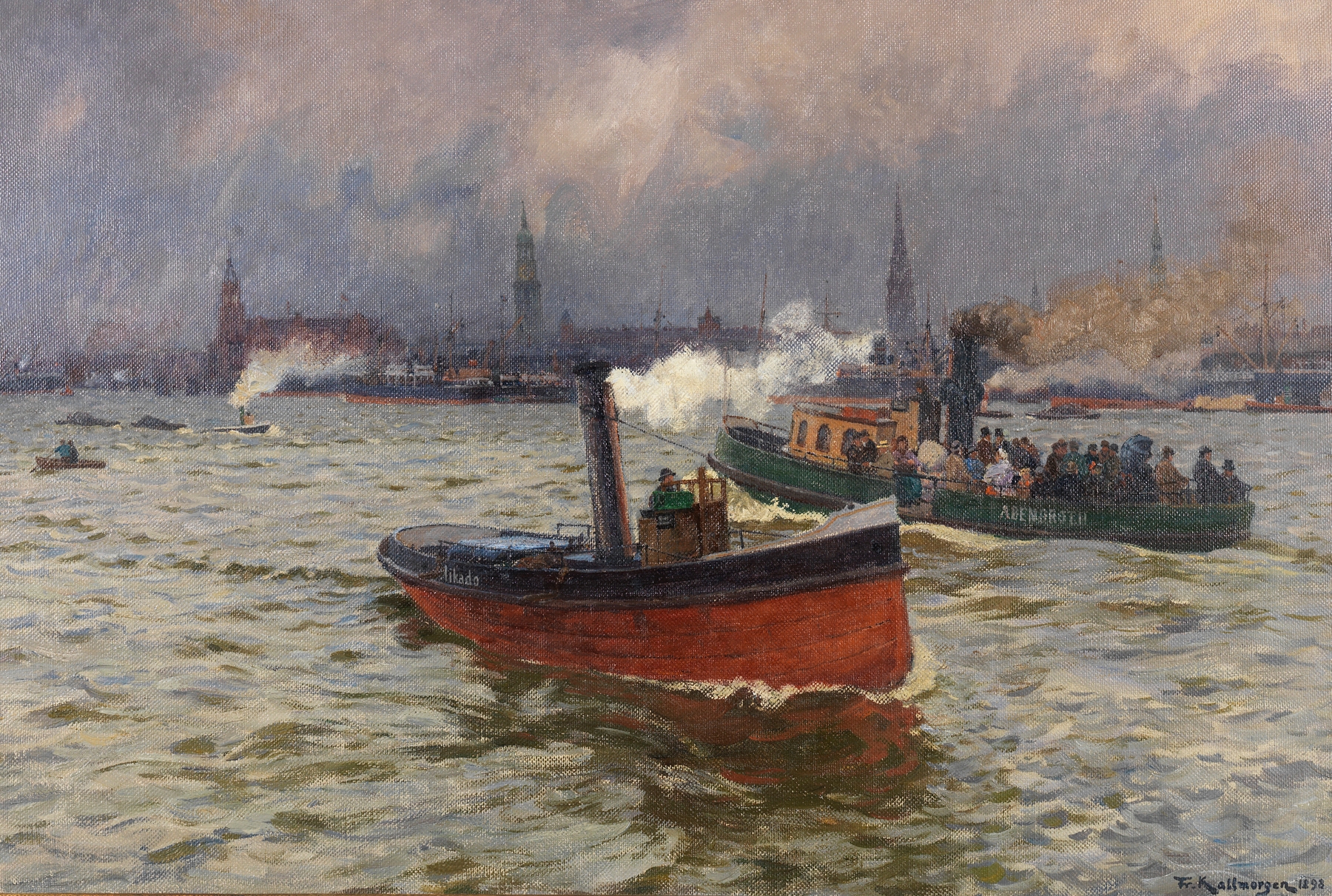
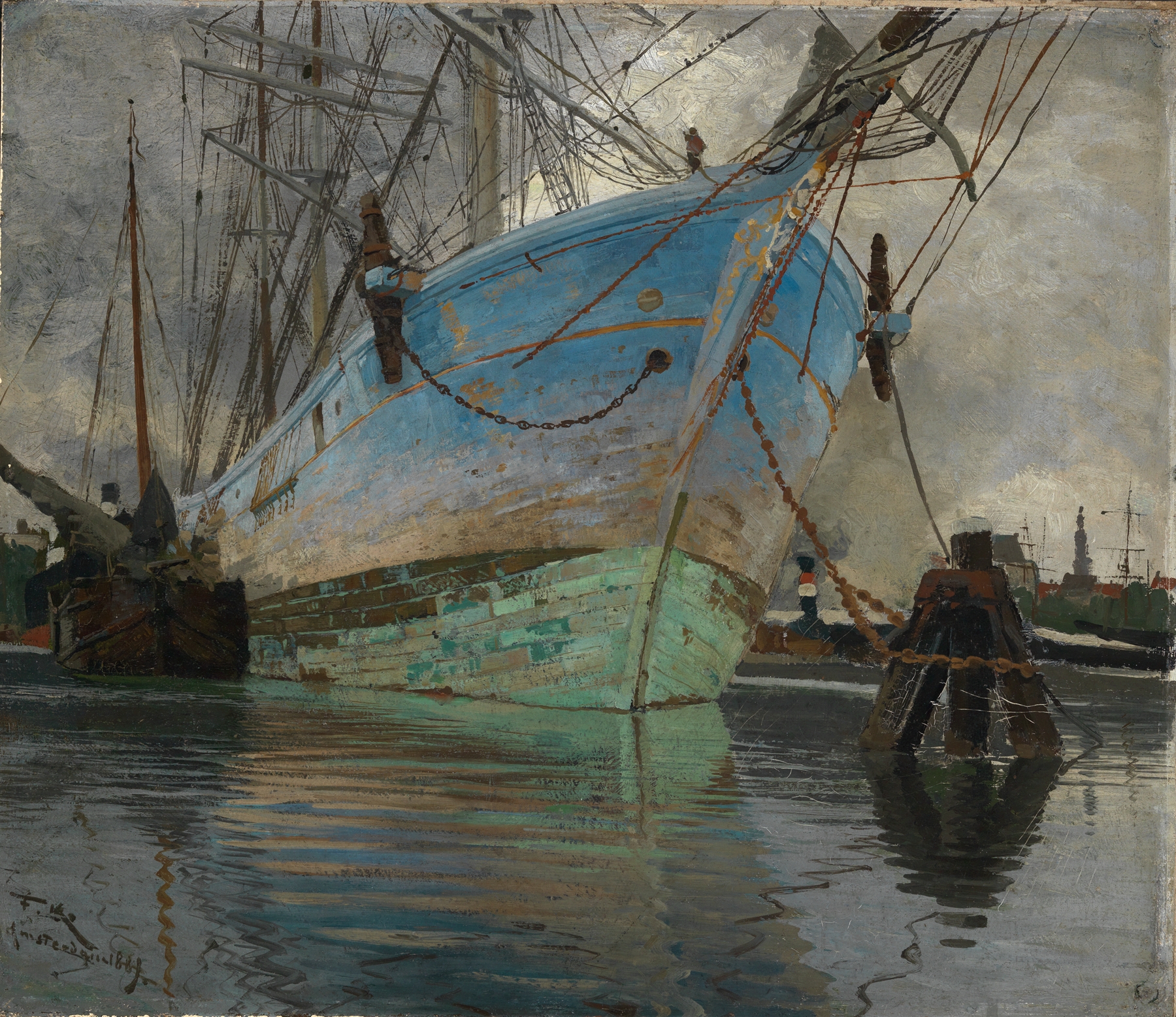
“Every silence here is a confession.” In the stillness of twilight, the bustling life of Hamburg retreats, revealing the madness that lurks beneath the serene surface. As day bleeds into night, shadows lengthen and secrets whisper along the harbor's edge, inviting contemplation on the paradox of beauty and chaos. Focus on the horizon line, where the warm amber glow of the setting sun shimmers on the water, creating a surreal interplay between light and shadow. The composition draws the eye to the striking silhouettes of ships, their forms both majestic and foreboding, anchored in a moment suspended between time and turmoil.
Notice the smooth brushwork that captures the flickering reflections, merging the vibrant hues of orange and blue, suggesting an uneasy harmony in a transient world. Delve deeper into the painting’s layered meanings — the contrast between the tranquil water and the industrious vessels hints at the madness of human ambition. The fleeting beauty of dusk serves as a reminder of the inevitable darkness that follows, a poignant reflection on life’s fleeting moments. Each detail, from the rippling waves to the distant skyline, conveys an underlying tension, where tranquility masks the chaos of existence.
Created in 1900, during a period of rapid industrialization in Germany, the artist painted this scene amid a growing fascination with modernity and its discontents. Kallmorgen navigated the complexities of a changing society, capturing not only the physical landscape of Hamburg but also the emotional landscapes of its people. This work emerged from a time in which art grappled with the dualities of progress and madness, as the world stood at the brink of a new century.