Niederdeutscher Bauernhof — History & Analysis
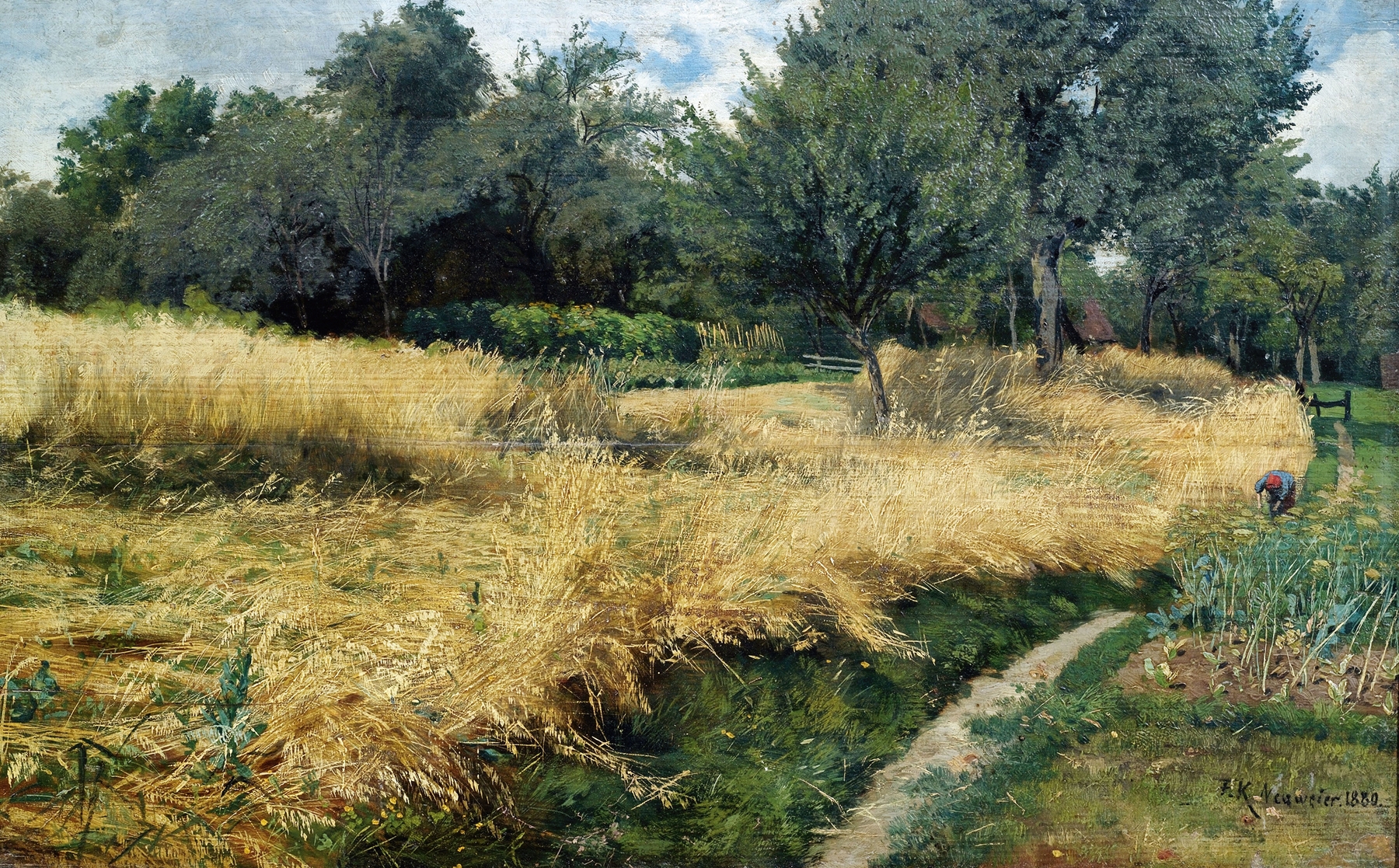
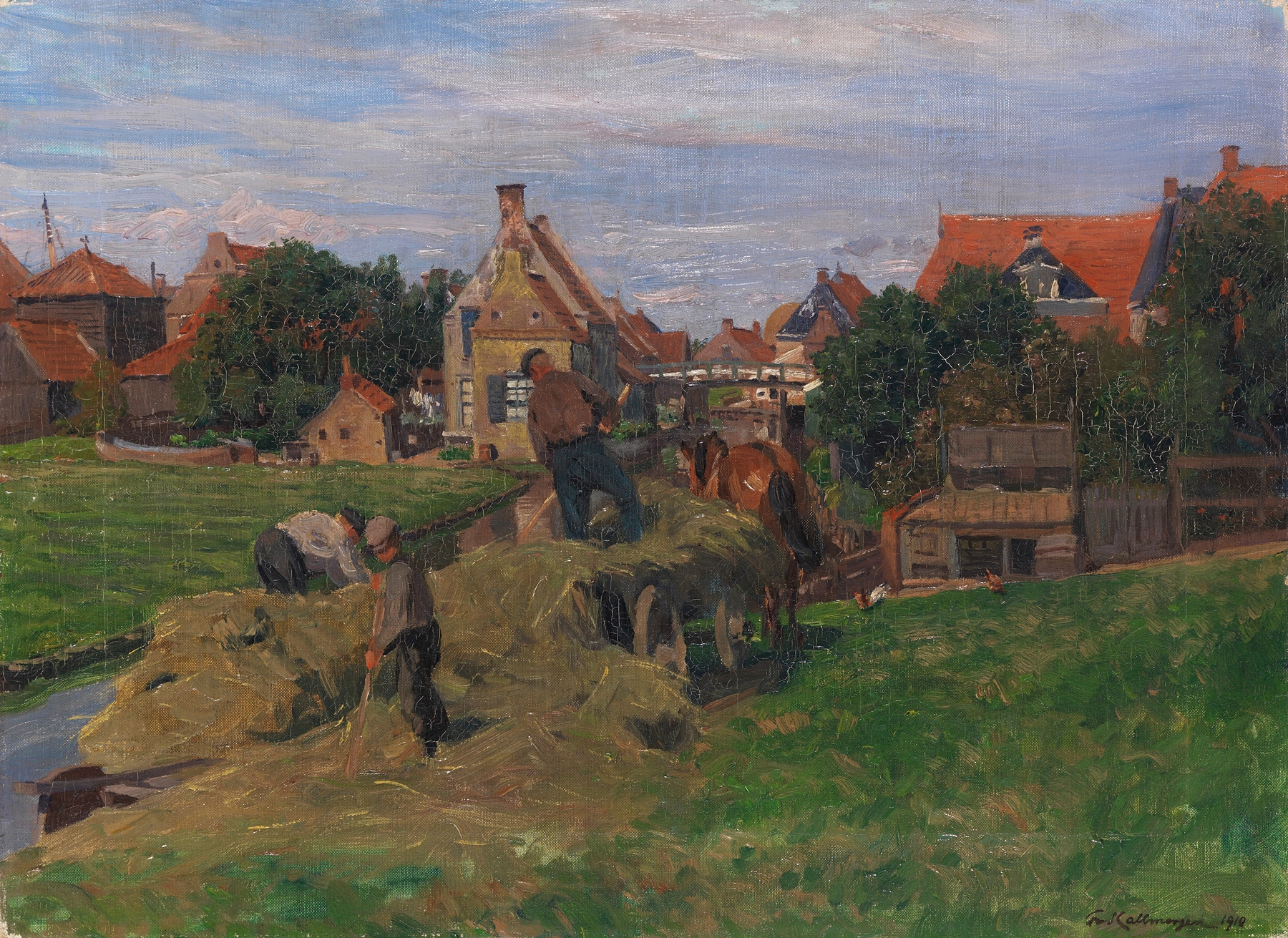
“Between color and silence, truth hides.” In Niederdeutscher Bauernhof, the illusion of pastoral life unfolds, inviting the viewer to step into a realm where simplicity dances with complexity. Notice how the viewer’s gaze is drawn immediately to the warm, earthy tones of the farmhouse, nestled amidst a vibrant landscape. The strong lines of the structure contrast beautifully with the soft, rolling hills that cradle it. Delicate brushwork suggests the texture of the wooden beams and thatched roof, while dappled light filters through the trees, casting gentle shadows that breathe life into the scene.
Every hue is carefully chosen, creating an intimate atmosphere that whispers of life lived in harmony with nature. Beyond its tranquil exterior, this work reveals a deeper tension between tradition and modernity. The rustic home stands as a testament to a simpler life, yet hints at encroaching change, as the clouds gather ominously above. The juxtaposition of the bright foreground and the muted sky captures a fleeting moment, where the warmth of home contrasts sharply with the uncertainties of an evolving world.
Details like the distant figures, busy in their tasks, evoke a poignant sense of community, yet they remain unknowable, almost ghostly. Friedrich Kallmorgen painted this piece in 1904 while residing in Germany, a time when the country was on the brink of significant industrial change. His focus on rural themes reflects a broader artistic movement that sought to elevate the rustic and the everyday amidst rapid modernization. Kallmorgen’s work stands as a quiet yet powerful reminder of the beauty that exists in the balance between progress and tradition.