Sommerwolken — History & Analysis
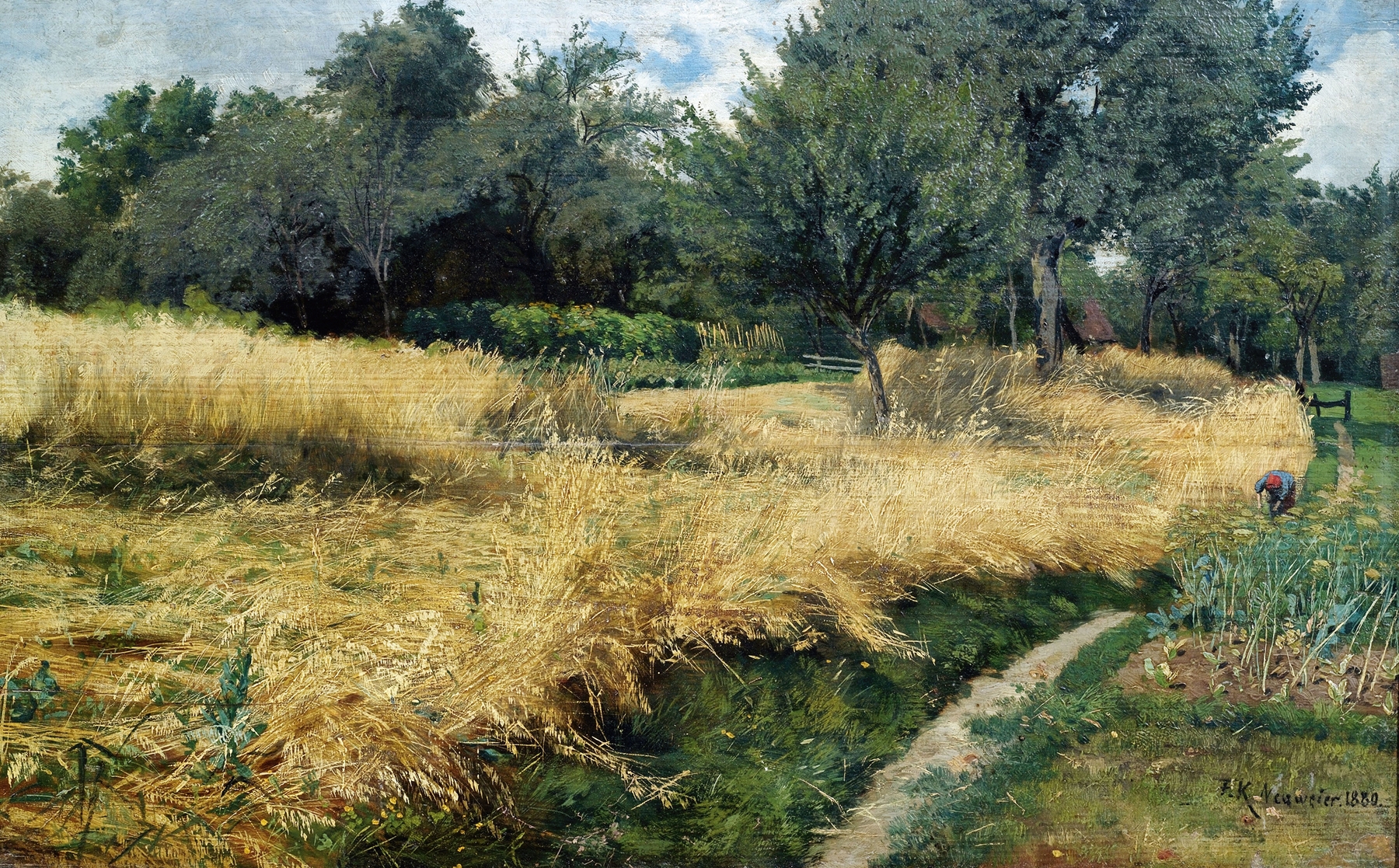
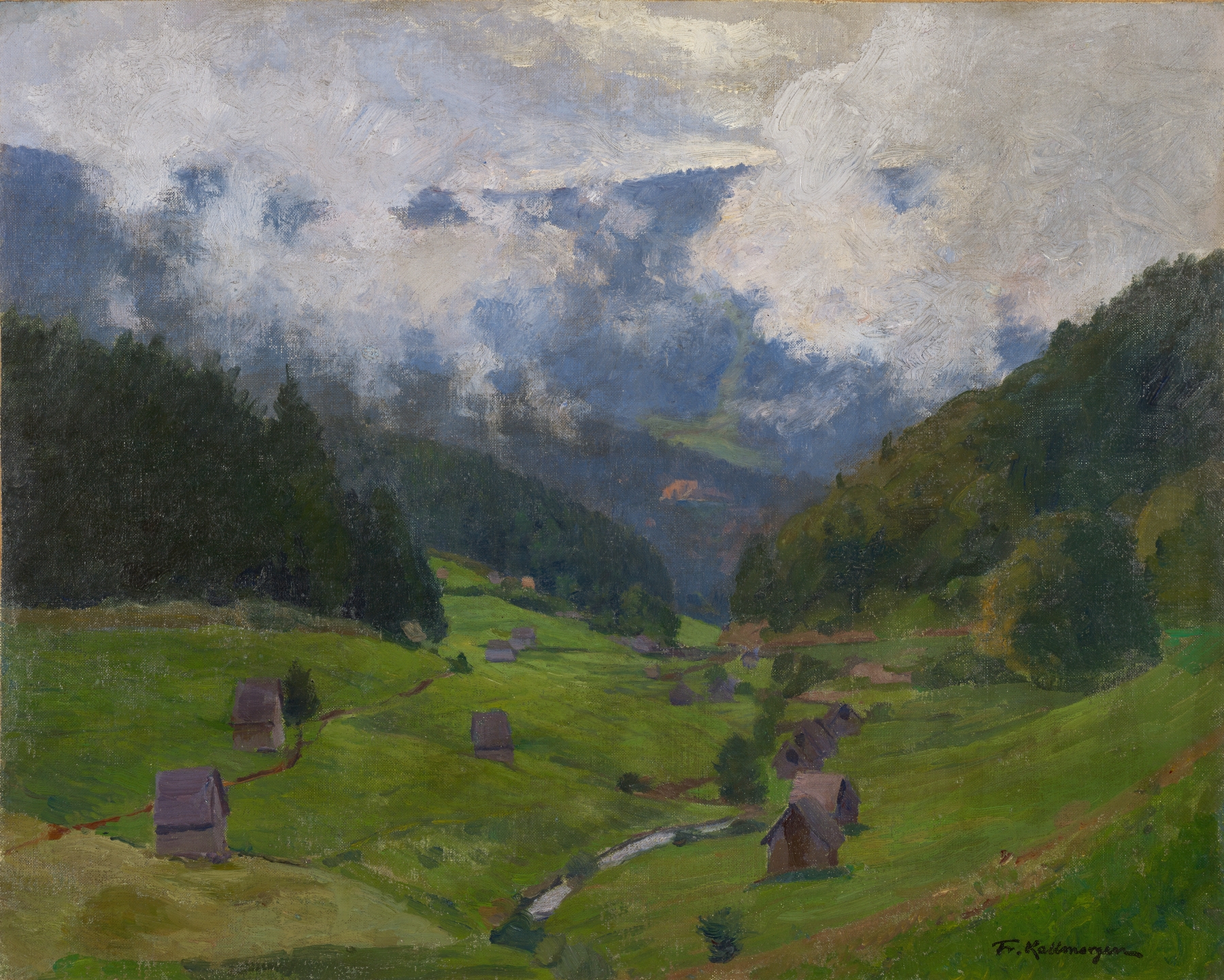
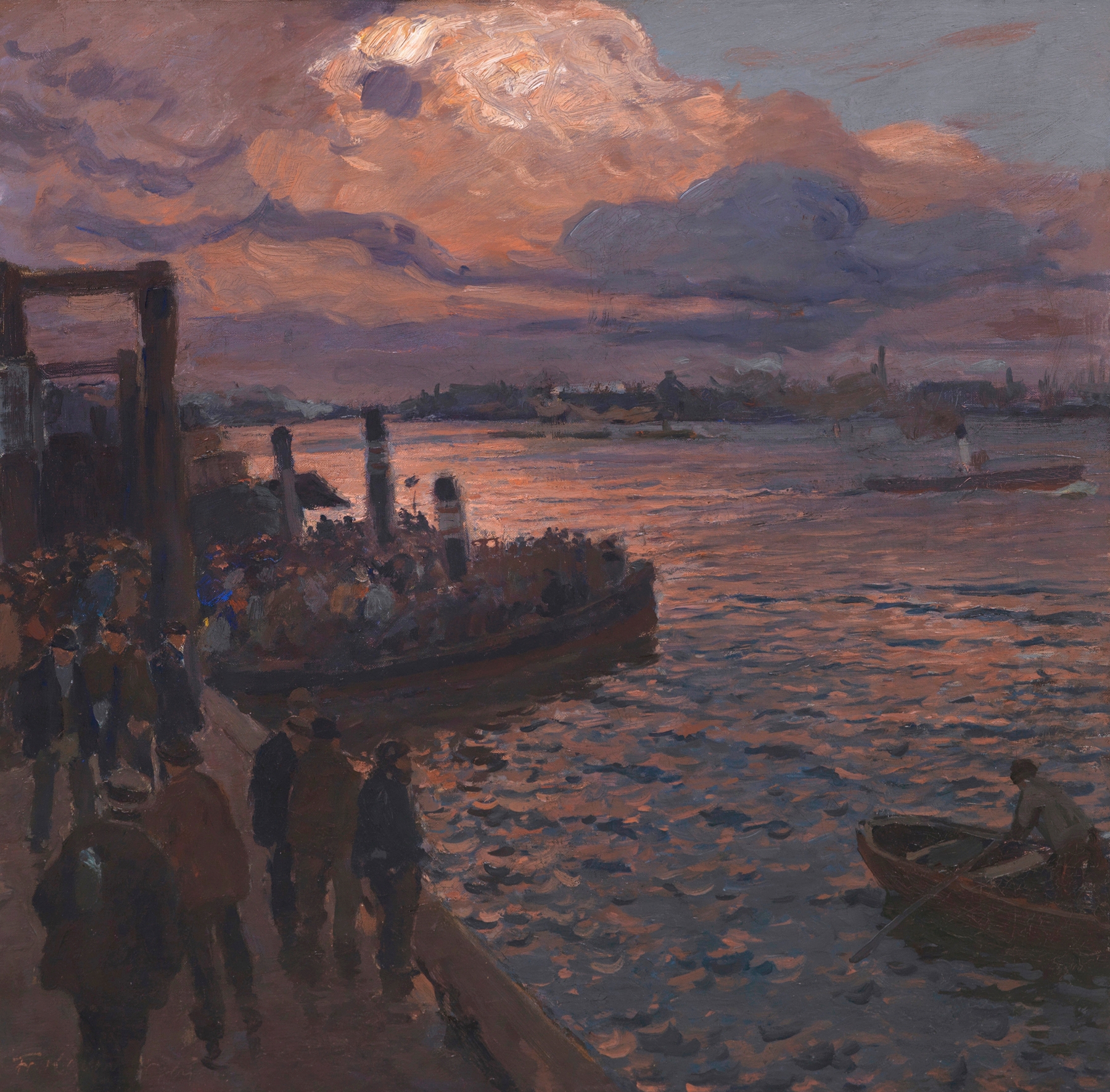
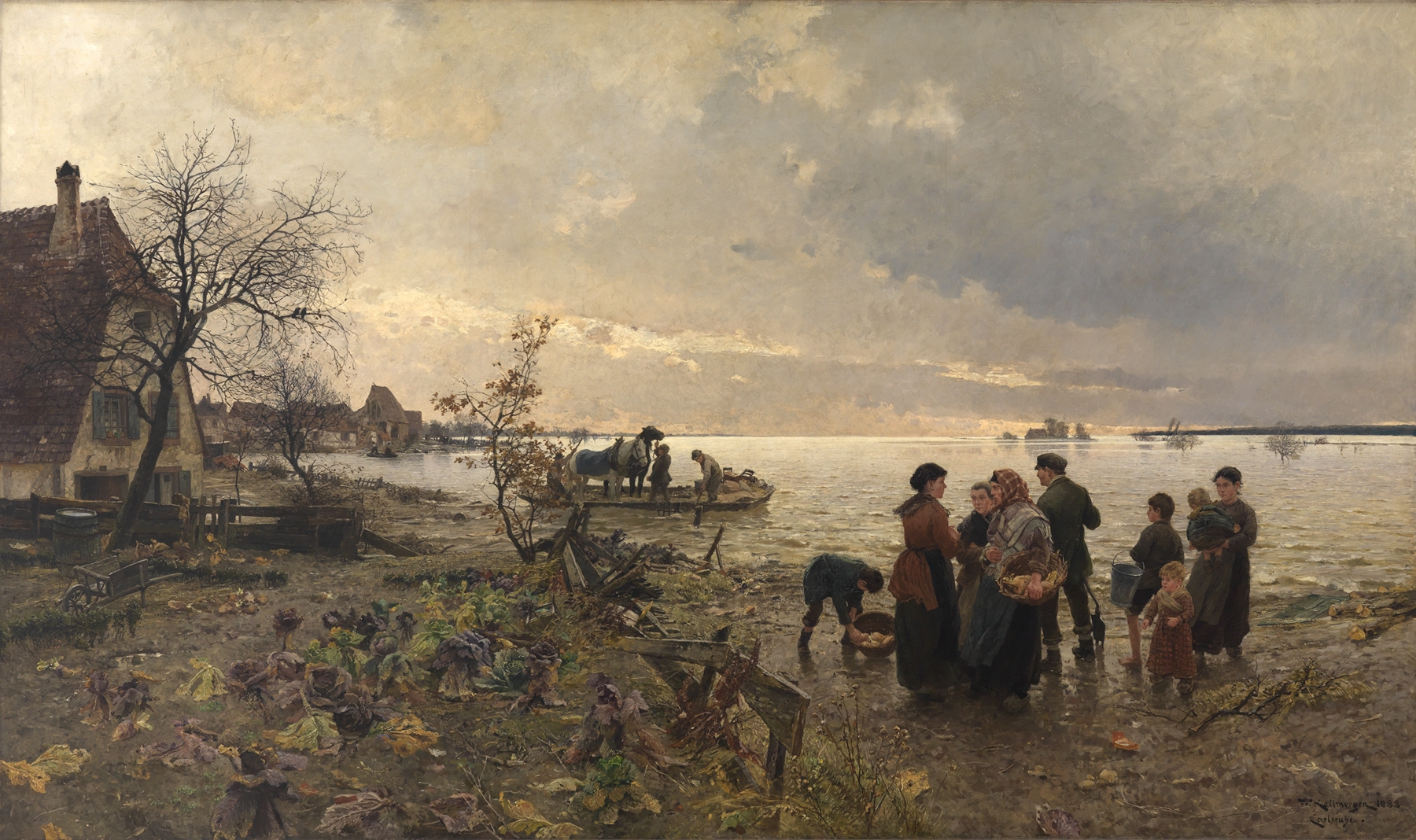
Can paint confess what words never could? In Sommerwolken, a delicate interplay of light and shadow whispers the fragility of fleeting moments, capturing an ephemeral beauty that speaks to the heart. Look to the left where soft, white clouds mingle with a vibrant blue sky. The artist uses a gentle brushstroke to create a sense of movement, as if the clouds themselves are drifting by, ephemeral and light. Notice how the sunlight bathes the landscape below in warm hues, drawing your gaze to the rich greens and golds of the meadow, which contrast beautifully with the coolness of the sky.
Kallmorgen’s careful attention to color and texture creates a harmonious balance, evoking a sense of serenity and tranquility. Yet beneath this serene beauty lies a poignant reminder of impermanence. The clouds, while magnificent, are but a temporary fixture in the expansive sky, hinting at the passage of time and the inevitability of change. The juxtaposition of the vibrant landscape against the transient clouds serves as a metaphor for life itself — moments of glory are often brief and fragile.
This tension between the static beauty of nature and the fleeting nature of clouds resonates with a deep emotional truth, inviting the observer to reflect on their own experiences of fragility. In 1900, Friedrich Kallmorgen created Sommerwolken during a period of artistic exploration across Europe, where the Impressionist movement was inspiring artists to embrace light and color in new ways. Living in Germany, Kallmorgen was part of a broader reaction against the constraints of traditional art, emphasizing the beauty of nature and the complexity of human emotion. This painting reflects his commitment to capturing the essence of a moment, a testament to the changing attitudes in the world of art and his personal journey as an artist.