Forest in Winter — History & Analysis
Where does light end, and longing begin? In the frozen stillness of winter, the whispers of the forest become a haunting echo of what once thrived. Look to the left at the frosted trees, their skeletal branches reaching out like desperate hands grasping for warmth. Notice the delicate interplay of light and shadow, where soft whites and deep blues blend, creating a sense of serenity tinged with sorrow.
The untouched snow blankets the ground, reflecting the muted light, while the distant horizon fades into an ethereal haze, urging your gaze deeper into the quietude of this wintry realm. Yet, amidst the beauty, a tension simmers beneath the surface. The starkness of the landscape evokes a profound solitude, inviting reflections on loss and the passage of time. Each tree, stripped bare, tells a story of resilience and fragility, while the crisp air, heavy with silence, suggests a longing for the vibrancy of life.
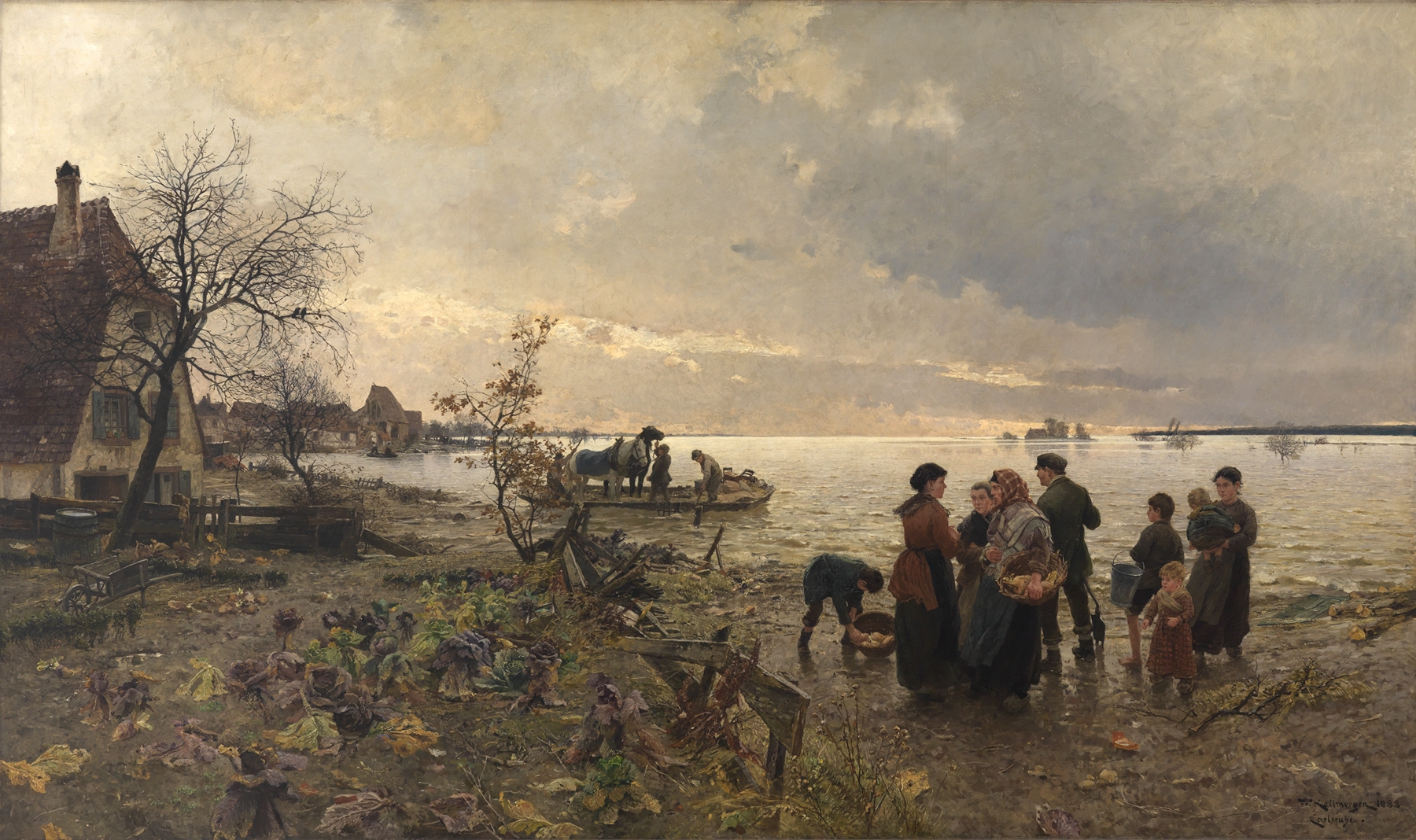
The juxtaposition of coldness and warmth in the palette underscores the melancholic beauty of nature’s cycle, where endings give way to new beginnings. Friedrich Kallmorgen painted this evocative scene in 1883, during a period marked by the rise of Naturalism and the exploration of light in landscape painting. Living in Germany, he sought to capture the essence of nature with emotional depth, a pursuit that resonated with the broader artistic movements of his time. This work reflects both his mastery of technique and a contemplative engagement with the themes of transience and the emotional weight of the natural world.