Fluitspelende herder — History & Analysis
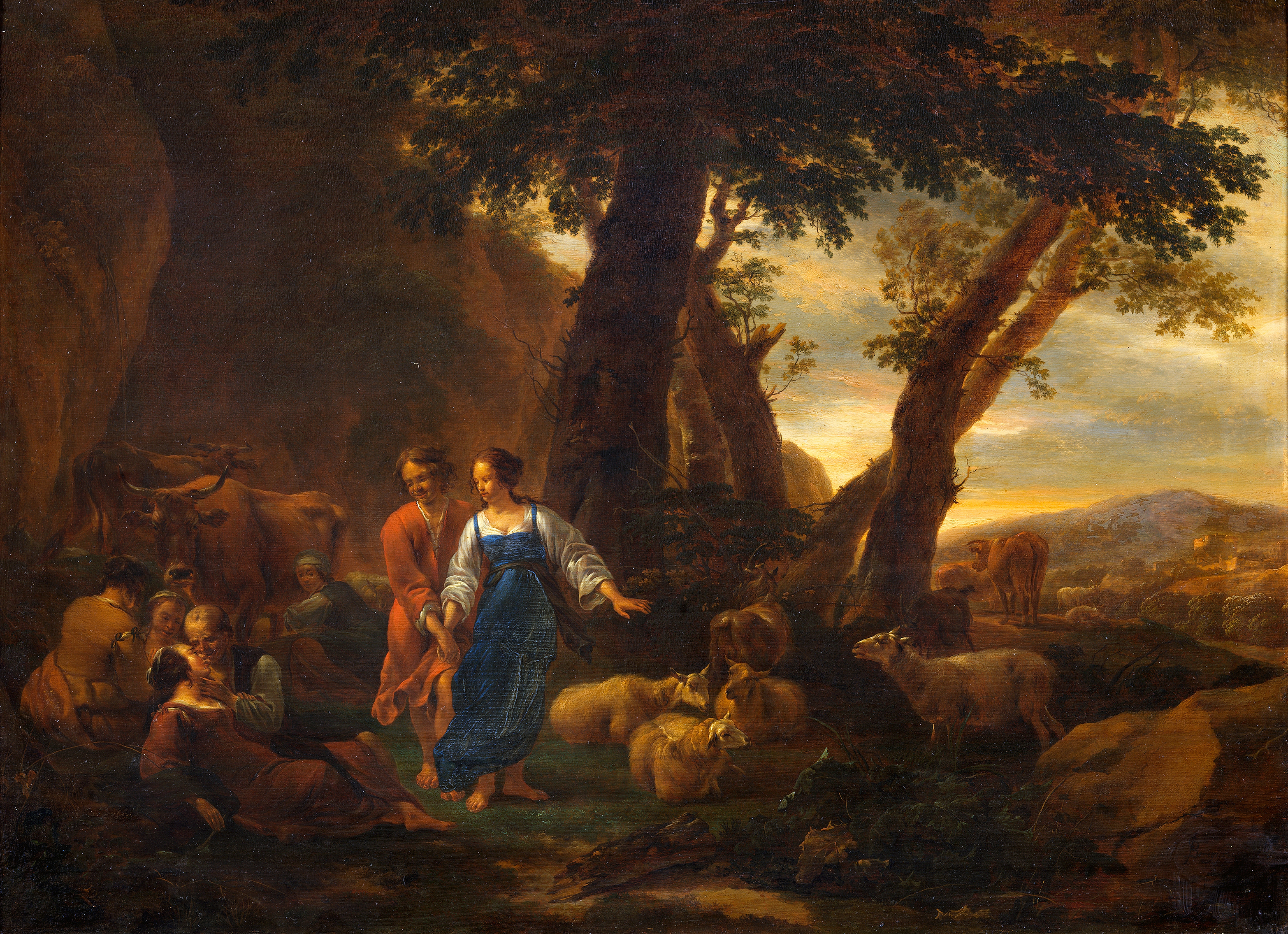
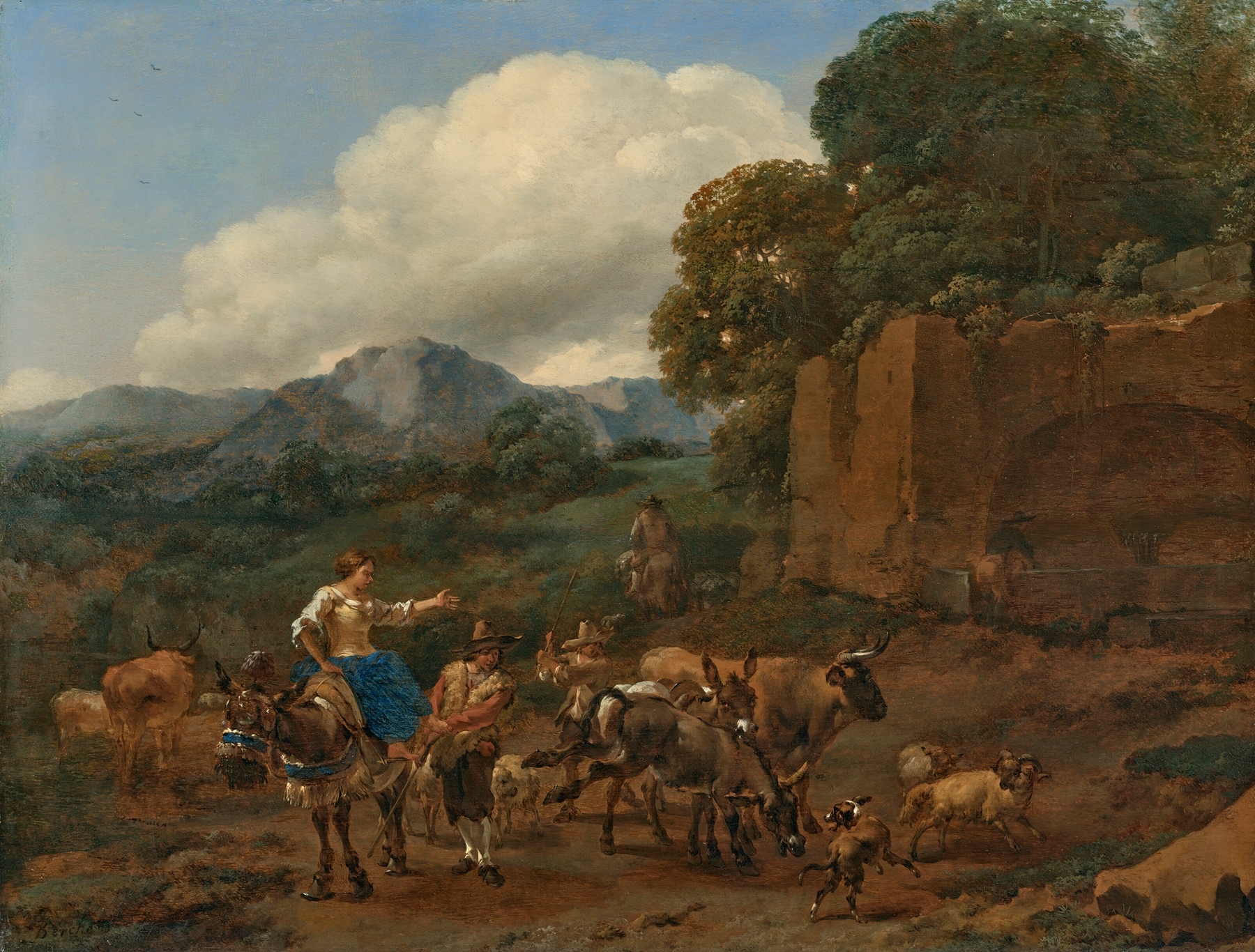
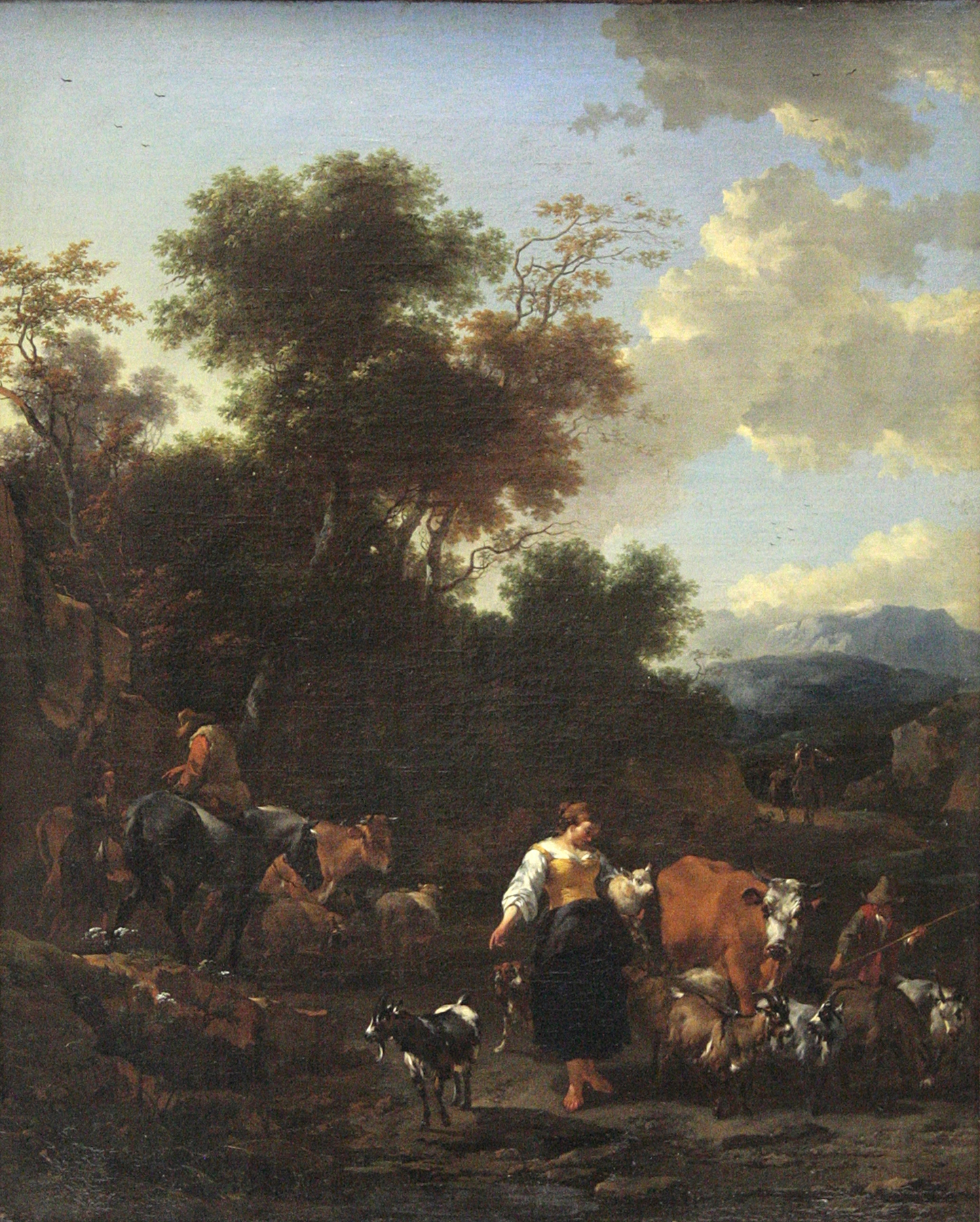
What if beauty was never meant to be finished? In the light of Fluitspelende herder, one is reminded that art often captures a fleeting moment, a transformation in time where nature and emotion entwine. Here, the shepherd and his surroundings breathe life into a tableau that dances between reality and lyrical idealism. Look to the left at the shepherd, his fingers deftly caressing the flute, evoking a melody that seems to drift through the air. Notice how soft, golden light bathes his figure, illuminating the intricate textures of his garments and the lush greenery that surrounds him.
The composition draws the eye toward the horizon, where soft clouds linger, hinting at the serenity of a pastoral landscape that envelops the scene. Vibrant greens and warm earth tones blend harmoniously, enhancing the sense of peace that permeates the air as if time itself has paused to listen. Yet, beneath this idyllic surface lies a subtle tension between man and nature. The shepherd, while a figure of calm, is also a reminder of the transient nature of existence — a fleeting moment of joy amidst the vastness of life. The distant hills and serene sky suggest the inevitability of change, emphasizing the transformation within the scene.
This interplay invites viewers to explore their own connections to beauty, the ephemeral nature of art, and the passage of time. Painted between 1645 and 1650, during the Dutch Golden Age, this work reflects Nicolaes Pietersz Berchem’s immersion in the beauty of rural life. Known for his lush landscapes and pastoral themes, Berchem was influenced by the elegance of classical ideals and a growing appreciation for nature. This period marked a shift in the art world, where the celebration of everyday moments became a defining characteristic, resonating with viewers seeking solace in the harmony of simplicity.