Flusslandschaft mit melkender Frau — History & Analysis
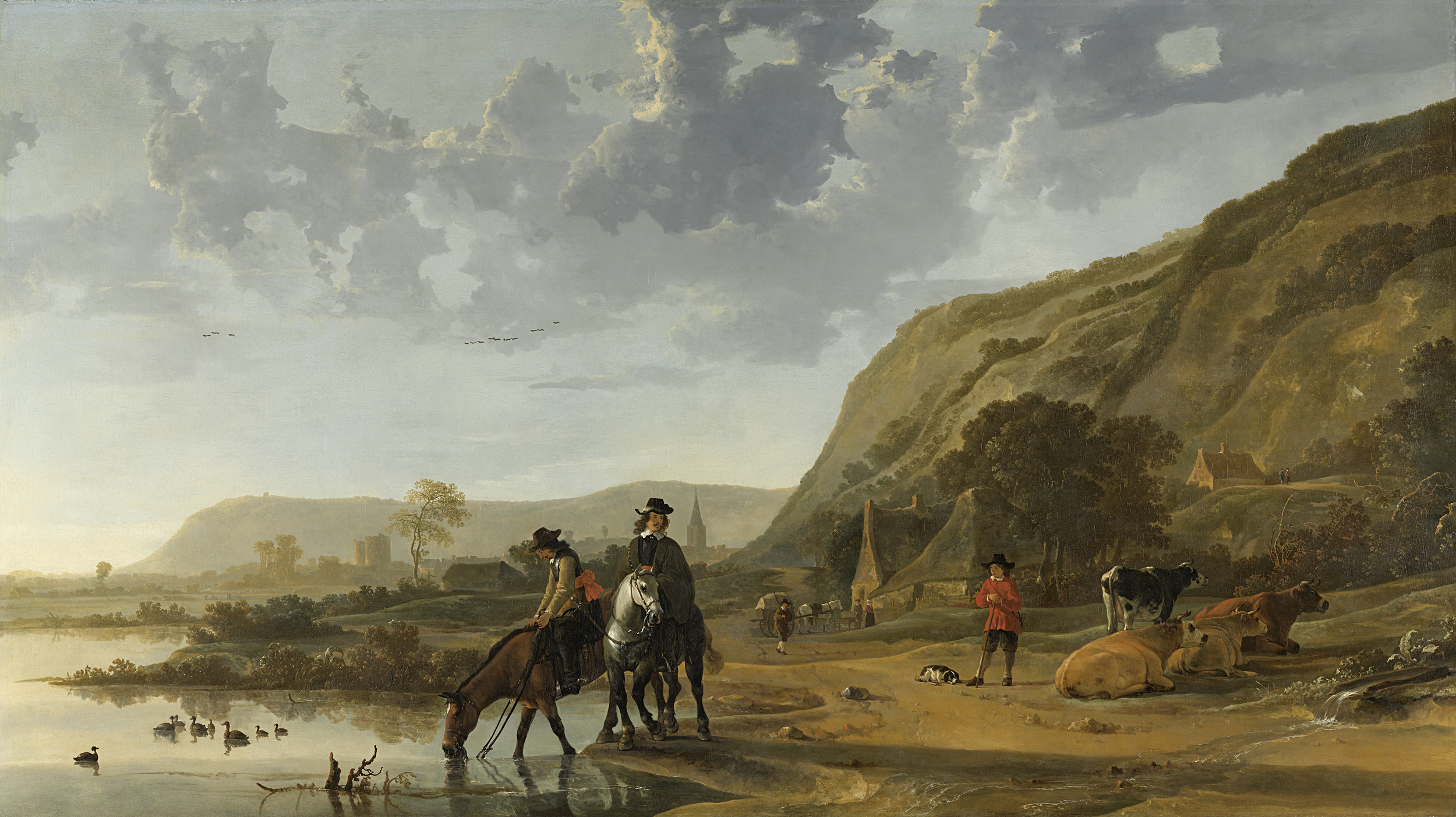
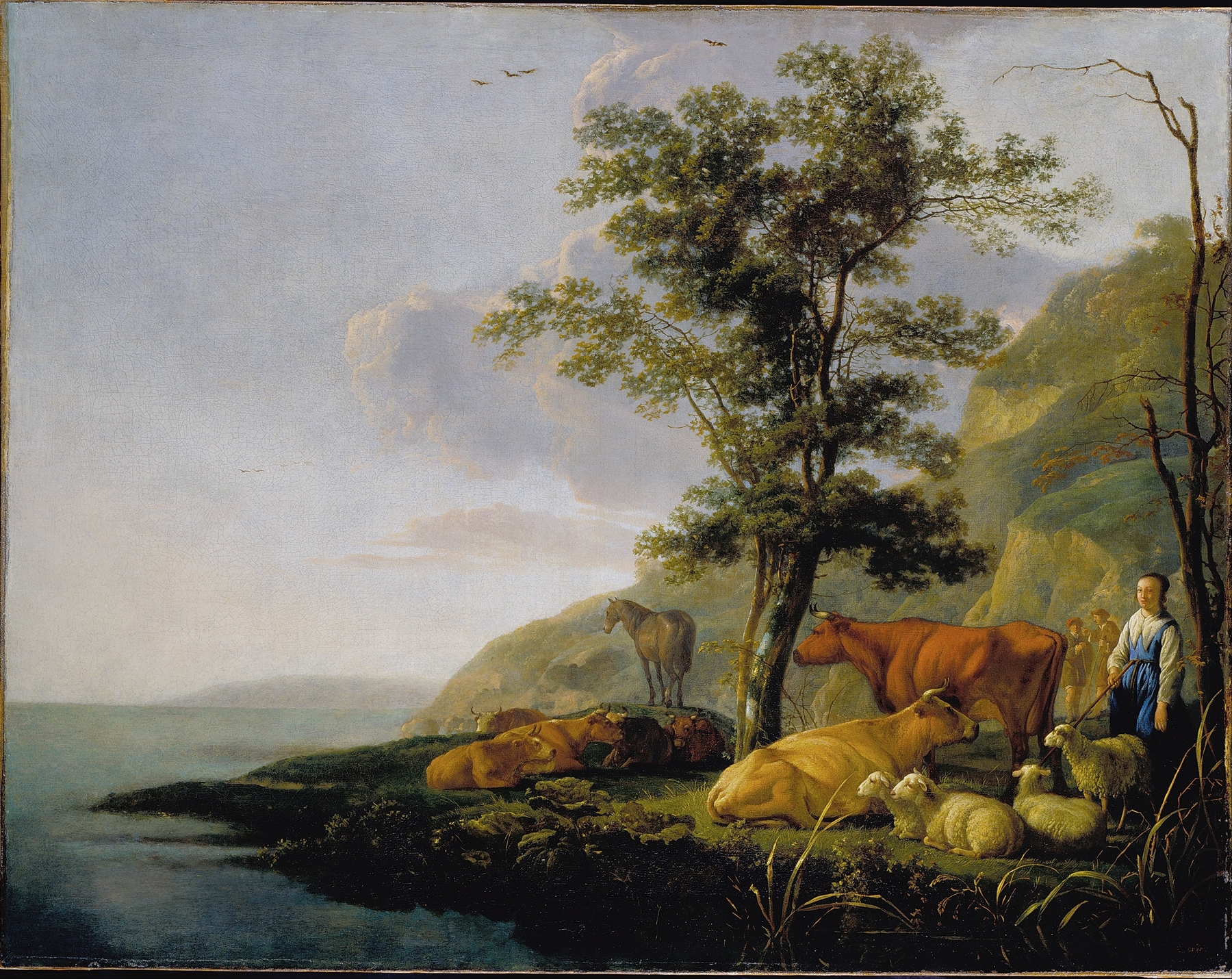
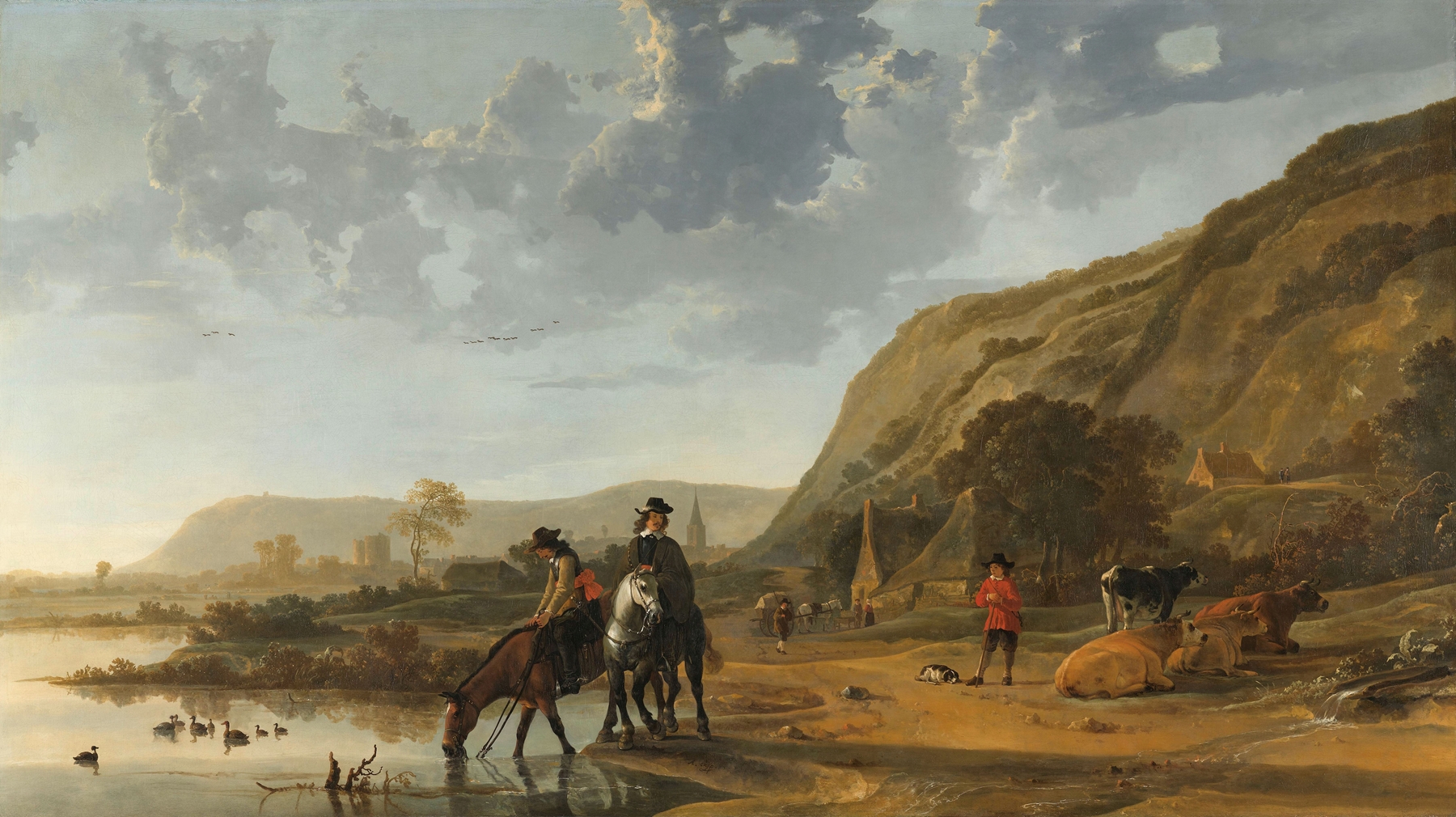
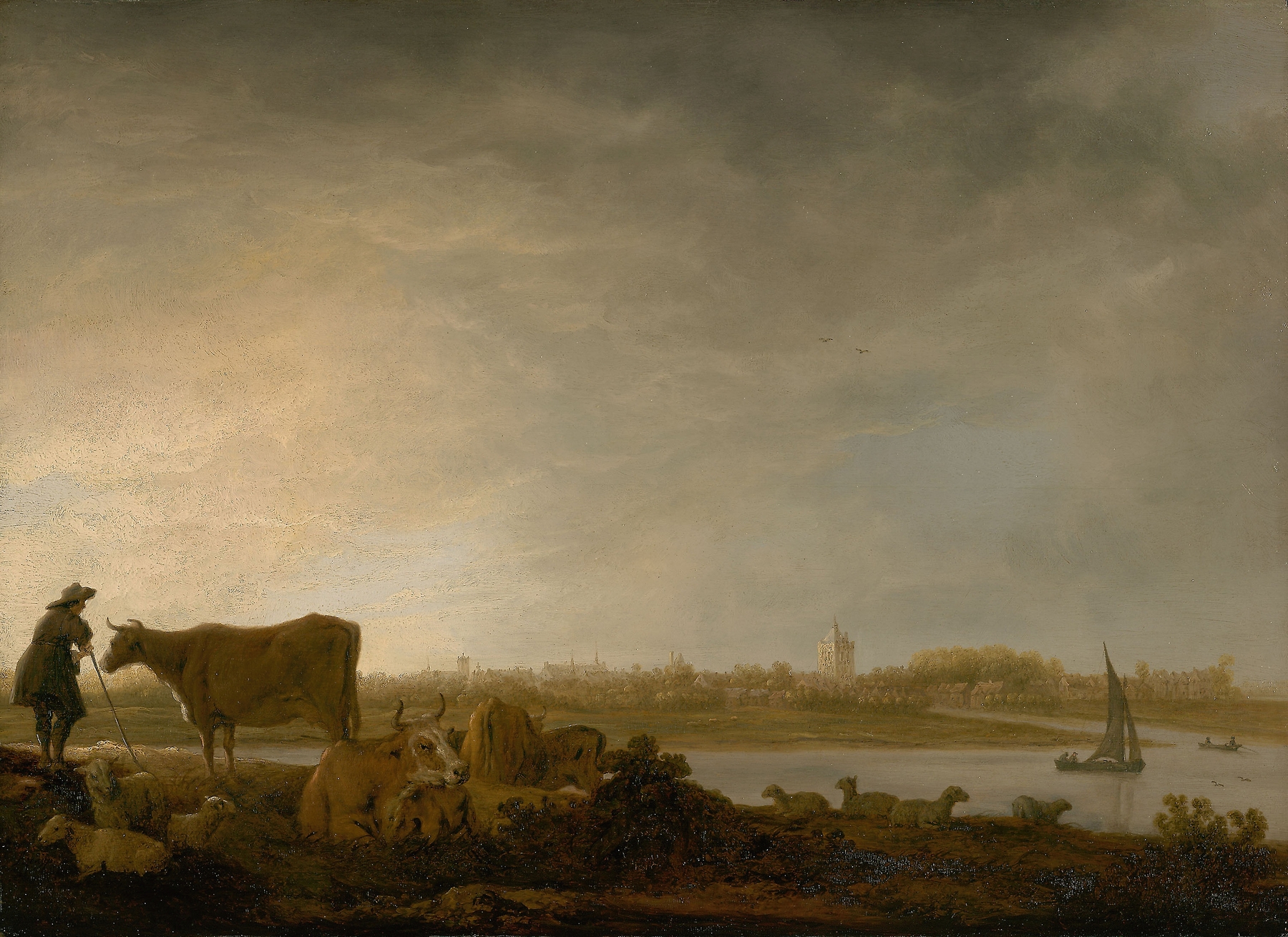
Could a single brushstroke hold eternity? In Flusslandschaft mit melkender Frau, the essence of rural life and nature's tranquility unfolds in layers of color and emotion, revealing a moment that feels both timeless and fleeting. Look to the left at the soft, dappled light illuminating the figure of the woman as she milks the cow, her posture modest yet purposeful. The gentle curves of her form echo the rolling hills in the background, where the vibrant greens and warm earth tones create a seamless harmony.
The sky, a sweeping canvas of pastel colors, contrasts the ground below, inviting the viewer to wander through the landscape and experience the serenity of this pastoral scene. The painting captures not just an image, but the delicate balance between human existence and nature. Notice the play of light reflecting off the water in the foreground, suggesting a deeper connection between the subjects and their environment. There is a palpable sense of peace, yet the act of milking evokes a timeless struggle between sustenance and survival, hinting at the transient nature of both life and labor in a changing world.
Created around 1646, this work emerged from a period when Aelbert Cuyp was honing his skills in the picturesque countryside of the Netherlands. The artist was influenced by the emerging Dutch Golden Age, exploring the relationship between man and nature while capturing the everyday lives of rural communities. This painting stands as a testament to his mastery, revealing the beauty and simplicity of life against the backdrop of an evolving art scene.