Französische Fischer — History & Analysis
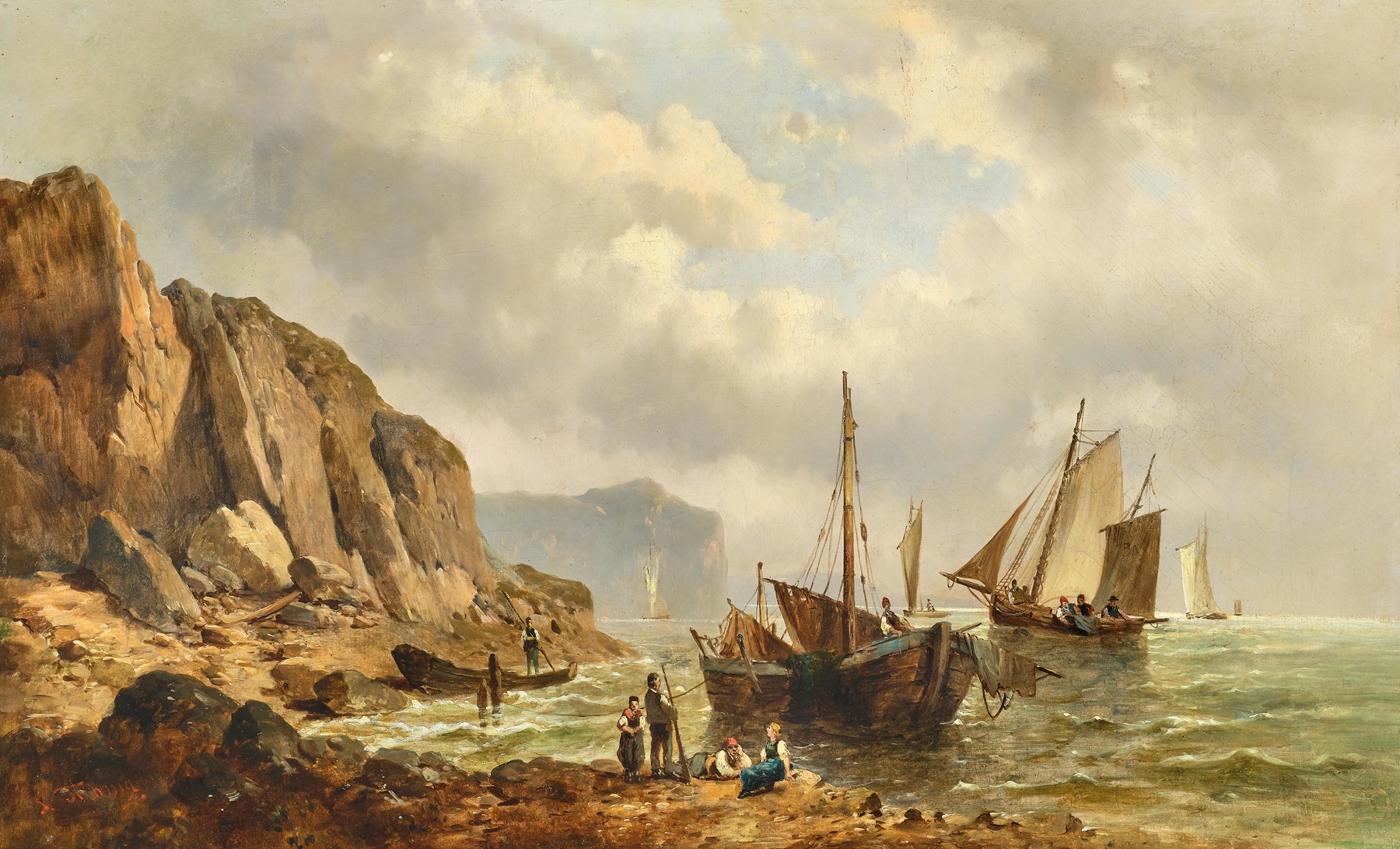
When did color learn to lie? In Französische Fischer, an unsettling revelation unfolds, where hues dance between reality and illusion, leading us toward a deeper exploration of truth. Look closely at the rich palette, where deep blues and vibrant oranges clash, evoking the tumult of the sea and the warmth of the sun. Focus on the figures of the fishermen, their expressions etched with determination yet veiled in a melancholic haze.
The brushwork is both delicate and forceful, suggesting movement and weight, while the composition draws your eye through layers of swirling colors, creating a rhythmic flow that mimics the waves. Beneath the surface, contrasts abound: between the serene beauty of the coastal landscape and the laborious, often harsh lives of the fishermen. Their toil is palpable, yet the painting transcends mere representation, inviting contemplation of existence and struggle. The interplay of light and shadow not only emphasizes their physical forms but also symbolizes the weight of their dreams and the burdens they carry.
Josef Thoma created this work during a time of personal introspection, possibly around the early 20th century, reflecting his continual quest to merge realism with emotional depth. Living in a Europe on the brink of change, artists were seeking new forms of expression to capture the complexities of life. Thoma’s exploration of the human condition amidst the beauty of nature resonates deeply with the artistic movements of his time, marking a pivotal point in his career.