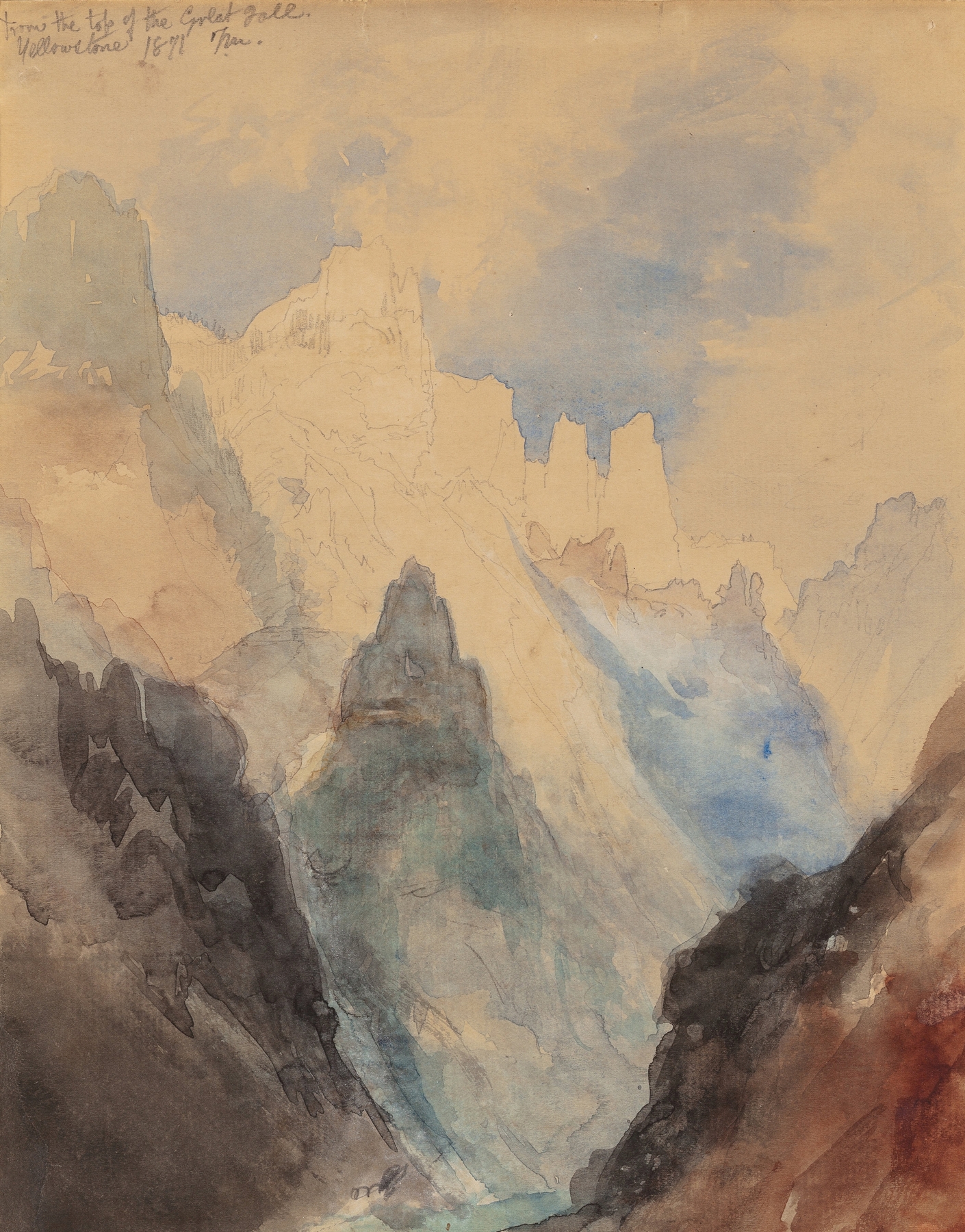
From the Top of Great Fall, Yellowstone — History & Analysis
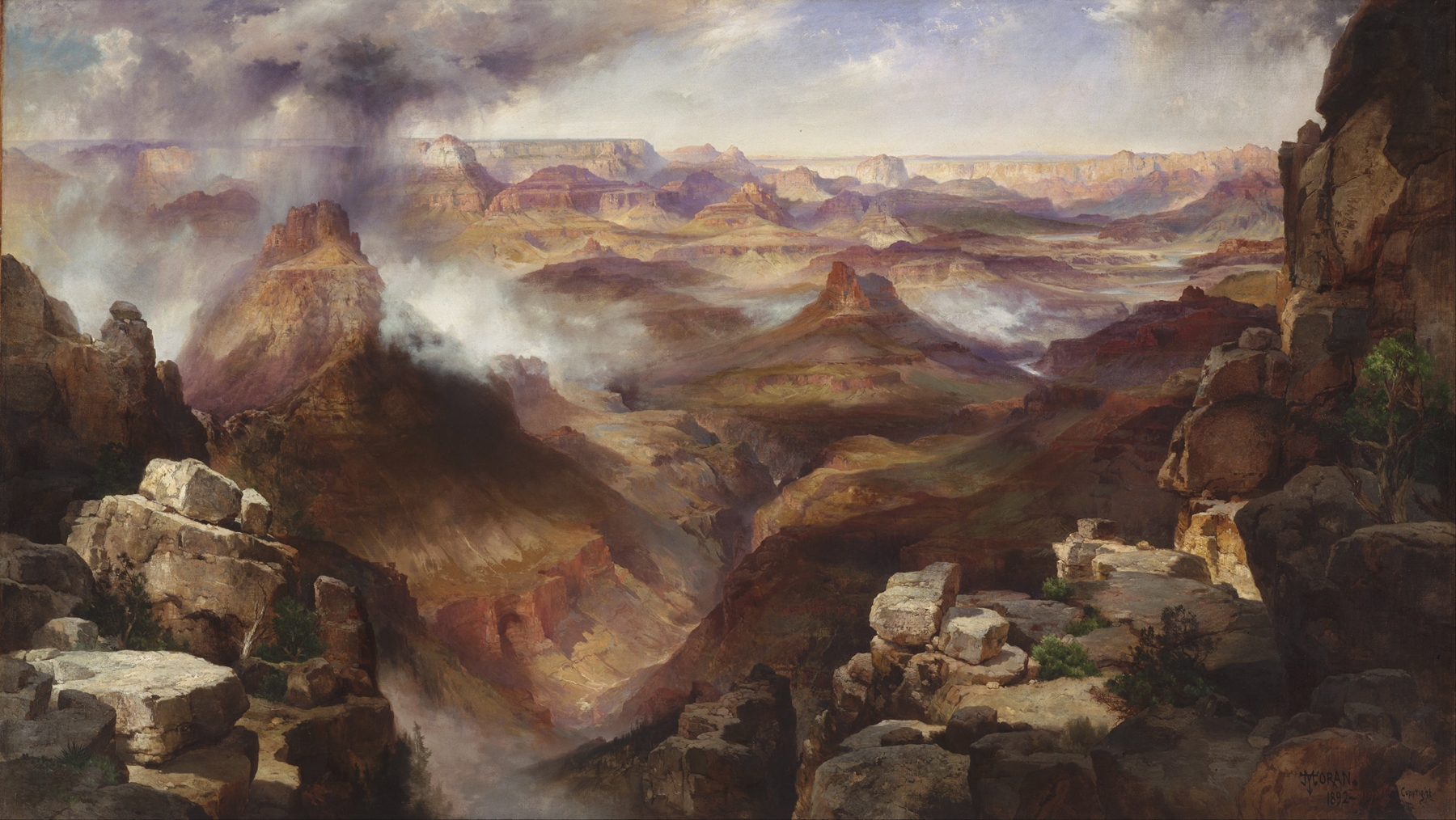
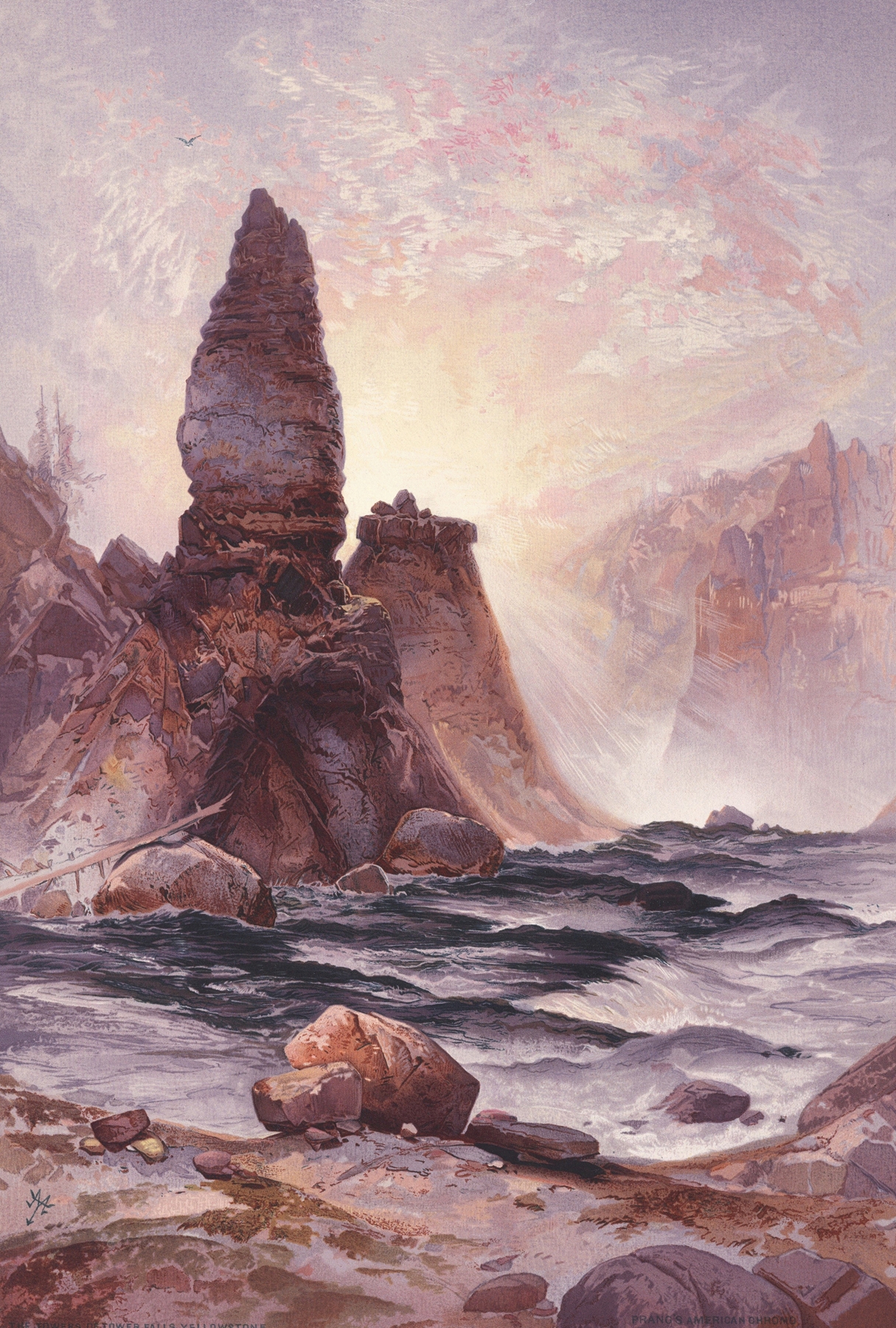
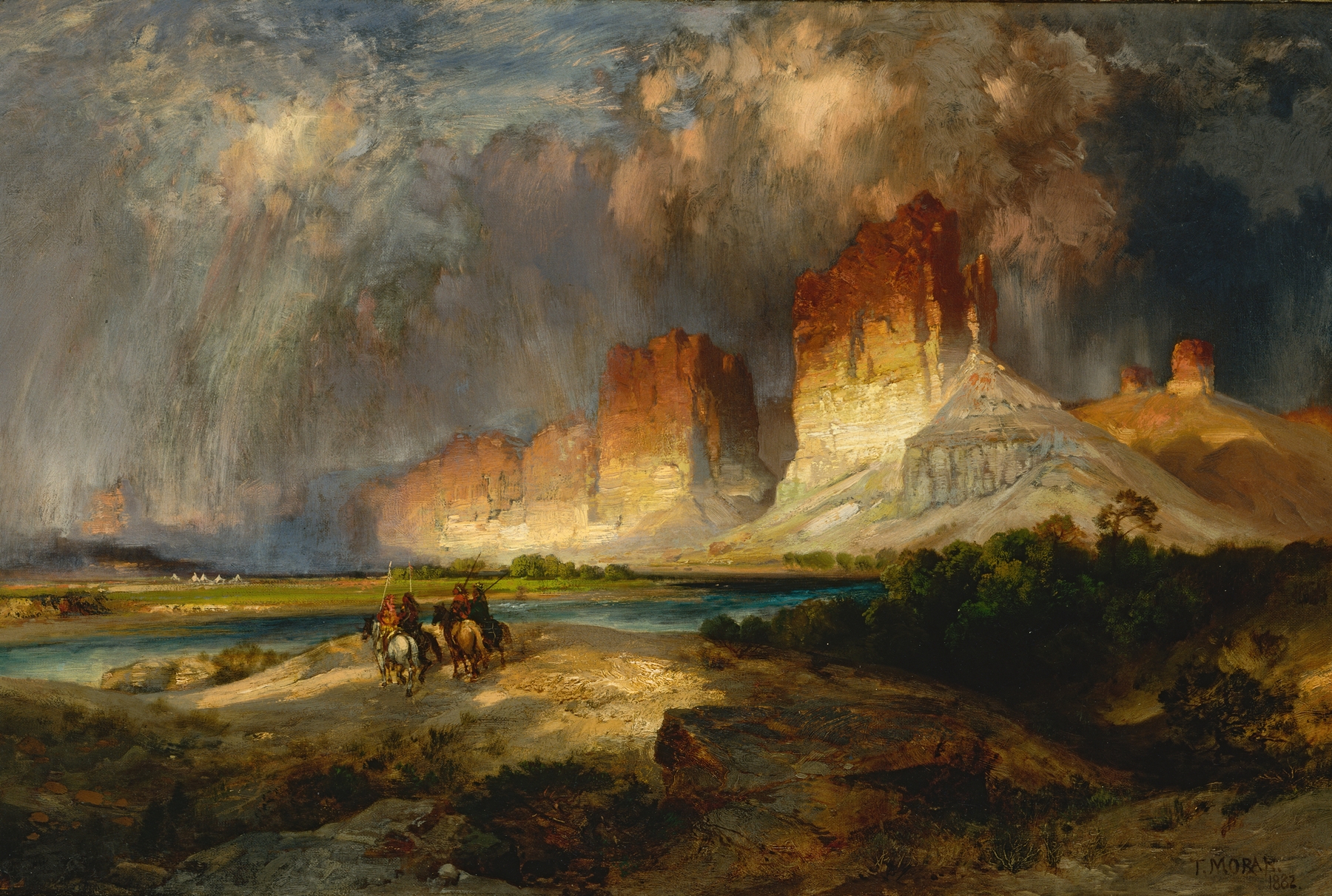
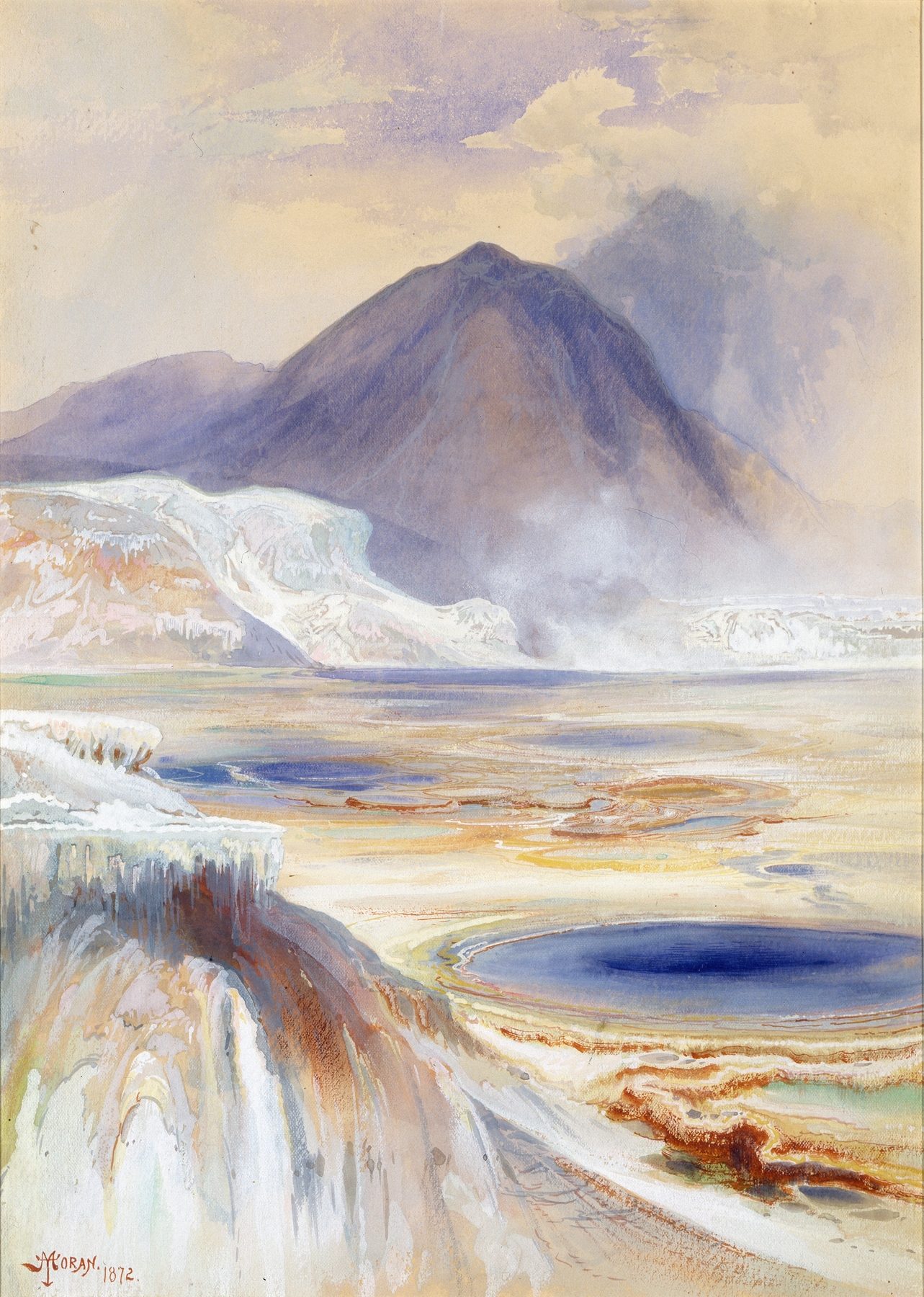
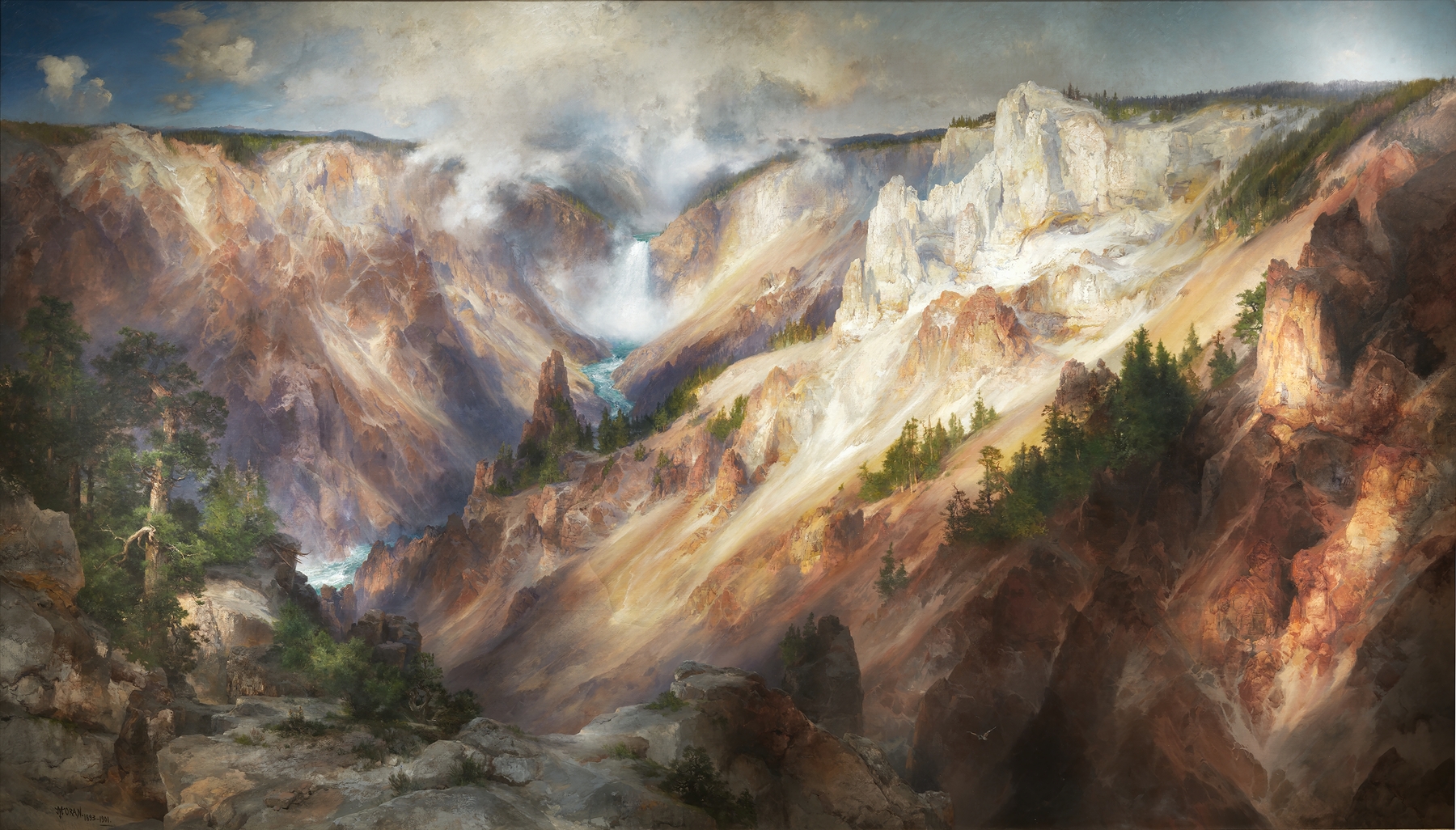
Did the painter know this moment would outlive them? As the sun dips below the horizon, a cascade of golden light spills over rugged cliffs, illuminating a timeless dance between water and stone. In the midst of nature's grandeur, the fleeting essence of nostalgia lingers, echoing the transience of human experience. Look to the left at the majestic waterfall, its frothy waters tumbling with fervor into the abyss below. The vibrant blues and greens juxtaposed with warm ochres evoke both serenity and turmoil.
Notice how Moran's brushstrokes capture the wild energy of the cascade, blending reality and reverie. The atmospheric perspective provides a sense of depth, inviting your gaze beyond the waterfall to the vast expanse of nature's beauty, while the sprawling skies seem to stretch into eternity. Yet, beneath this breathtaking panorama lies an emotional tension. The contrast between the chaotic plunge of the water and the stillness of the surrounding landscape speaks to the duality of existence—endless movement set against the immovable weight of time. Each intricate detail, from the rocky embankments to the softly illuminated clouds, serves as a reminder of nature’s power and fragility.
It’s a moment suspended, where the viewer is compelled to consider both the beauty and impermanence of life. In 1871, Moran created this piece amid the burgeoning American appreciation for the natural landscape, capturing the raw majesty of Yellowstone during an expedition with the U.S. Geological Survey. The world was witnessing a growing fascination with the American West, reflecting the era's evolving artistic movements that sought to bridge the gap between nature and humanity. In this moment, he not only painted a scene but also encapsulated a burgeoning national identity, forever preserving a slice of the wild spirit.