Fulham on the Thames — History & Analysis
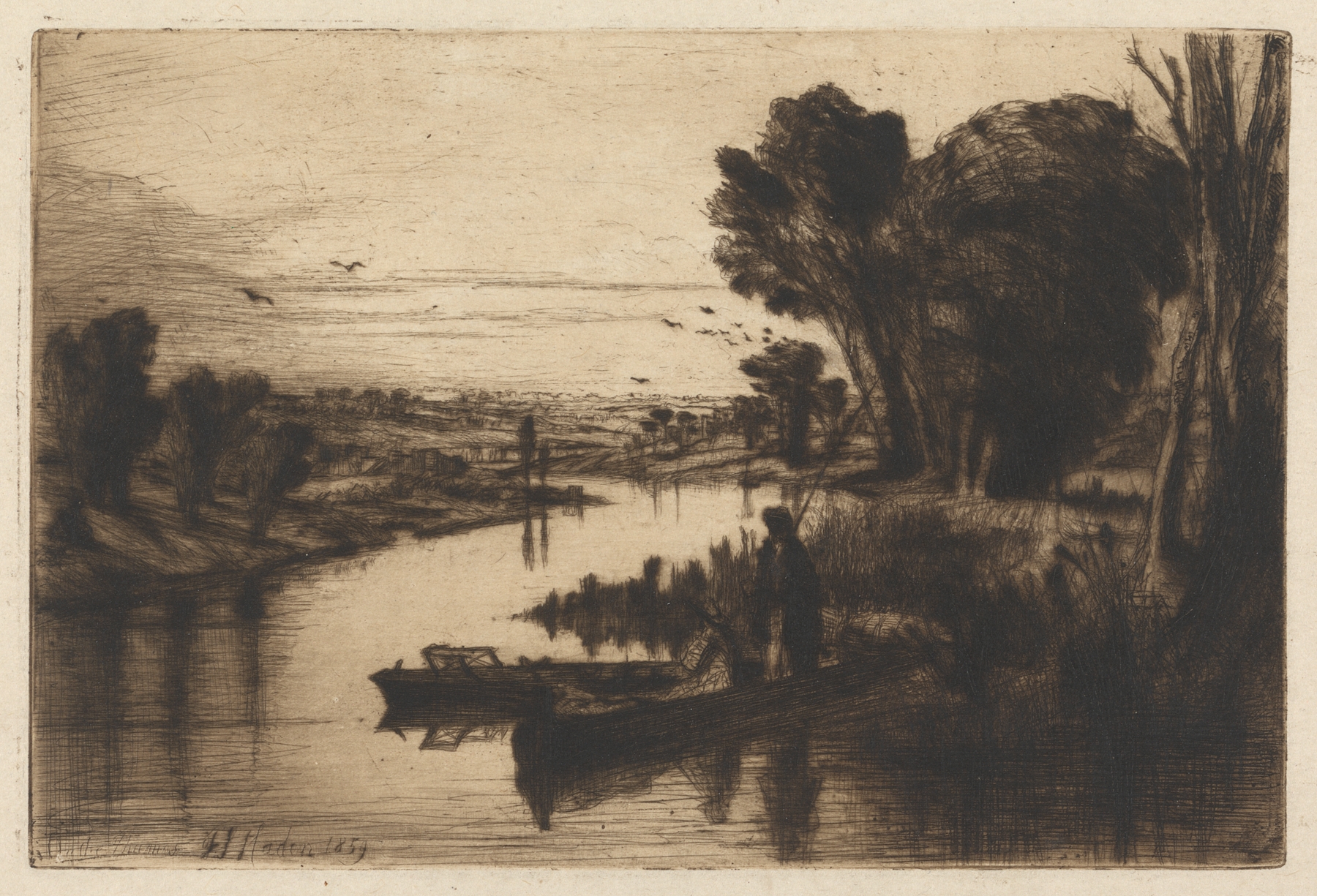
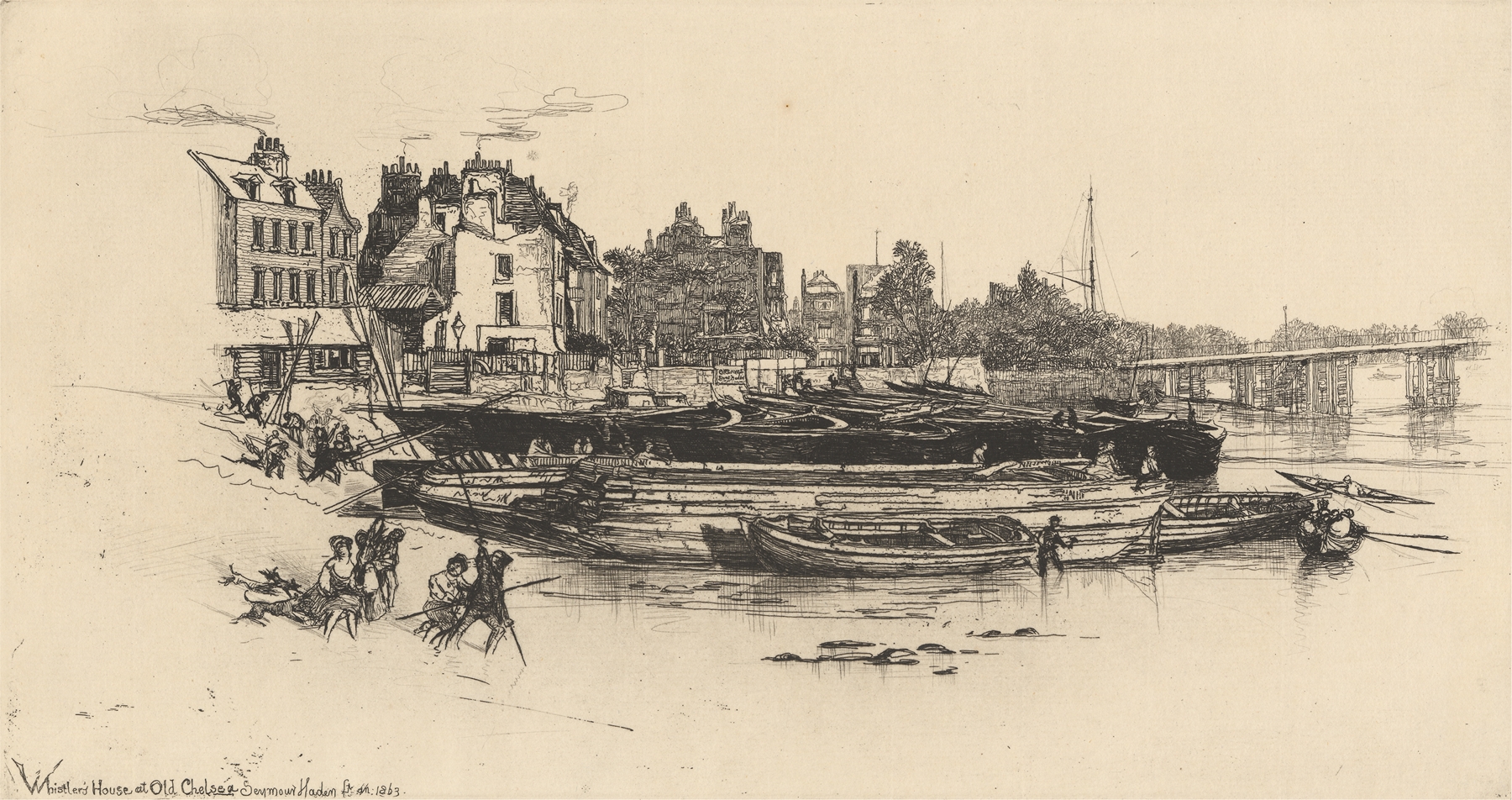
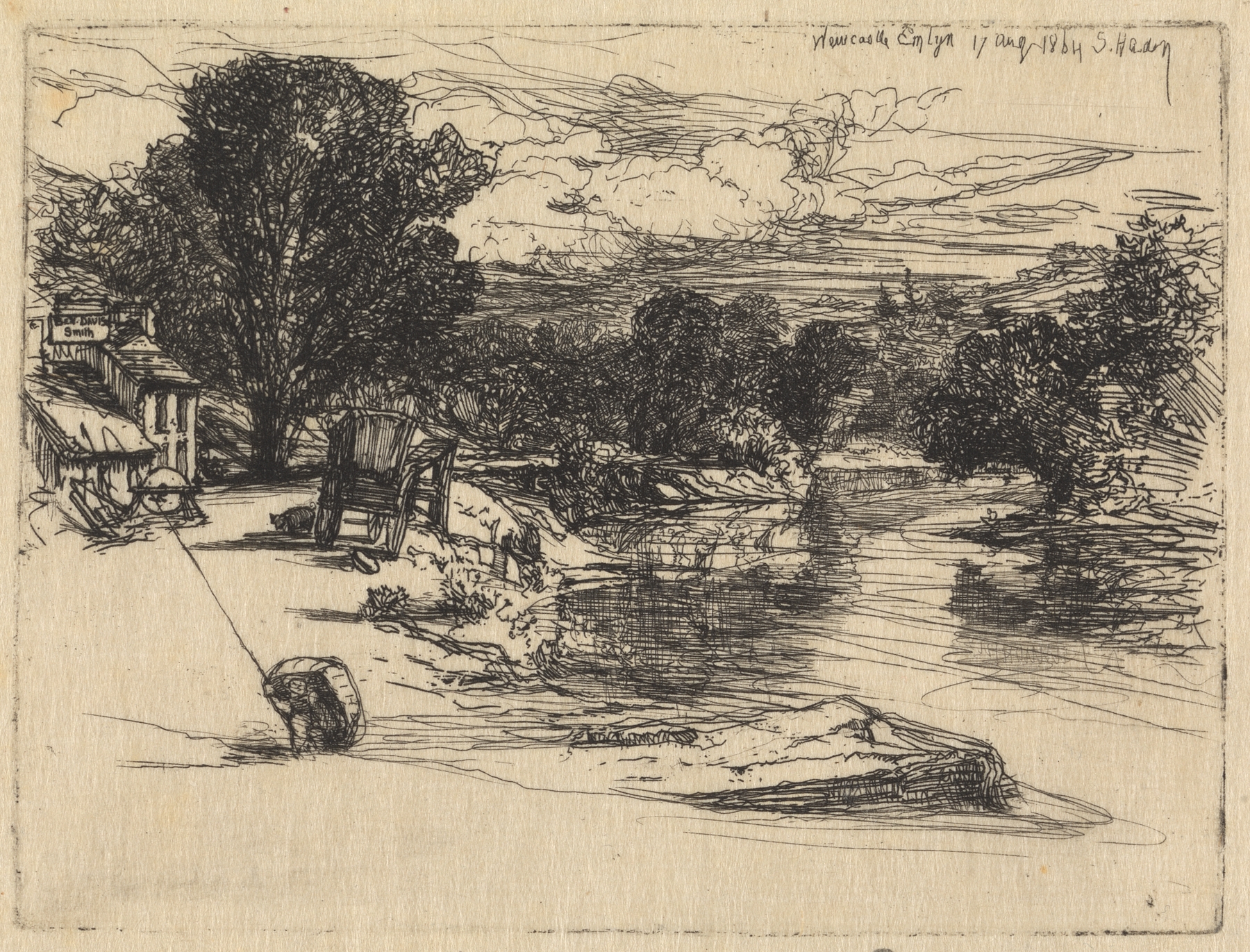
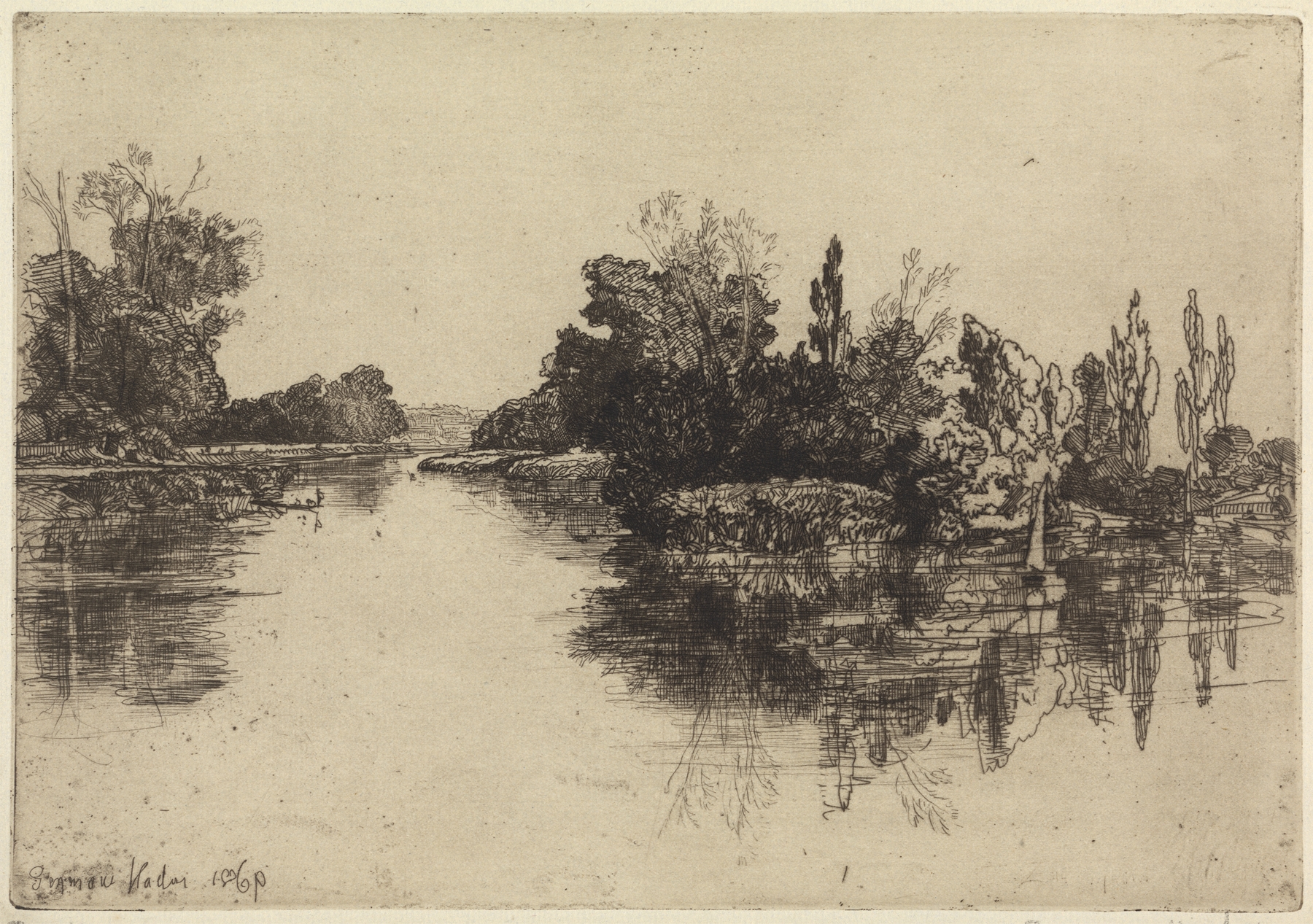
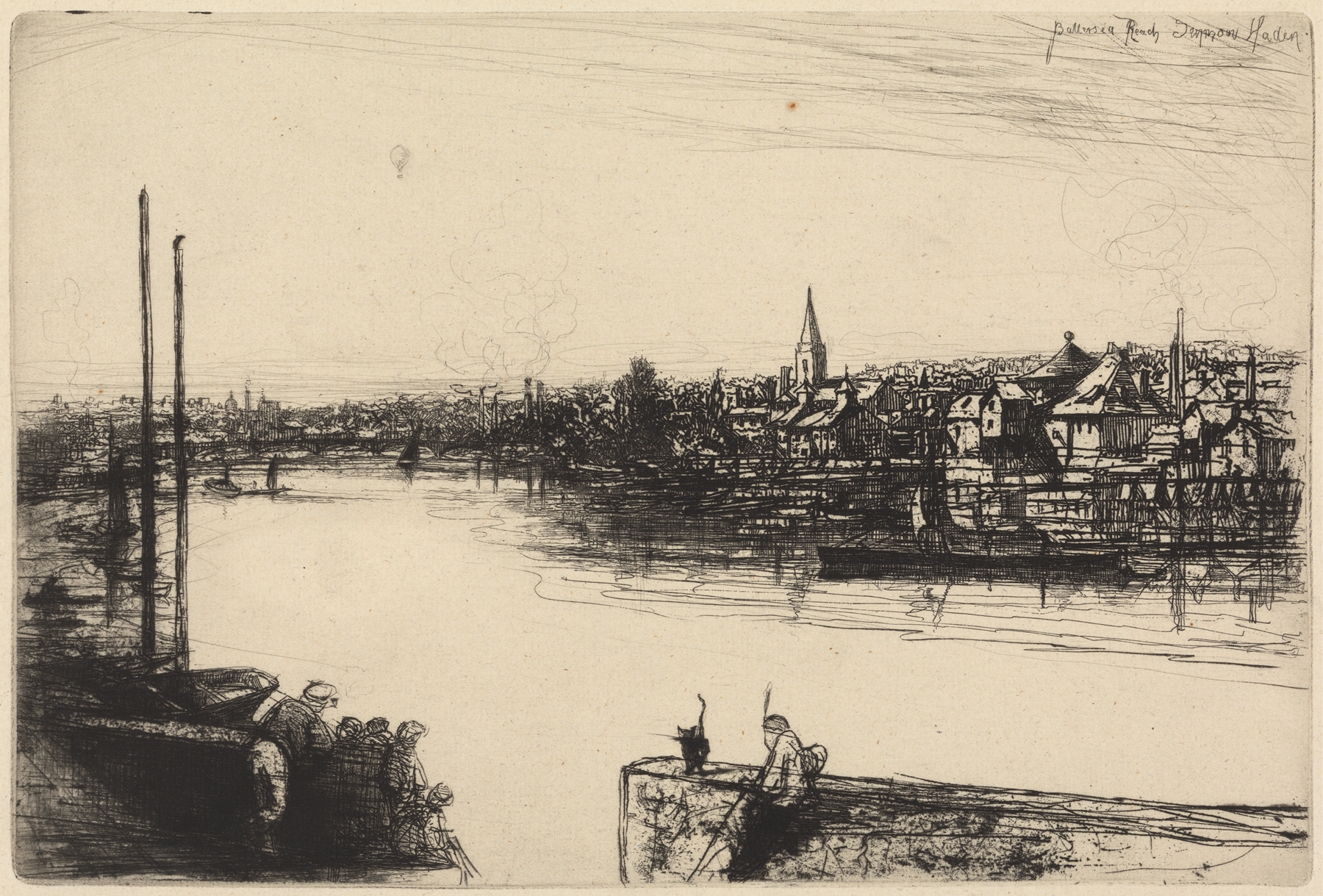
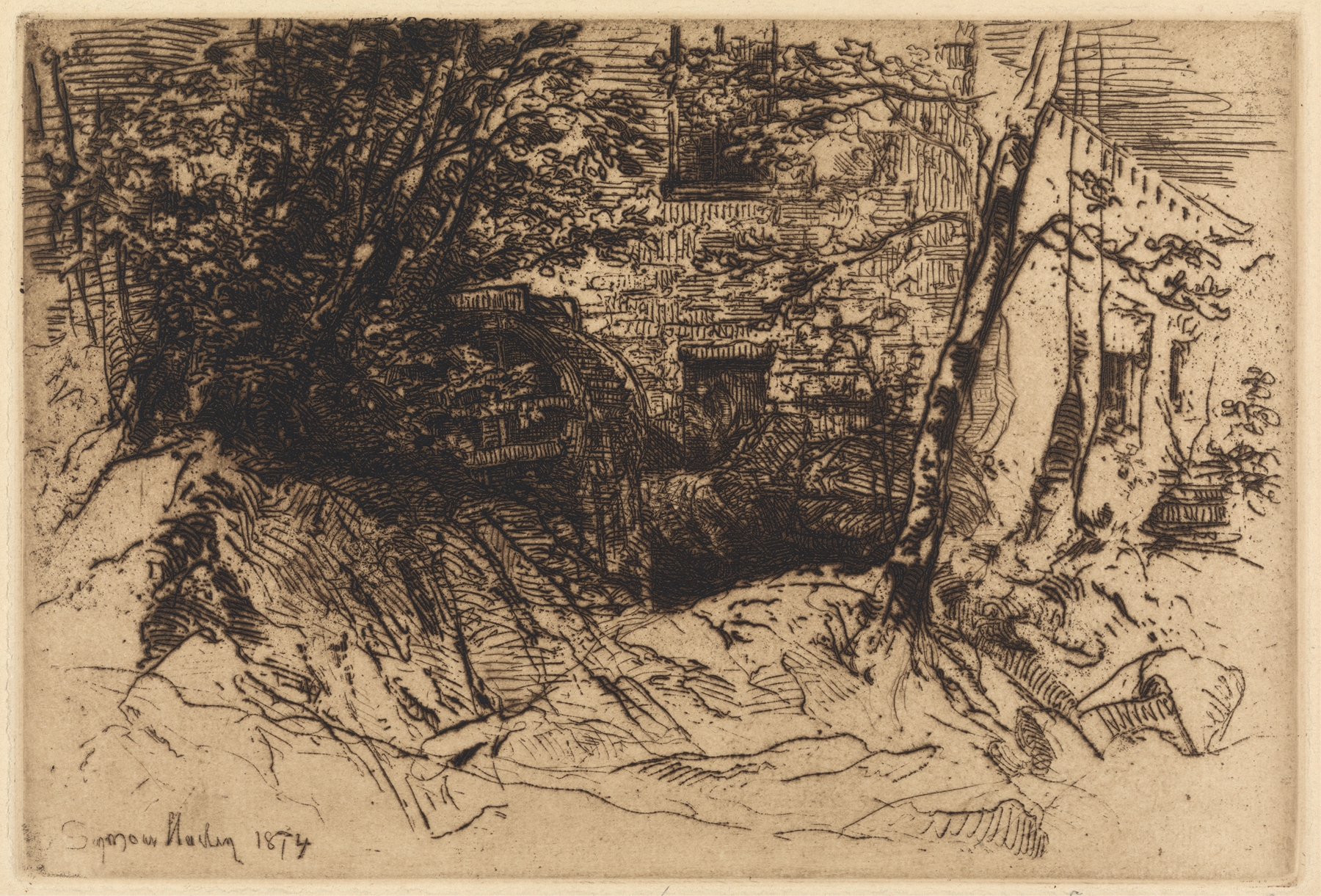
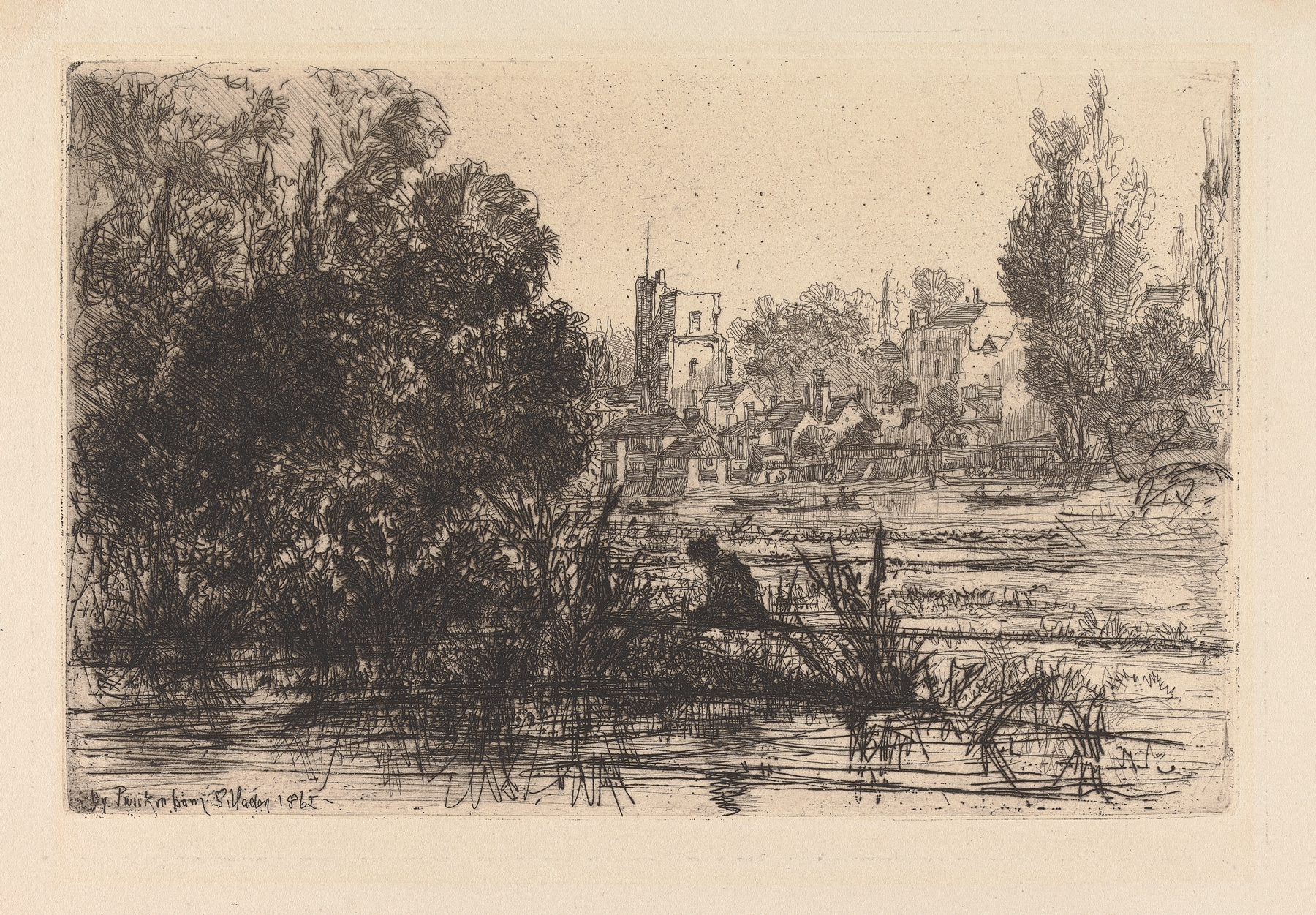
What secret hides in the quiet of the canvas? In this moment captured by the artist, a tranquil river flows gently, inviting reflection and contemplation amidst the bustle of life. Look to the lower left where the shimmering surface of the Thames dances with light, its soft ripples mirroring the rich hues of evening sky. Notice how the intricate lines of Haden’s etching draw the eye towards the silhouetted trees, their branches arching gracefully against the horizon.
The subtle gradation of tones from dark to light reveals a masterful technique, creating a serene depth that envelops the scene in a silent embrace. Beneath the surface calm lies a poignant tension between nature and the encroaching cityscape. The juxtaposition of the vibrant colors in the sky against the muted tones of the shore speaks to the enduring faith in the beauty of the natural world, even as urban life looms nearby. The distant boats hint at human endeavor, while the peaceful water suggests a steadfastness that endures through change—a meditation on coexistence.
Haden created this work in the later years of his life, after 1858, drawing inspiration from the landscapes of his native England. During this period, he was immersed in the burgeoning movement of etching and printmaking, an era that encouraged artists to capture the essence of their surroundings with a fresh perspective. This piece reflects both his personal journey and the societal shifts of the time, where art began to navigate the tensions between industrial progress and the enduring allure of the natural world.