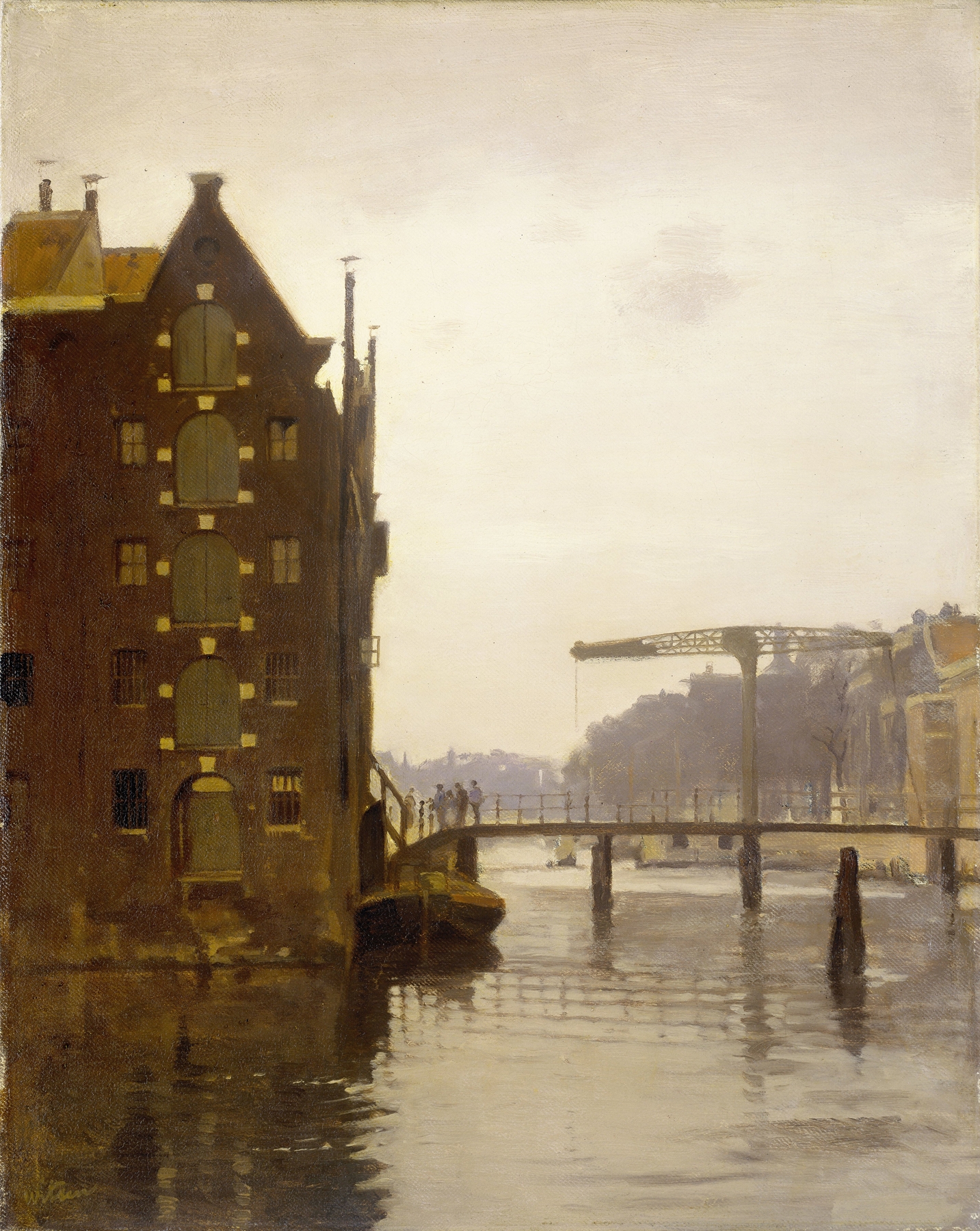
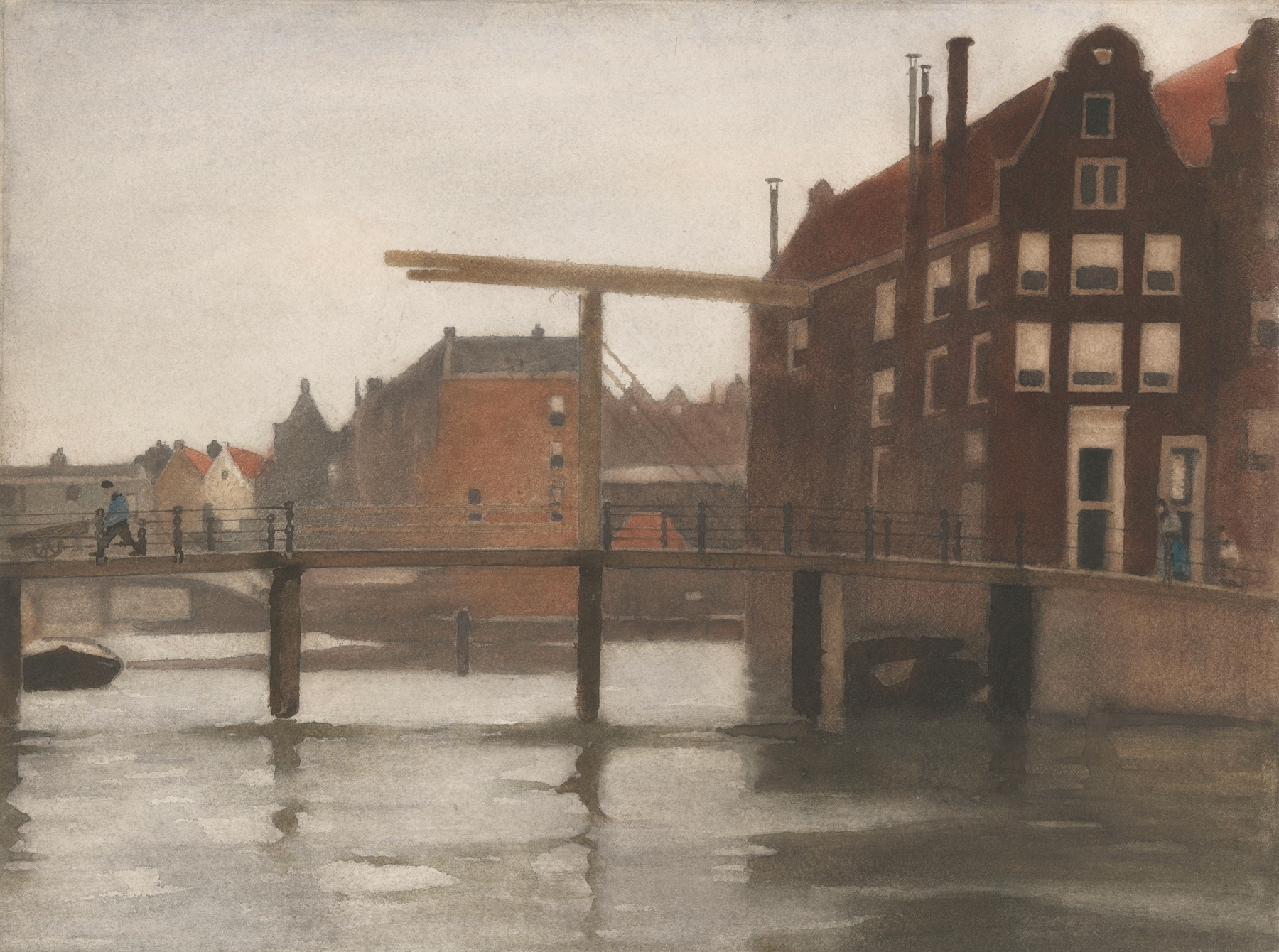
Gezicht vanaf de Rapenburgwal op de Peperbrug en het pakhuis Sweeden — History & Analysis
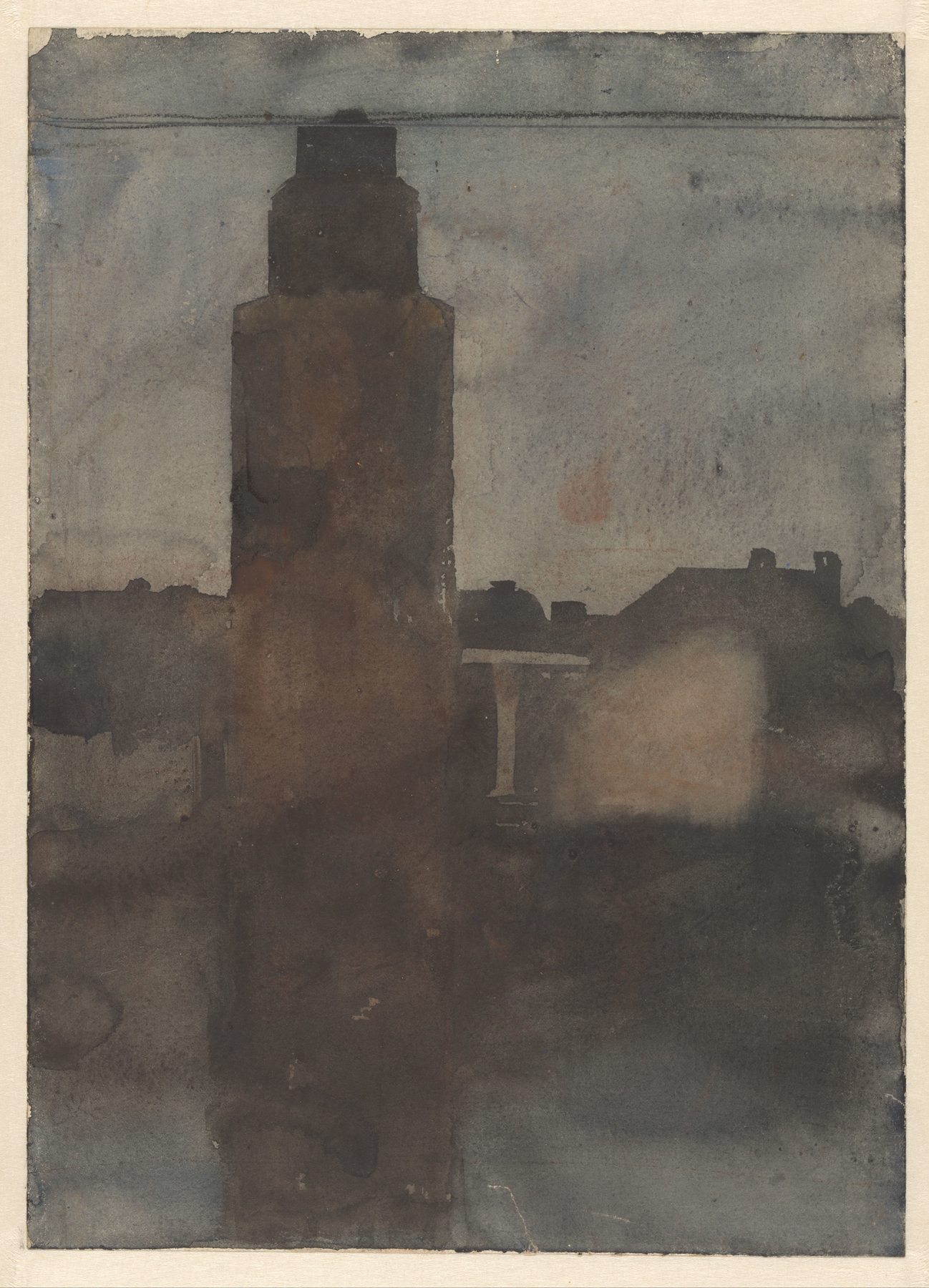
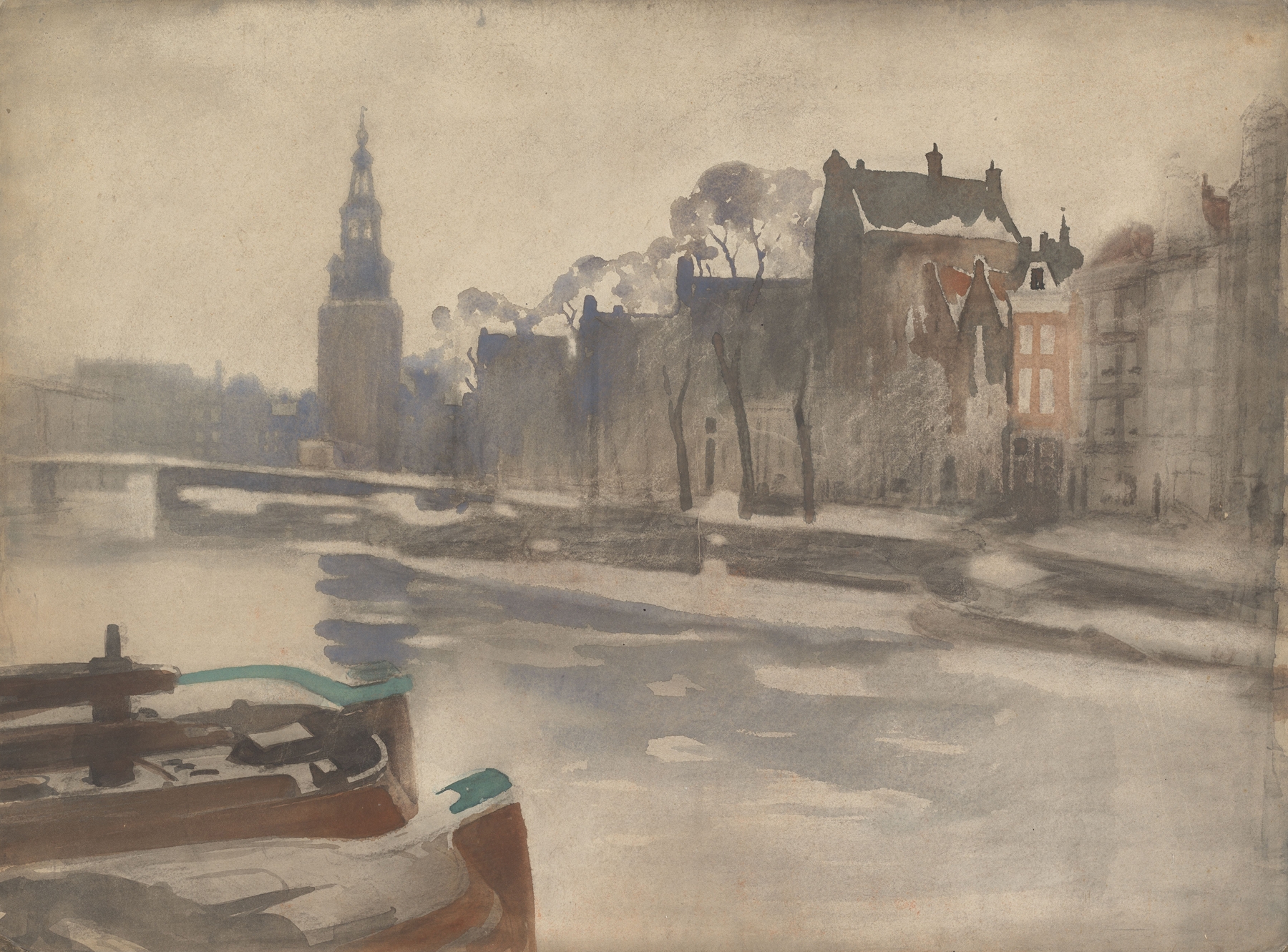
Could a single brushstroke hold eternity? In the hands of a master, the concept of innocence transforms into a timeless glimpse of life captured on canvas. Look to the serene waterway that dominates the foreground of the composition. Notice how the painter’s delicate brushwork brings the surface of the canal to life; reflections shimmer with a blend of soft blues and greens, evoking tranquility. To the left, the Peperbrug rises gracefully, its arching silhouette perfectly mirrored in the water below.
The buildings surrounding the bridge stand solid and stoic, their muted tones harmonizing with the gentle hues of the sky. The overall composition is balanced, leading the eye along the waterway into the inviting embrace of the horizon. Yet, within the calm, there exists an undercurrent of contrast. The lighthearted innocence of the scene belies the subtle tension found in the figures, lost in their own worlds. A solitary boat drifts, a symbol of solitude amidst the bustling city, while the methodical lines of the architecture suggest the passage of time constraining the joy of fleeting moments.
The artist captures a stillness that invites reflection on the nature of existence and the delicate interplay between isolation and community. Willem Witsen painted this piece in 1911 while living in Amsterdam, a city abuzz with artistic innovation and modernity. At this time, the art scene was evolving, intertwining traditional techniques with new forms of expression. Witsen was well-regarded among the Dutch Impressionists, and his work often reflected the rhythm of urban life, revealing a unique perspective that combined both observation and emotion in his depictions of the world around him.