Ginger boy — History & Analysis
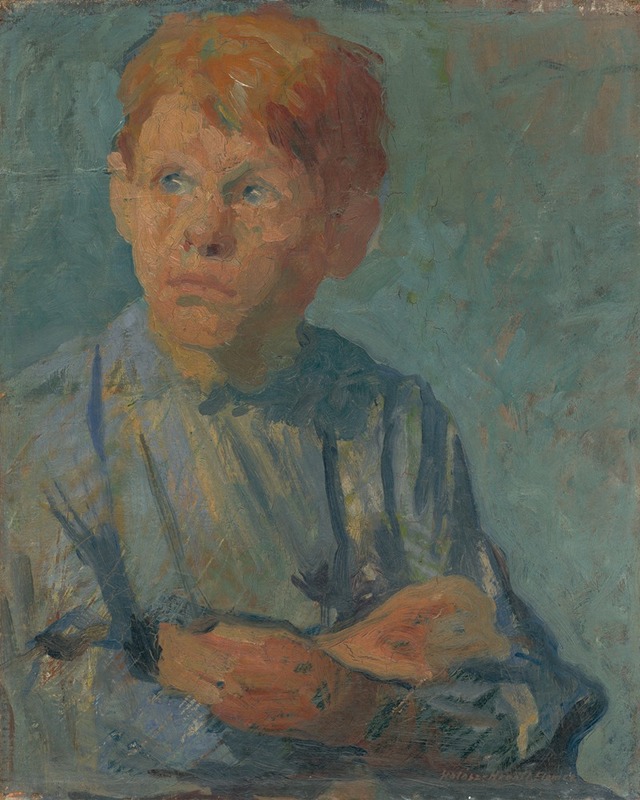
What if silence could speak through light? In Ginger Boy, the interplay of illumination and shadow invites a profound reflection on the passage of time. Look to the center of the canvas, where a young boy's vibrant ginger hair captures the light, drawing your attention immediately. The softness of his features contrasts starkly with the textured background, a muted haze that seems to dissolve into the ether.
The delicate brushwork reveals a layered depth, while the warm, golden hues surrounding him create an ethereal glow that envelops the subject, suggesting a moment suspended between past and present. Beyond its apparent simplicity, the painting resonates with emotional subtleties. The boy’s wide-eyed expression, caught in a moment of quiet contemplation, hints at both innocence and the weight of unspoken thoughts. The contrasting tones—the warmth of his hair against the coolness of the background—reflects the tension between childhood and the inevitable march of time.
Here, every brushstroke seems to whisper a story, capturing the fleeting nature of youth. In 1900, Elemír Halász-Hradil was exploring the boundaries of portraiture in Vienna, a city brimming with artistic innovation. This period marked a transition in his career as he navigated between academic traditions and emerging modernist tendencies. The socio-political climate, marked by a quest for identity and self-expression, influenced his pursuit of conveying not just likeness but emotional resonance, a theme that firmly establishes Ginger Boy within the canon of early 20th-century portraiture.